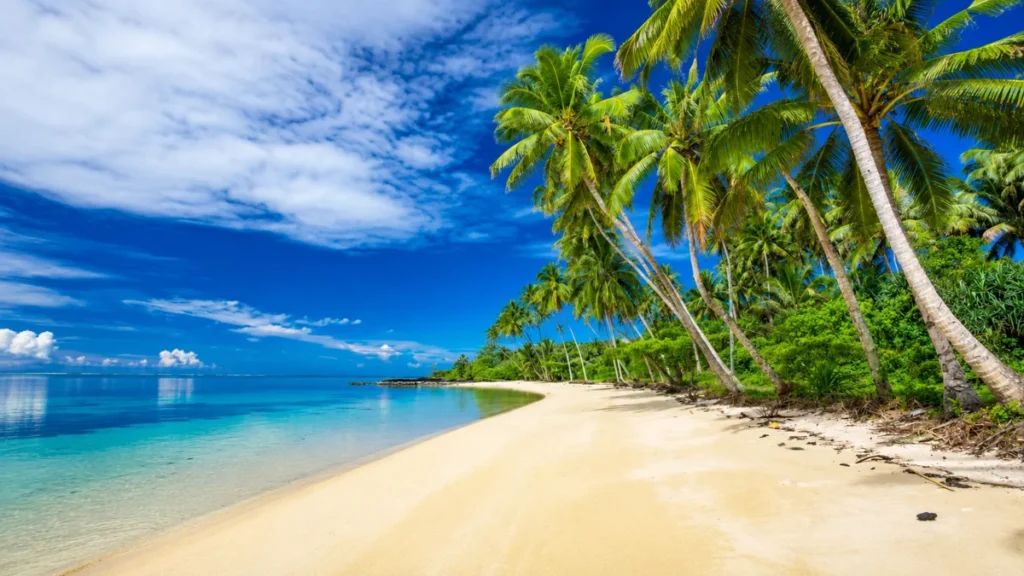
Some of the Pacific’s most memorable islands are not the ones that appear most often in travel advertisements. Their appeal can be quieter: a stronger sense of place, fewer tourism layers, slower days, and experiences that feel more personal once you arrive.
Choosing a less-publicized Pacific island can still feel risky when flights are expensive and annual leave is limited. Travelers may wonder whether a quieter destination is genuinely rewarding or simply receives less attention because it is harder to reach, less polished, or more difficult to plan.
Several Pacific islands still feel genuinely underrated in 2026, especially Samoa, Tonga, Vanuatu, Rarotonga, Taveuni, and Moorea. Each offers a strong travel experience, but for different reasons: cultural depth, quieter pacing, dramatic nature, manageable island exploration, or scenery that receives less attention than better-known neighbors.
The word “underrated” needs some care. It does not necessarily mean empty beaches, low prices, or a destination nobody knows. An island can be well known within the Pacific and still receive far less international attention than the quality of the experience deserves.
This article answers Which Pacific Islands Still Feel Underrated in 2026? by looking beyond popularity. It explains what these destinations actually feel like, what travelers often misunderstand, who each island suits, and where the tradeoffs may matter more than the scenery.
Quick Comparison of the Six Underrated Pacific Islands
If you are comparing these destinations quickly, this overview shows the main atmosphere, strongest appeal, typical pace, and a realistic amount of time to allow. Trip length is not a strict rule, but it helps prevent a slower island from being squeezed into an itinerary that is too rushed.
| Island | Best Known For | Typical Pace | Good Trip Length | Main Reality to Accept |
|---|---|---|---|---|
| Samoa | Culture, waterfalls, village life, and scenic driving | Slow | 7–10 days | Less tourism polish and more independent planning |
| Tonga | Quietness, whales, sailing, and small-scale island life | Very slow | 7–10 days | Limited transport, nightlife, and backup options |
| Vanuatu | Volcanoes, diving, blue holes, and outer-island adventure | Moderate | 7–10 days | Inter-island travel can add cost and complexity |
| Rarotonga | Easy exploring, lagoon activities, and a relaxed one-base holiday | Relaxed | 5–7 days | It is convenient rather than untouched, and prices can still be high |
| Taveuni | Rainforest, waterfalls, diving, hiking, and birdlife | Slow | 5–7 days | Extra connections and fewer conventional resort facilities |
| Moorea | Mountain scenery, lagoon experiences, and independent exploration | Relaxed | 5–7 days | It is still expensive and increasingly well known |
This comparison is most useful as a starting point. Samoa and Tonga suit travelers who want deeper quiet and cultural presence. Vanuatu and Taveuni suit travelers who want nature and activity. Rarotonga and Moorea are easier to shape into a shorter island holiday without losing the sense of place.
What “Underrated” Really Means in Pacific Travel
An underrated Pacific island is not automatically a secret destination. It is better understood as a place that offers more depth, atmosphere, or traveler value than its level of publicity may suggest.
Some islands are underrated because they sit beside a more famous neighbor. Moorea lives in the shadow of Bora Bora. Taveuni is often overlooked beside Fiji’s better-known resort areas. Other destinations, such as Samoa, Tonga, and Vanuatu, are recognized names but receive less attention than Hawaii, Fiji, or French Polynesia in mainstream travel marketing.
There is also a difference between being underrated and being easy. Some quieter islands remain less crowded because transfers are slower, accommodation choices are narrower, or tourism infrastructure is more modest. These are not always weaknesses, but they do affect traveler fit.
The best underrated destination is therefore not the least visited one. It is the island that quietly delivers the kind of experience you personally value without requiring you to chase popularity for reassurance.
The Real Pacific Travel Reality Check
Pacific travel can be slower and less predictable than visiting a large city or a major resort region. Flights may operate on limited schedules. Domestic connections can require patience. Ferry departures may depend on weather, and imported food, fuel, rental cars, and hotel supplies can cost more than travelers expect.
Quieter islands may also have fewer backup options. When a tour is canceled, a restaurant closes early, or the weather changes, there may not be a long list of alternatives nearby. Travelers who need constant activity can interpret this as a lack of things to do. Travelers who enjoy unhurried days may experience the same situation as part of the island’s appeal.
The pace of service can also feel different. Meals may take longer, Sunday routines may reduce activity, and local timing may feel more flexible than visitors are used to. Planning carefully helps, but trying to control every hour can make a quieter Pacific trip feel more stressful than it needs to be.
This reality is important because “underrated” should not be confused with “perfect.” These islands can be deeply rewarding, but their appeal often comes from accepting a slower rhythm rather than expecting the convenience of a heavily developed tourism destination.
What Many Travel Articles Miss About Underrated Pacific Islands
Many travel articles describe underrated islands through empty beaches, blue lagoons, and claims that visitors can experience “paradise without the crowds.” That can be visually appealing, but it does not tell travelers what daily life on the trip will feel like.
A destination may feel peaceful in the morning but extremely quiet after dinner. A beautiful outer island may require an extra flight, boat transfer, or weather-dependent connection. A small resort may feel personal and warm, but it may offer fewer dining choices, fewer organized activities, and less separation from local life.
What matters most is not whether an island is less famous. It is whether the reasons it remains less famous suit you. Some travelers want tourism polish, frequent transport, nightlife, and many accommodation options. Others are happier with a slower island road, a simple guesthouse, local conversations, and days shaped around weather rather than a full itinerary.
The Pacific Spotlight Scale: Popularity Versus Travel Reward
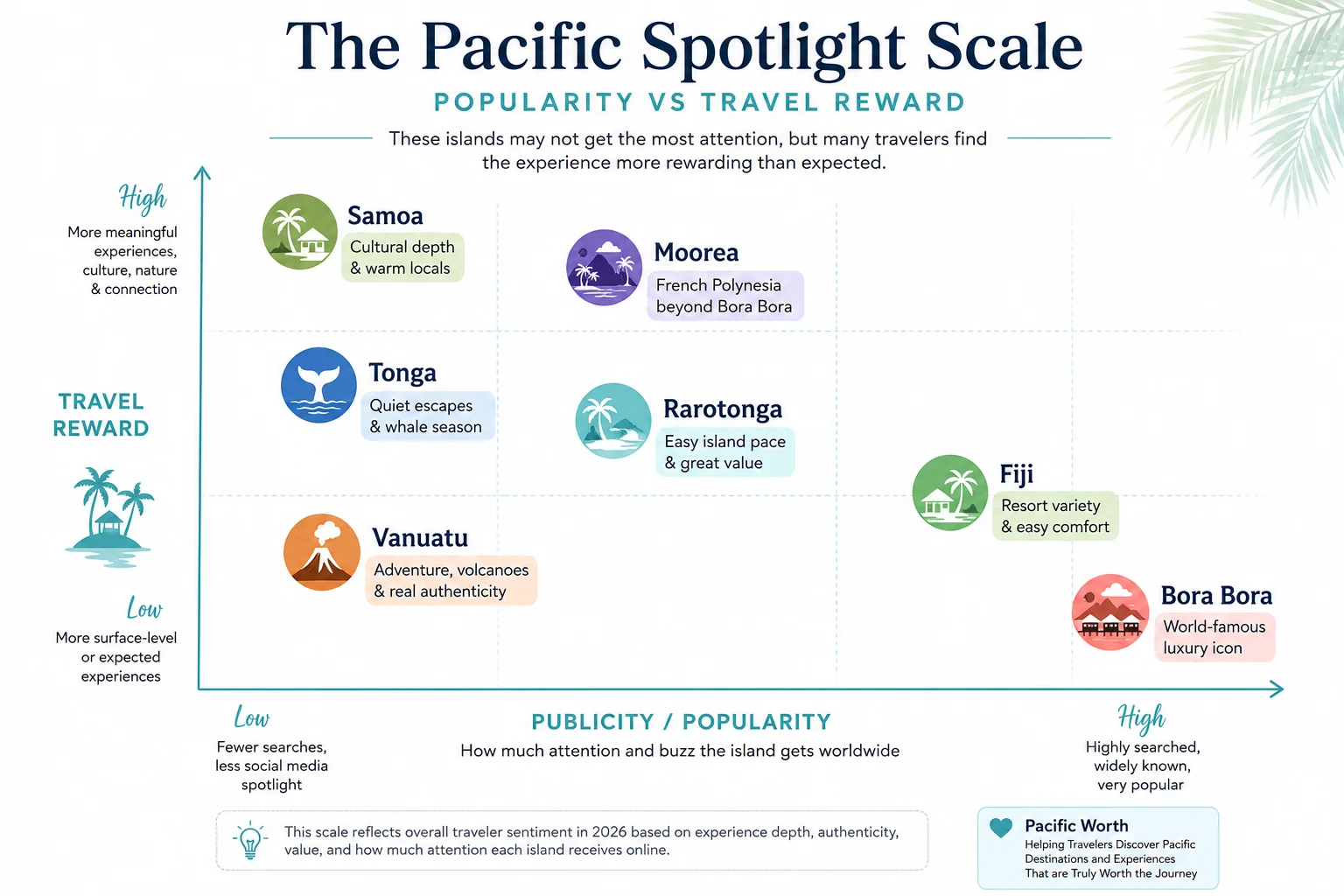
The first visual for this article is designed to show that publicity and traveler reward are not the same thing. The islands below are not ranked from best to worst. They sit in different positions depending on how much global attention they receive compared with how rewarding the trip can feel for the right traveler.
| Destination | Why It Can Feel Underrated | Main Tradeoff |
|---|---|---|
| Samoa | Strong cultural identity, dramatic landscapes, and a less packaged atmosphere | Slower logistics and fewer highly polished resort choices |
| Tonga | Quiet pacing, small-scale travel, and meaningful experiences beyond whale season | Limited transport, nightlife, and accommodation variety |
| Vanuatu | Volcanoes, diving, blue holes, culture, and adventure receive less attention than they deserve | Inter-island planning can add cost and complexity |
| Rarotonga | Easy island exploration with a relaxed atmosphere that is less intense than major resort destinations | Not untouched, and prices can still reflect remote-island economics |
| Taveuni | A lush, nature-focused Fiji experience away from the main resort corridors | Extra transfers and fewer conventional resort conveniences |
| Moorea | Dramatic French Polynesian scenery with more everyday island life than Bora Bora | Still expensive and no longer a quiet secret |
The table reveals an important pattern: each island is underrated for a different reason. Samoa and Tonga are often overlooked by travelers seeking a polished resort holiday. Vanuatu is under-discussed relative to the variety of experiences it offers. Taveuni and Moorea are overshadowed by better-known parts of their own countries, while Rarotonga sits in a useful middle ground between convenience and calm.
1. Samoa: Strong Culture Without Heavy Tourism Packaging
Samoa is one of the clearest answers for travelers asking which South Pacific islands are still underrated. It is not unknown, but it often receives less attention than Fiji despite offering a strong combination of culture, waterfalls, swimming holes, beaches, coastal drives, village life, and a slower island rhythm.
The atmosphere is one of Samoa’s greatest strengths. Tourism is present, but the country does not always feel shaped around visitors. Churches, villages, family spaces, roadside activity, local customs, and Sunday routines remain visible. This can make the destination feel grounded rather than staged.
Travelers often expect Samoa to feel like a quieter version of Fiji. In reality, it has its own personality. The experience is usually less resort-centered, more independent, and more connected to the landscape and everyday life. A day may involve driving between waterfalls, stopping at a local shop, swimming in an ocean trench, and returning to a modest beach stay rather than moving between organized resort activities.
Social media may show Samoa’s most dramatic natural locations, but it rarely shows the slower spaces between them. Roads can take time, attraction opening arrangements may feel informal, and evenings outside Apia can become very quiet. For travelers who enjoy independence, that quiet can be restorative. For those who want constant entertainment, it may feel limiting.
Samoa is particularly rewarding when travelers give it enough time. A rushed trip built around checking off attractions can miss the atmosphere that makes the country memorable. Our guide Is Samoa Worth Visiting for First-Time Pacific Travelers? offers a more detailed introduction to that experience.
Samoa Is Best For
- Travelers interested in culture, village life, and local rhythm
- Couples and independent travelers who prefer quiet over nightlife
- Visitors who enjoy waterfalls, natural swimming places, and scenic drives
- People comfortable with simpler stays and flexible schedules
Samoa Is Not Ideal For
- Travelers who want a large selection of luxury resorts and organized activities
- Visitors expecting fast transport and tightly scheduled sightseeing
- People who prefer busy evenings, shopping, and strong tourist energy
What may stay with you: If Samoa stays with you, it will probably be because its people, cultural rhythm, and sense of place felt just as important as its beaches and waterfalls.
2. Tonga: Quiet Travel Beyond Whale Season
Tonga is often discussed almost entirely through humpback whale experiences. Whale season is an important part of the destination, but focusing only on that period can make the rest of Tonga seem secondary. For travelers who value quietness, cultural presence, uncrowded coastal settings, and a small-scale island atmosphere, Tonga can feel underrated throughout the year.
The country often feels slower and less commercially organized than more developed Pacific holiday destinations. That does not mean there is nothing to do. It means the trip is less likely to be filled automatically for you. Time may be spent cycling, snorkeling, visiting beaches, exploring caves, walking coastal areas, taking a boat trip, or simply moving at the pace of the island.
Different island groups also create different experiences. Tongatapu offers the capital, cultural sites, blowholes, local life, and easier arrival logistics. Ha’apai can feel more remote and beach-focused. Vava’u is strongly associated with sailing and whales. ’Eua appeals more to hikers, nature-focused travelers, and those who are comfortable with a rawer setting.
The tradeoff is limited choice. Flights and ferries require more planning, accommodation can be small-scale, and nightlife is not a major reason to travel here. Weather or transport changes can have a larger effect because alternative connections are fewer.
That quietness is exactly why Tonga can feel meaningful. It is not trying to compete with highly polished resort destinations. It tends to suit travelers who want to feel removed from normal routines rather than constantly entertained. For a fuller look at the destination outside its most famous season, see Is Tonga Worth Visiting Beyond Whale Season?.
Tonga Is Best For
- Travelers who want a genuinely slow and quiet Pacific holiday
- Whale enthusiasts, sailors, hikers, and nature-focused visitors
- People comfortable with small accommodation properties and limited schedules
- Travelers who value space and atmosphere more than resort polish
Tonga Is Not Ideal For
- Visitors seeking nightlife, shopping, and a wide restaurant scene
- Travelers with very rigid island-transfer schedules
- People who need many backup activities during poor weather
What may stay with you: Tonga may be remembered less for how much you completed and more for how completely the trip allowed you to slow down.
3. Vanuatu: Adventure That Still Feels Raw
Vanuatu can feel underrated because its travel identity is more varied than many travelers realize. Port Vila is often the first image people have of the country, but the wider destination includes active volcano experiences, blue holes, reef and wreck diving, waterfalls, caves, rainforest, cultural encounters, and islands with very different personalities.
Efate can provide the easiest introduction, with accommodation, markets, day trips, beaches, and organized activities. Espiritu Santo feels more spacious and nature-focused, with blue holes, beaches, diving, and wartime history. Tanna is more dramatic and raw, where volcanic landscapes, black-sand beaches, kastom, and rural roads shape the experience.
What travelers often expect is a straightforward tropical resort break. What they may discover is a destination with stronger adventure energy and more contrast. One part of the trip can feel comfortable and visitor-ready, while another island may feel remote, earthy, and dependent on local logistics.
This variety is the reward, but it is also the tradeoff. Seeing more than one island can increase flight costs and make the itinerary more vulnerable to delays. Roads and facilities vary. A short visit focused only on Port Vila may be easy, but it may not reveal the full character that makes Vanuatu stand out.
Vanuatu is especially good for travelers who want the Pacific to feel active rather than purely restful. Our article Is Vanuatu Worth the Flight from Australia? looks more closely at whether the journey and logistics match the experience.
Vanuatu Is Best For
- Adventure travelers interested in volcanoes, diving, blue holes, and nature
- Visitors who enjoy combining a comfortable base with a rawer outer-island experience
- Travelers interested in Melanesian culture and varied island landscapes
- People who prefer memorable activities over highly polished resort surroundings
Vanuatu Is Not Ideal For
- Travelers who want every part of the trip to feel seamless and luxurious
- Visitors trying to combine several islands on an inflexible schedule
- People who prefer only calm beach days and minimal movement
What may stay with you: Vanuatu often leaves a strong memory through contrast—the comfort of a coastal stay beside volcanoes, blue holes, cultural experiences, and landscapes that still feel powerful and raw.
4. Rarotonga: Easy to Enjoy Without Feeling Overbuilt
Rarotonga is the most developed and visited island in the Cook Islands, so calling it underrated may seem unusual. The point is not that Rarotonga is undiscovered. It is that the island often delivers a better balance of ease, atmosphere, and manageable exploration than its international profile suggests.
The island is compact enough to feel understandable. Travelers can settle into one accommodation base, move around the coastal road, visit beaches and cafés, explore inland areas, and enjoy the lagoon without needing a complicated multi-island itinerary.
Rarotonga often feels more relaxed than large tourism destinations because the island does not have the same scale of resort zones, shopping districts, or urban development. There is visitor infrastructure, but local life remains visible. The result is not a raw or untouched destination; it is a practical island holiday that still feels personal.
Travelers sometimes expect every beach to look empty and every day to feel remote. In reality, popular lagoon areas can be active, especially around well-known accommodation and swimming spots. Road noise can be noticeable in some places, and prices are not always low. Imported goods and limited competition still affect costs.
Rarotonga is underrated less because it is hidden and more because it quietly works. It can suit travelers who want a one-week Pacific escape without the pressure of expensive island hopping. Our guide Is Rarotonga Worth Visiting for a Short Island Escape? explains that short-trip appeal in more detail.
Rarotonga Is Best For
- Couples, solo travelers, and small families wanting a manageable island holiday
- Visitors who like exploring independently without complex transfers
- Travelers seeking a balance between local atmosphere and visitor convenience
- People with around one week who do not want to rush
Rarotonga Is Not Ideal For
- Travelers expecting a completely untouched or empty island
- Visitors looking for large luxury-resort variety or energetic nightlife
- People who assume the Cook Islands will automatically be inexpensive
What may stay with you: Rarotonga’s strength is how naturally the holiday comes together, with enough ease to relax and enough local character to keep the island from feeling anonymous.
5. Taveuni: A Different Side of Fiji
Fiji is not underrated as a country, but Taveuni can be. Many visitors experience Fiji through Denarau, the Coral Coast, the Mamanuca Islands, or the Yasawa Islands. Taveuni offers a different mood: greener, quieter, more nature-focused, and less centered on the familiar resort-holiday structure.
Often called Fiji’s Garden Island, Taveuni is associated with rainforest, waterfalls, hiking, diving, birdlife, and the Bouma National Heritage Park area. The atmosphere can feel lush and active rather than purely beach-focused. Accommodation tends to be smaller-scale, and the island rewards travelers who want to spend time outdoors.
The expectation may be “Fiji without crowds.” The reality is more specific. Taveuni is not simply a quieter substitute for a Mamanuca resort. It is a different style of Fiji trip, with more emphasis on nature, road transfers, guided walks, diving, and local surroundings.
The extra effort matters. Reaching the island usually adds another connection, and weather can affect flights, boats, diving, and hiking. Dining and accommodation choices are narrower than in Fiji’s larger tourism areas. Travelers who want a broad resort menu, kids’ clubs, and constant organized entertainment may prefer another part of Fiji.
Taveuni feels underrated because many travelers choose Fiji for ease and resorts, while this island is better suited to those who want Fiji to feel greener, quieter, and more exploratory.
Taveuni Is Best For
- Hikers, divers, birdwatchers, and nature-focused travelers
- Repeat Fiji visitors seeking a different atmosphere
- Couples who prefer small-scale stays to large resort zones
- Travelers comfortable adding a domestic connection
Taveuni Is Not Ideal For
- Visitors who want the easiest possible first trip to Fiji
- Families focused mainly on large resort facilities and kids’ programs
- Travelers with very short itineraries or no flexibility for transfers
What may stay with you: Taveuni is likely to remain in your memory through its greenery, waterfalls, reef life, and the feeling of seeing a quieter side of Fiji.
6. Moorea: French Polynesia Beyond Bora Bora
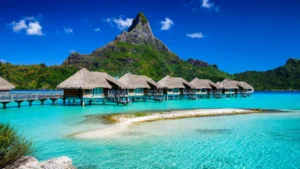
Moorea is not a hidden island, but it remains underrated relative to Bora Bora. Many travelers imagine French Polynesia through overwater bungalows and Bora Bora’s lagoon. Moorea offers equally strong emotional scenery in a setting that can feel more varied, active, and connected to ordinary island life.
The landscape is dramatic. Green mountain ridges rise behind bays and coastal roads, while lagoon views remain part of everyday movement around the island. Moorea can feel romantic without being limited to a resort bubble. Travelers can rent a car or scooter, visit viewpoints, stop at beaches, explore food stands, join lagoon excursions, and experience different parts of the island from one base.
What travelers often expect is a cheaper Bora Bora. That comparison is too simple. Moorea can still be expensive, especially once flights, accommodation, meals, and activities are included. Its value comes from variety and atmosphere rather than simply lower prices.
Moorea also feels more lived-in. Traffic, local homes, shops, roadside activity, and everyday movement are visible. Some travelers appreciate this because it gives the island more personality. Others may prefer the highly controlled, private-resort feeling associated with Bora Bora.
For travelers deciding between the two, What Makes Moorea Feel More Relaxing Than Bora Bora? explores the emotional and practical differences in greater detail.
Moorea Is Best For
- Couples who want dramatic scenery without staying entirely inside a resort
- Travelers who enjoy driving, exploring, lagoon activities, and varied days
- Visitors who want French Polynesia to feel romantic but also lived-in
- Travelers who want a practical addition to a Tahiti itinerary
Moorea Is Not Ideal For
- Travelers expecting a low-cost alternative to Bora Bora
- Visitors who want complete privacy and a highly exclusive resort atmosphere
- People who assume every beach is broad, sandy, and easy to access
What may stay with you: Moorea often stays with travelers through the combination of dramatic mountain scenery and the freedom to experience French Polynesia beyond a private resort setting.
Find Your Underrated Pacific Island
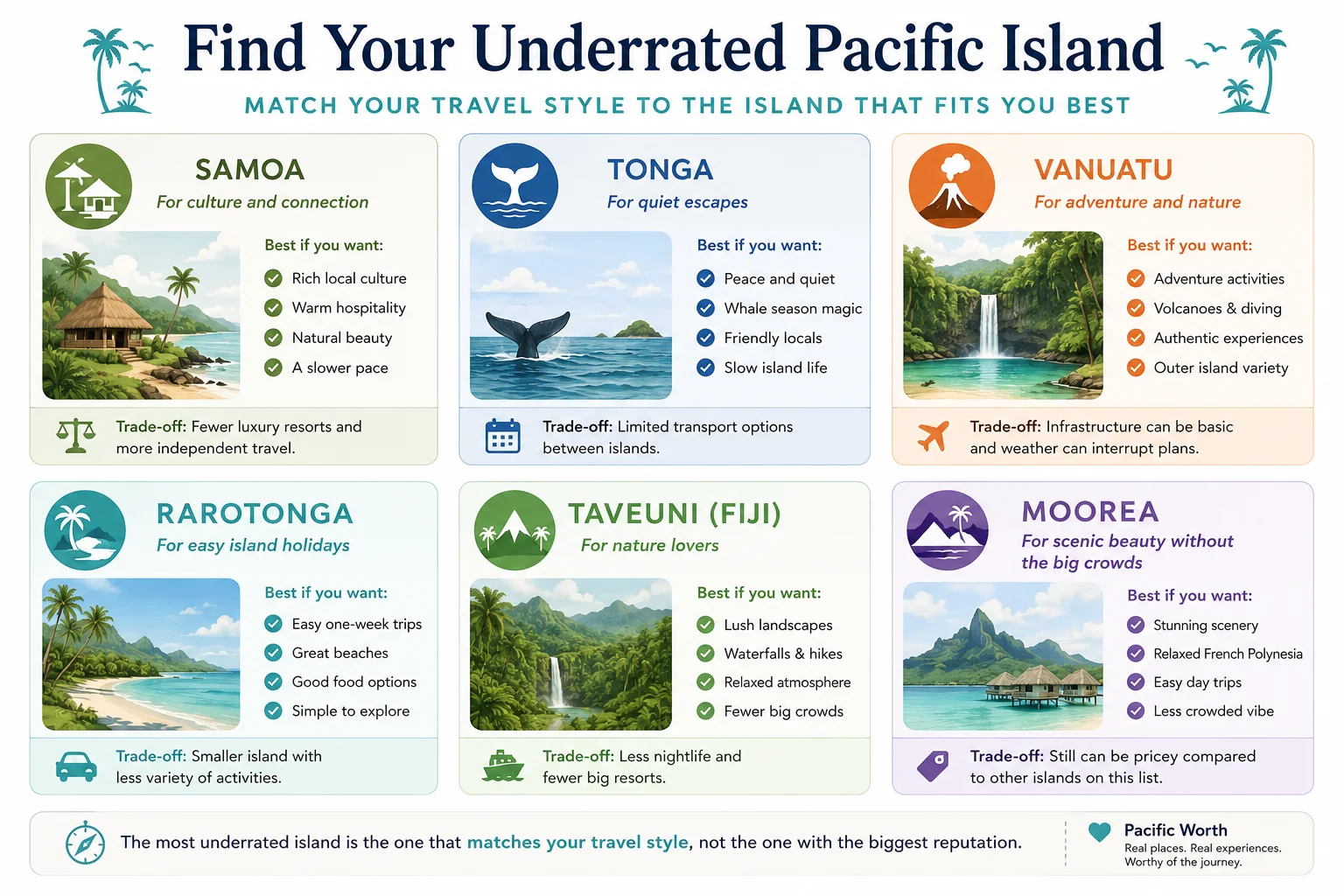
The second diagram is a decision tool rather than another popularity comparison. It helps readers match the islands to the kind of experience they actually want.
| If You Want… | Consider… | Why It Fits | What to Accept |
|---|---|---|---|
| Visible culture and a strong local rhythm | Samoa | Village life, tradition, natural attractions, and less tourism packaging | Slower travel and fewer polished resort choices |
| A very quiet and unhurried escape | Tonga | Small-scale tourism, space, coastal calm, and a slower daily pace | Limited schedules, nightlife, and backup options |
| Volcanoes, diving, and active adventure | Vanuatu | Strong variety across Efate, Santo, Tanna, and other islands | Extra planning and potentially costly inter-island travel |
| An easy one-week island holiday | Rarotonga | Compact size, coastal road, lagoon activities, and simple independent exploring | It is not untouched, and remote-island costs remain |
| A greener, quieter side of Fiji | Taveuni | Rainforest, waterfalls, diving, hiking, and smaller-scale stays | Domestic connections and fewer conventional resort facilities |
| French Polynesian scenery with more variety | Moorea | Mountains, lagoon experiences, road exploration, and a lived-in atmosphere | High costs and growing popularity |
No island in this table is the universal winner. Samoa offers greater cultural presence, Tonga offers deeper quiet, Vanuatu offers stronger adventure, Rarotonga offers easier short-trip practicality, Taveuni offers nature-focused Fiji, and Moorea offers one of the most balanced French Polynesian experiences.
Budget and Value Expectations
Underrated does not mean inexpensive. Pacific destinations often face high transport costs, expensive imports, limited competition, seasonal demand, and small accommodation markets. A less-famous island can still cost more than expected.
| Destination | Where Value Often Comes From | Where Costs Can Rise |
|---|---|---|
| Samoa | Simple accommodation, independent driving, nature-focused days | Rental cars, imported food, private transfers, and resort dining |
| Tonga | Quiet days, local atmosphere, and small-scale stays | Domestic flights, whale tours, outer-island transfers, and limited supply |
| Vanuatu | High-impact experiences such as volcanoes, diving, and blue holes | Inter-island flights, guided activities, and remote accommodation |
| Rarotonga | One-base itineraries, easy independent exploring, and no need to island-hop | Accommodation, restaurant meals, imported goods, and lagoon activities |
| Taveuni | Nature, hiking, diving, and smaller-scale properties | Domestic connections, guided activities, and limited dining choice |
| Moorea | Varied scenery and activities from one island base | French Polynesian accommodation, meals, tours, and international access |
For real budgets, the best value often comes from reducing unnecessary movement. Staying longer on one island can cost less and feel more rewarding than trying to collect several destinations in a short trip. The cheapest room is also not always the best value if it requires expensive taxis, daily restaurant meals, or difficult transfers.
Travelers planning from Australia should compare total journey cost rather than airfare alone. Our article Which Pacific Islands Are Easiest to Reach from Australia? can help place flight access and trip practicality into context.
Best For and Not Ideal For
Underrated Pacific islands tend to suit travelers who care more about atmosphere, personal connection, and meaningful pacing than constant convenience. However, each island still has a different traveler fit.
These Islands Are Best For
- Travelers who enjoy slower days and do not need a full schedule
- Couples, solo travelers, and families comfortable exploring independently
- Visitors interested in culture, nature, diving, hiking, or local atmosphere
- Travelers willing to accept modest infrastructure for a more personal experience
- People who choose destinations according to feeling rather than fame
These Islands May Not Be Ideal For
- Travelers who require frequent flights, fast transfers, and many backup options
- Visitors seeking large shopping districts, nightlife, or city-style entertainment
- People expecting low prices simply because a destination is less publicized
- Travelers trying to fit several remote islands into a very short itinerary
- Visitors who become frustrated when weather changes plans
Practical Travel Insights
A quieter Pacific trip becomes easier when the planning reflects the destination’s actual pace.
- Choose one main island experience rather than forcing too many transfers into a short trip.
- Build at least one flexible day into itineraries involving domestic flights, ferries, diving, or boat tours.
- Check whether your accommodation includes airport transfers, breakfast, kitchen facilities, or access to nearby food.
- Do not judge an island only by the capital or main arrival area; outer regions may feel very different.
- Research Sunday opening patterns, especially in destinations where church and family routines strongly shape the week.
- Compare the atmosphere you want before comparing hotel star ratings.
- Accept that weather is part of the experience rather than treating every cloudy period as a failed day.
Common Traveler Misunderstandings
One common misunderstanding is that underrated islands must be empty. Rarotonga and Moorea can both feel busy in popular areas. Their underrated quality comes from the balance of atmosphere and experience, not from having no visitors.
Another misconception is that less tourism development automatically creates a more authentic trip. A destination can feel culturally meaningful, but travelers still need to behave respectfully and avoid treating local communities as attractions. Authenticity is not something a visitor is entitled to demand.
Travelers also sometimes assume that simpler infrastructure means poor value. In reality, a small locally run stay can feel more memorable than a polished resort when it matches the traveler’s expectations. The opposite is also true: a simple property can feel disappointing when someone expected full-service luxury.
Finally, underrated does not mean better than famous. Bora Bora, Fiji’s resort islands, and Hawaii are popular for understandable reasons. They can offer convenience, variety, service, and iconic experiences. The purpose of looking beyond them is not to dismiss popular destinations, but to notice alternatives that may fit some travelers better.
Seasonal and Local Context
Season can change how underrated Pacific islands feel. Drier periods often make road trips, hikes, lagoon excursions, and outdoor activities easier, but they may also attract more visitors and higher accommodation prices.
Wetter periods can bring greener landscapes, fewer tourists, humid days, stronger showers, and more flexible planning. Tropical rain does not always last all day, but extended weather systems can affect visibility, sea conditions, flights, and boat transfers.
Tonga’s whale season adds a clear seasonal focus and can increase demand in popular areas. Vanuatu’s volcano, diving, and outer-island experiences depend more heavily on transport and local conditions. Taveuni’s hiking and diving can feel very different during periods of heavy rain or rough seas. Moorea and Rarotonga remain appealing year-round for many travelers, but lagoon conditions, wind, humidity, and rainfall still shape the mood.
School holidays and cruise ship schedules can also make a destination feel temporarily busier. An island that seems quiet most of the week may feel different on a cruise-arrival day or during a major local event. This does not remove its appeal, but it is another reason to avoid judging a destination from one photograph or one day.
Pacific Worth Note: I think the most underrated Pacific islands are often the ones that ask travelers to slow down before they reveal their value. They may not create the easiest itinerary or the most polished first impression, but the atmosphere can become more meaningful once the trip stops being measured by how much was completed each day.
Related Pacific Worth Articles
These guides may help you compare travel pace, trip length, and destination fit before choosing your island:
- Which Pacific Islands Are Best for a One-Week Trip?
- Cook Islands vs Hawaii for a Slower Island Experience
Frequently Asked Questions
Which Pacific islands are most underrated in 2026?
Samoa, Tonga, Vanuatu, Rarotonga, Taveuni, and Moorea can all feel underrated in 2026. Samoa stands out for culture, Tonga for quietness, Vanuatu for adventure, Rarotonga for easy island exploration, Taveuni for nature, and Moorea for French Polynesian scenery beyond Bora Bora.
Which underrated Pacific island is easiest for a one-week trip?
Rarotonga is one of the easiest choices for a one-week trip because travelers can stay in one place and explore the island by road without needing several domestic flights or boat transfers. Samoa can also work well for one week when the itinerary focuses mainly on Upolu.
Which underrated Pacific island feels least touristy?
Tonga can feel especially quiet and lightly touristed, while Samoa often feels strongly connected to local life. Parts of Vanuatu and Taveuni can also feel remote. The experience depends heavily on the specific island, accommodation area, season, and cruise schedule.
Are underrated Pacific islands cheaper than Fiji or Hawaii?
Not necessarily. A quieter island may have lower accommodation prices in some areas, but limited flights, imported goods, domestic transfers, rental cars, and small tourism markets can increase the total cost. Value depends on how well the destination matches the experience you want.
Which underrated Pacific island is best for couples?
Moorea suits couples wanting scenery and varied activities, Rarotonga works well for an easy relaxed escape, and Samoa suits couples who prefer culture, quiet roads, and a less packaged experience. Tonga may suit couples who want deeper seclusion and do not need nightlife or extensive resort facilities.
Final Thoughts
So, Which Pacific Islands Still Feel Underrated in 2026? Samoa, Tonga, Vanuatu, Rarotonga, Taveuni, and Moorea all deserve consideration, but they are underrated in different ways.
Samoa offers culture and a grounded island rhythm. Tonga offers stillness and small-scale travel. Vanuatu offers one of the Pacific’s strongest combinations of adventure and natural variety. Rarotonga offers an unusually manageable island holiday. Taveuni reveals a greener, quieter side of Fiji. Moorea provides dramatic French Polynesian scenery with more room for independent exploration.
None of these destinations is ideal for every traveler. Some require extra connections, flexible timing, simpler accommodation, or a greater acceptance of weather and limited choice. Those tradeoffs are part of the decision, not details to ignore.
The most worthwhile choice is not automatically the least famous island. It is the destination whose atmosphere, cost, pacing, and practical realities fit the way you genuinely want to travel.
The most memorable Pacific island is rarely the one with the biggest reputation. It is the one whose pace, atmosphere, and character match the way you genuinely want to travel.
That is the value of looking beyond the usual names. An island does not need to be secret, cheap, or completely empty to feel underrated. It only needs to offer more meaning than its reputation prepared you to expect—and to feel truly worth the journey once you are there.
Leave a Reply