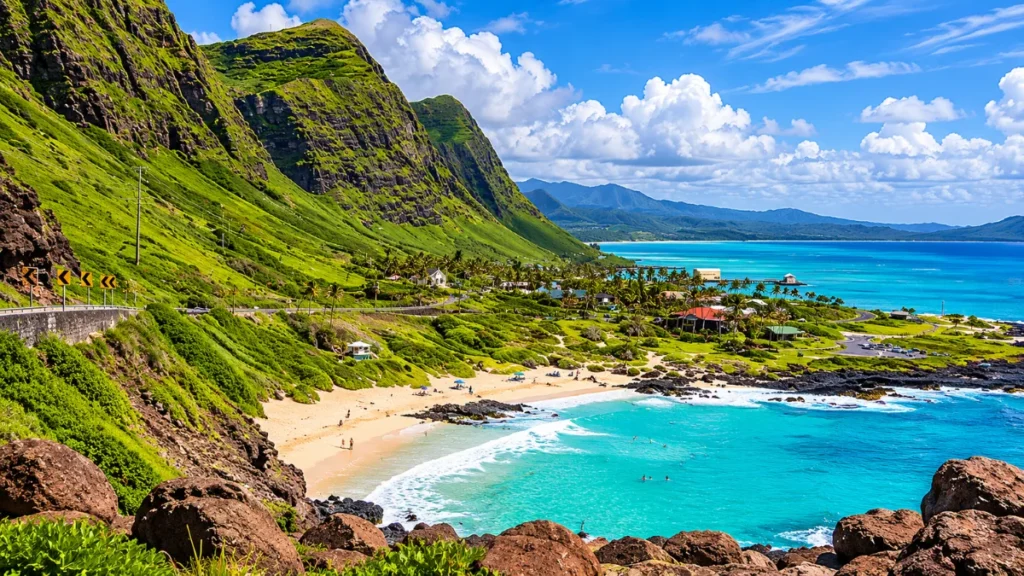
Many travelers comparing Pacific island destinations eventually ask a very practical question: is Fiji expensive compared to Hawaii? It is a fair concern. Both places look beautiful online, both can involve long flights, and both are often shown through polished resort images that do not always explain the real cost of the trip.
Is Fiji expensive compared to Hawaii? In most cases, Fiji is usually less expensive than Hawaii for accommodation, food, and many day-to-day travel costs. However, Fiji can still become expensive when you add luxury resorts, island transfers, meal plans, and premium experiences. Hawaii often costs more overall, but it usually offers more convenience, activity variety, and easier travel infrastructure.
This comparison can feel confusing because Fiji and Hawaii do not offer the same kind of Pacific experience. Hawaii often feels more developed, flexible, and activity-friendly. Fiji often feels slower, more relaxed, and more remote, especially once you move away from the main arrival areas.
This article compares Fiji and Hawaii in a realistic way, looking at travel costs, accommodation, food, activities, atmosphere, pacing, expectations, and which destination may feel more worth it for your travel style.
Is Fiji Expensive Compared to Hawaii? Quick Answer
Fiji is usually not as expensive as Hawaii for many travelers, especially when comparing accommodation and local dining. Mid-range travelers may find better value in Fiji, particularly if they choose carefully and avoid very remote luxury resorts.
However, Fiji is not always a cheap destination. Resort meal plans, boat transfers, private island stays, and imported goods can make the final cost higher than expected.
Hawaii is often more expensive overall, but it can also feel easier to plan. Travelers usually have more restaurants, roads, shops, activities, and accommodation types to choose from. That convenience is part of what some travelers are paying for.
Fiji vs Hawaii Cost Comparison
If you are comparing Fiji and Hawaii mainly by cost, it helps to look beyond the flight and hotel price. The real budget picture depends on how you eat, where you stay, how often you move around, and what kind of island experience you want.
| Travel Cost Area | Fiji | Hawaii |
|---|---|---|
| Accommodation | Often better value, especially outside luxury private islands | Usually higher in popular resort areas |
| Food | Can be cheaper locally, but resort meals add up | Often expensive, especially restaurant dining |
| Activities | Moderate to high depending on tours and island location | Wide range, but many paid activities can be costly |
| Transport | Island transfers can become expensive | Car rental, parking, and inter-island flights can add costs |
| Convenience | Less developed outside main areas | Generally easier and more flexible |
| Overall Value | Often better for relaxation and resort stays | Often better for activities, variety, and convenience |
This table does not mean Fiji is always the cheaper choice for every traveler. It simply shows the general pattern many travelers notice when comparing the two destinations.
The Real Pacific Travel Reality Check
Pacific travel can be beautiful and memorable, but it is not always as simple as the photos suggest. Both Fiji and Hawaii are island destinations, and that affects prices in practical ways.
Imported goods often cost more. Transport can take longer. Weather can shift plans. Remote locations may have fewer choices. A meal, transfer, or activity that feels ordinary in a mainland city can cost more when it has to be supported by island logistics.
Fiji often feels more affected by remoteness once travelers move away from the main tourism areas. Hawaii has stronger infrastructure, but many everyday costs are still high because of distance, tourism demand, and island supply chains.
This does not make either destination bad value. It simply means travelers should compare them with realistic expectations instead of expecting mainland prices in a tropical setting.
What Many Travel Articles Miss About Fiji and Hawaii
Many travel articles compare Fiji and Hawaii by showing beaches, hotels, and honeymoon packages. Those details matter, but they do not fully explain whether a destination will feel worth the money.
Value is emotional as well as financial. A traveler may spend less in Fiji but feel disappointed if they expected easy sightseeing and constant activity. Another traveler may spend more in Hawaii but feel it was worth it because they enjoyed the freedom to explore, drive, eat out, and plan each day differently.
Fiji and Hawaii also feel different in person. Fiji often gives travelers a slower, softer, more disconnected feeling. Hawaii often feels more energetic, accessible, and varied. The better value depends on which feeling you actually want from your trip.
Fiji vs Hawaii Expectation vs Reality
Both destinations are often marketed with the same kind of travel language: tropical paradise, dream island escape, turquoise water, and unforgettable beaches. But the real experience is more practical and more varied than that.
| What Travelers Often Expect | What The Experience Often Feels Like |
|---|---|
| Fiji is always cheap | Fiji can be cheaper than Hawaii, but remote resorts and transfers can raise costs |
| Hawaii is only for luxury travelers | Hawaii is expensive, but it also offers many travel styles and accommodation types |
| Both destinations feel similar | Fiji often feels slower and quieter, while Hawaii often feels more developed and active |
| Island travel is always simple | Transfers, weather, ferry schedules, and flights can affect timing and budget |
| Resort photos show the whole experience | The real trip includes food costs, transport, weather, crowds, and daily pacing |
| The cheaper destination is automatically better value | The better value depends on your travel style, expectations, and comfort needs |
One of the biggest differences is that Fiji often feels more like a slow escape, while Hawaii often feels like an island destination with more movement and choice.
Fiji vs Hawaii: Budget Expectation vs Reality
A simple budget comparison can help travelers avoid surprises. Fiji may look cheaper at first, but the final cost depends heavily on resort style, meal plans, and transfers. Hawaii may look expensive early, but some travelers find it easier to control daily spending because there are more choices nearby.
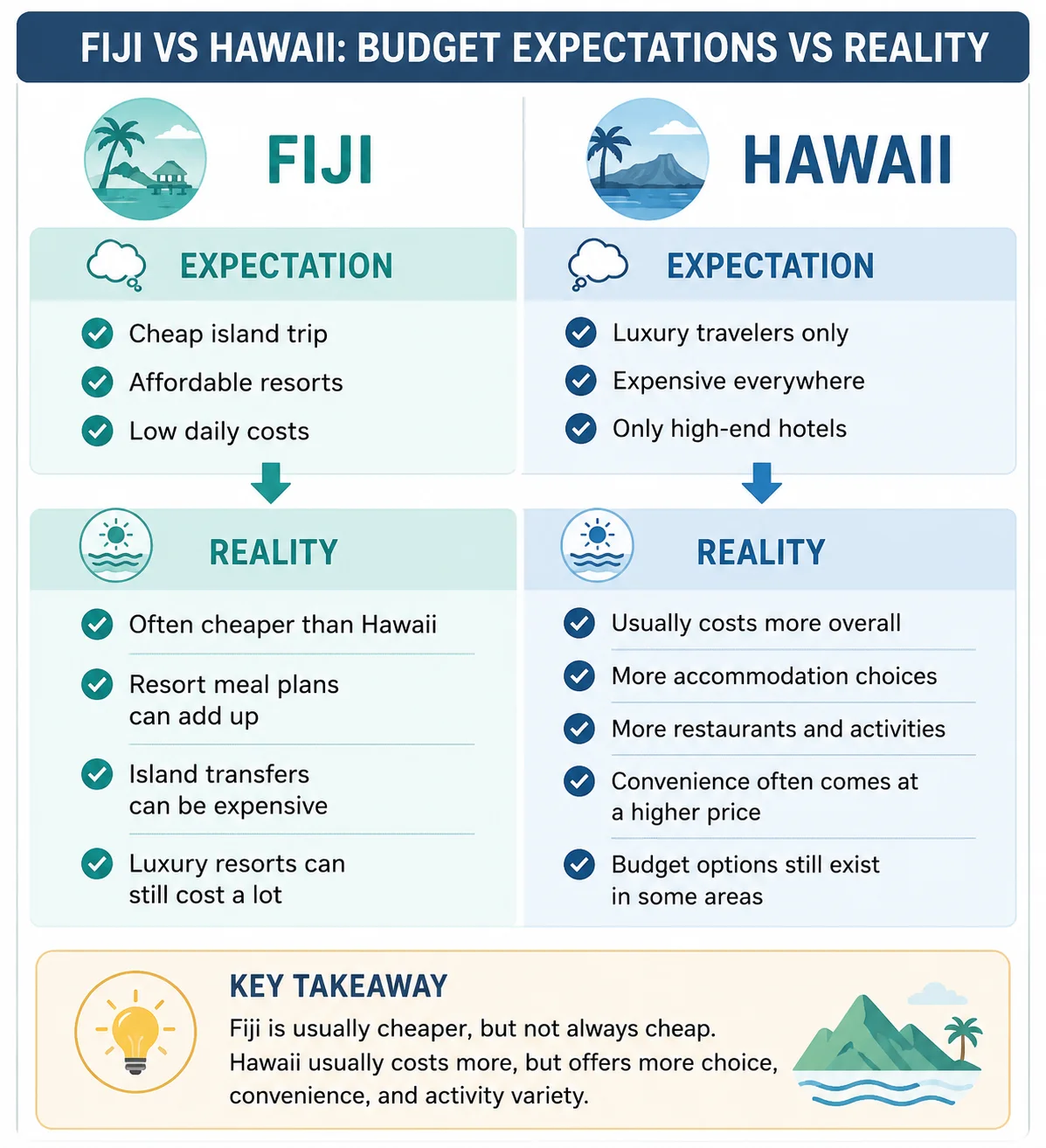
For many travelers, Fiji feels like better value when the goal is rest, beachfront accommodation, and a slower resort-style holiday. Hawaii may feel like better value when the goal is activity variety, road trips, food choices, and convenience.
Accommodation Costs
Accommodation is usually where travelers notice the clearest cost difference. Fiji often offers stronger value for beachfront stays, especially for travelers who are not booking the most exclusive private island resorts.
Mid-range Fiji resorts, smaller island properties, and some family-friendly stays may feel more affordable than similar resort-style accommodation in Hawaii.
Hawaii usually has higher hotel prices in popular areas, especially places such as Waikiki, Maui, and major resort zones. However, Hawaii also offers more accommodation variety, including hotels, condos, vacation rentals, and budget-friendly options in some areas.
The main difference is choice. Fiji may offer better value if you choose the right resort. Hawaii may offer more flexibility if you want to adjust your budget through location, transport, and food choices.
Food and Dining Costs
Food costs can surprise travelers in both destinations.
In Fiji, eating at local restaurants or simpler places can be much more affordable than dining at resort restaurants every day. But once travelers stay on a remote island resort, food choices may become limited. In those settings, meal plans and resort dining can make the trip feel more expensive.
Hawaii restaurant prices are often high, especially in tourist areas. Eating out for every meal can quickly increase the total cost of the trip. However, Hawaii usually offers more choice, including supermarkets, casual food spots, cafés, food trucks, and local-style meals.
This means Fiji can be cheaper for food, but Hawaii may be easier for travelers who want more control over where and how they eat.
Activities, Tours, and Daily Spending
Fiji and Hawaii differ strongly in how travelers spend their days.
In Fiji, many travelers spend more time around the resort, beach, pool, reef, or nearby island area. Activities may include snorkeling trips, village visits, boat tours, cultural evenings, diving, kayaking, or spa experiences.
In Hawaii, travelers often build fuller days. Road trips, hikes, beaches, cultural sites, food stops, scenic drives, surf lessons, tours, shopping, and national parks can all become part of the trip.
Hawaii may cost more because travelers often do more. Fiji may feel less expensive if the trip is slower and less activity-heavy. This is why pacing matters when comparing travel budgets.
Transport and Island Logistics
Transport is one of the easiest costs to underestimate.
In Fiji, the price can change significantly depending on where you stay. A resort near Nadi or Denarau may be easier to reach, while outer island resorts may require boat transfers, domestic flights, or arranged transport.
In Hawaii, travelers may need rental cars, parking, fuel, or inter-island flights. These costs can add up, especially for travelers who want to explore beyond one resort area.
Fiji transport can feel more remote and schedule-dependent. Hawaii transport can feel more flexible but still expensive.
Atmosphere and Feel
Cost matters, but atmosphere often decides whether the trip feels worth it.
Fiji often feels calm, warm, and slower. The pace can feel soft around the edges. Days may move through breakfast, beach time, swimming, resting, and quiet evenings. On smaller islands, the soundscape can be simple: waves, wind, voices, and resort music in the distance.
Hawaii often feels more energetic and layered. You can wake up near the beach, drive to a lookout, stop for food, visit a town, hike, shop, and return for sunset. Even when Hawaii feels peaceful, it usually has more movement around it.
Travelers who want to fully slow down may feel Fiji offers better emotional value. Travelers who want options and independence may feel Hawaii justifies the higher cost.
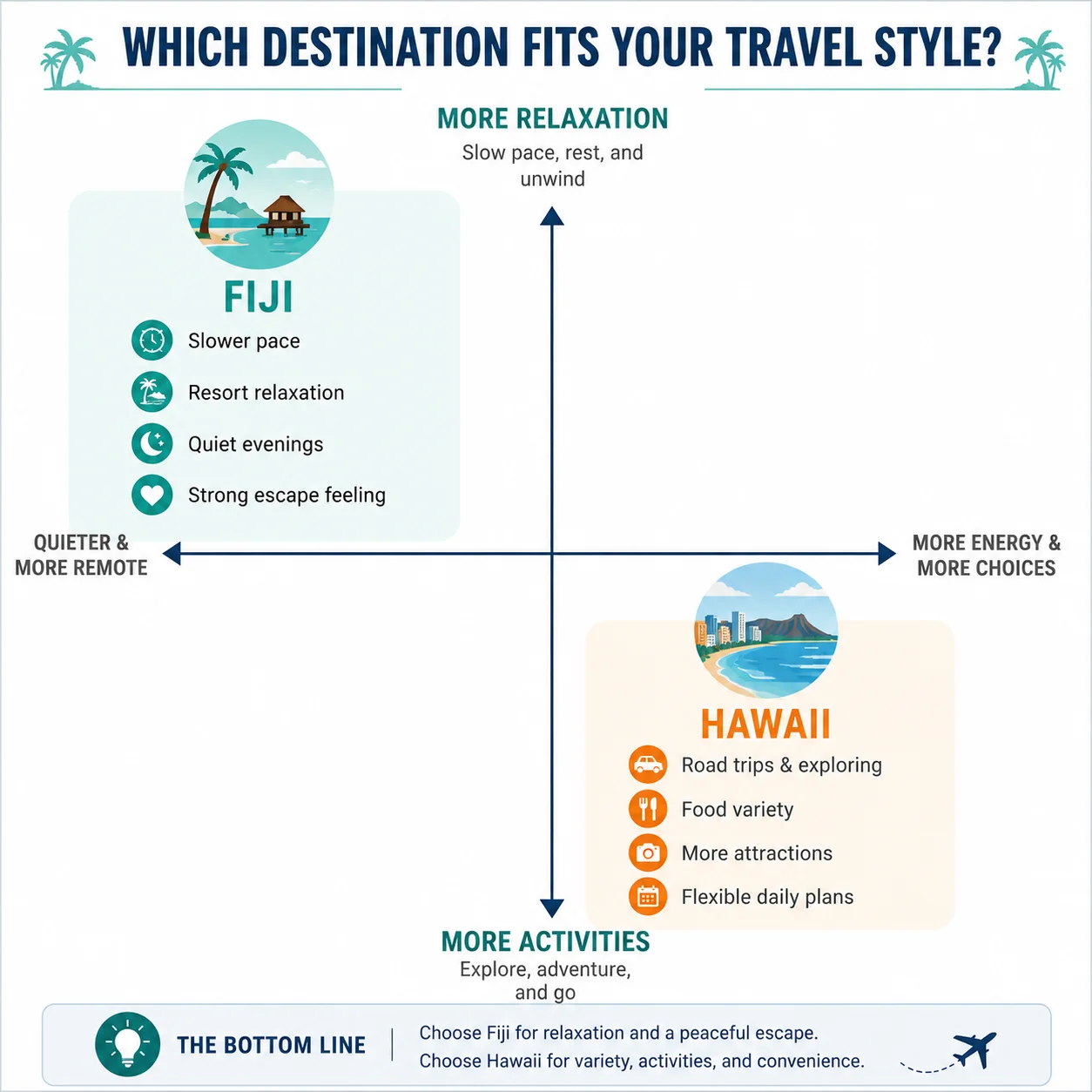
Which Destination Fits Your Travel Style?
Instead of asking only which destination is cheaper, it may be more useful to ask which destination fits the way you naturally enjoy travel.
| If You Prefer… | Better Match |
|---|---|
| Slower resort days | Fiji |
| Road trips and independent exploring | Hawaii |
| Better beachfront resort value | Fiji |
| More dining choices | Hawaii |
| A quieter emotional atmosphere | Fiji |
| More activities in one trip | Hawaii |
| A stronger feeling of escape | Fiji |
| More convenience and flexibility | Hawaii |
If this is your first time comparing both destinations, our article on Hawaii vs Fiji for First-Time Pacific Travelers may also help you understand the broader travel-style differences.
Where Your Travel Budget Usually Goes
Most travelers do not overspend in one single area. The total cost usually grows through a combination of accommodation, meals, transfers, activities, and small daily choices.
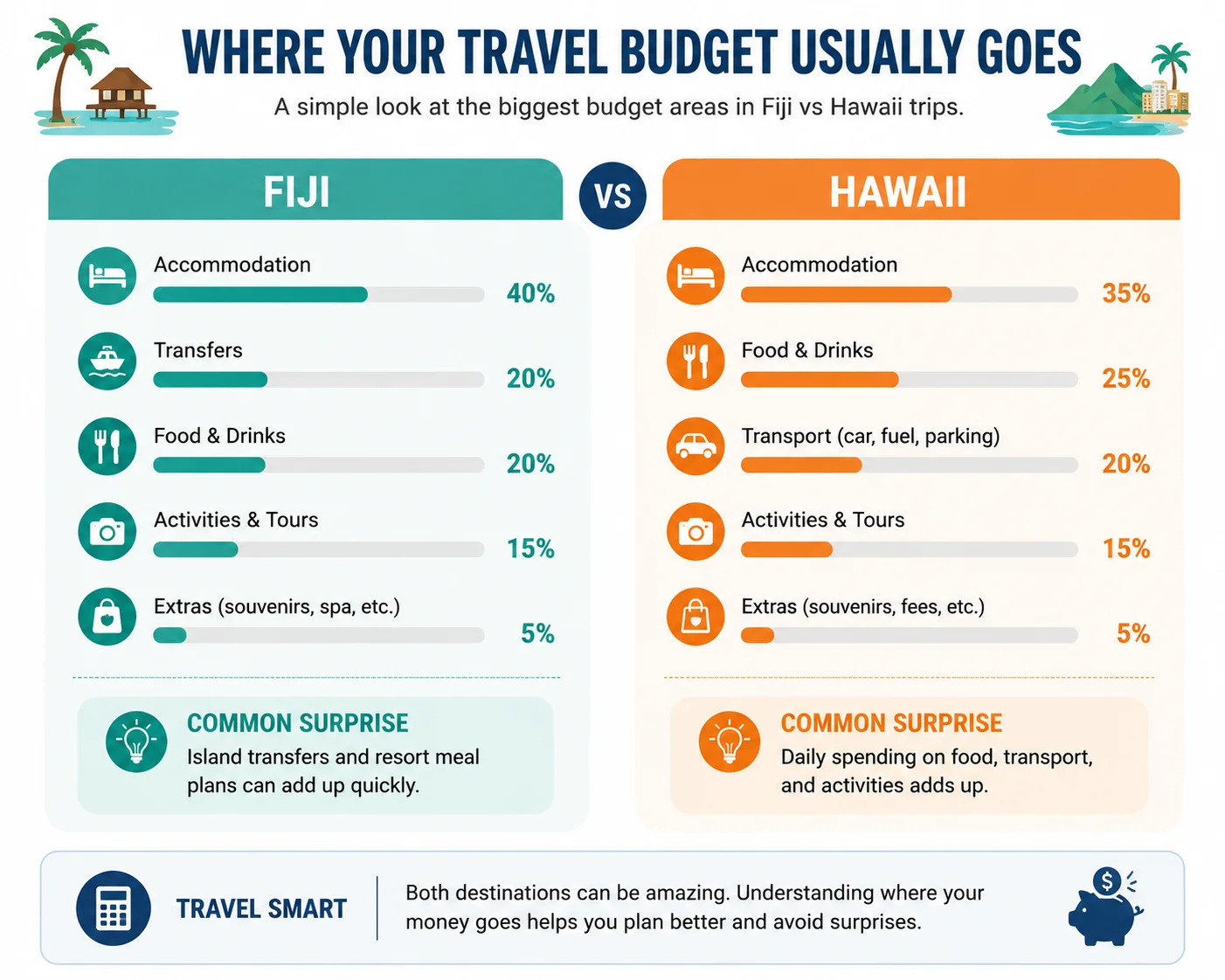
In Fiji, the biggest surprises are often resort meals and transfers. In Hawaii, the biggest surprises are often accommodation, restaurants, parking, car rental, and daily activities.
For a deeper Fiji-focused cost guide, you may also find How Expensive Is Fiji Really in 2026? useful before estimating your travel budget.
Best For and Not Ideal For
Both destinations can be worth the journey, but they suit different travelers. Knowing this before booking helps reduce disappointment.
Fiji Is Best For
- Travelers who want a slower island holiday
- Couples looking for a relaxed resort escape
- Families wanting beachfront resort value
- Travelers who prefer quiet evenings and simple days
- Visitors who want a stronger feeling of disconnection
- People who value atmosphere more than constant activity
Fiji May Not Be Ideal For
- Travelers wanting busy nightlife
- Visitors who dislike flexible island timing
- People who want easy independent sightseeing every day
- Travelers expecting everything to be cheap
- Visitors who feel uncomfortable with remote logistics
Hawaii Is Best For
- First-time Pacific travelers wanting convenience
- Travelers who enjoy road trips and sightseeing
- Families wanting many food and activity choices
- Visitors who want beaches plus towns, hikes, shops, and attractions
- Travelers who prefer flexible daily planning
- People who want a mix of nature and developed tourism
Hawaii May Not Be Ideal For
- Travelers trying to minimize costs as much as possible
- Visitors wanting a very quiet and remote island feeling everywhere
- People who dislike crowds in popular areas
- Travelers who want a simple resort-only escape
- Visitors who may feel stressed by high daily spending
Practical Travel Insights
When planning around real budgets, it helps to think about the full travel experience rather than only comparing hotel prices.
- Choose Fiji if you want better resort value and a slower pace.
- Choose Hawaii if you want more activities, restaurants, and convenience.
- Check Fiji transfer costs before booking an outer island resort.
- Check Hawaii parking, resort fees, and car rental costs before finalizing your budget.
- Leave room in your budget for weather changes, schedule shifts, and slower island timing.
- Travel outside peak holiday periods if your dates are flexible.
- Compare the exact island or resort area, not only the country name.
If you are wondering why some travelers still choose Fiji even when Hawaii is more convenient, our article on Why Do Some Travelers Prefer Fiji Over Hawaii? explores that decision in more detail.
Common Traveler Misunderstandings
One common misunderstanding is thinking Fiji is always cheap. Fiji can be cheaper than Hawaii, but it is still a Pacific island destination with imported goods, resort pricing, and transfer costs.
Another misunderstanding is assuming Hawaii is only expensive because it is famous. Hawaii is expensive partly because of demand, but also because it offers strong infrastructure, many activities, and more travel convenience.
Some travelers also assume the cheaper destination automatically offers better value. That is not always true. If you want independent exploring, Hawaii may feel worth the higher cost. If you want slow days and a peaceful resort atmosphere, Fiji may feel like the stronger choice.
The most helpful comparison is not just Fiji vs Hawaii. It is Fiji or Hawaii for your budget, travel style, pacing preference, and expectations.
Seasonal and Local Context
Prices in both destinations can change depending on season, school holidays, weather patterns, and demand. Peak travel periods usually bring higher prices and busier accommodation.
Fiji’s wetter season can sometimes bring better deals, but weather may feel more humid and less predictable. Hawaii also has busier and quieter periods, with prices often rising around major holidays and school vacation times.
Shoulder seasons can be useful for travelers who want a calmer balance between weather, cost, and crowds. As with most Pacific travel, flexibility often helps.
Pacific Worth Note: I think the most useful way to compare Fiji and Hawaii is to look beyond the price tag. Fiji often feels valuable because it slows the trip down. Hawaii often feels valuable because it gives travelers more freedom to move. The better choice depends on which kind of value you actually need.
Frequently Asked Questions
Is Fiji cheaper than Hawaii?
Fiji is usually cheaper than Hawaii for many travelers, especially for accommodation and some local dining. However, luxury resorts, island transfers, and meal plans can make Fiji more expensive than expected.
Is Fiji expensive for couples?
Fiji can be affordable for couples compared with Hawaii, especially if they choose mid-range resorts and avoid too many premium extras. However, honeymoon-style resorts and private island stays can become expensive.
Is Hawaii worth paying more for?
Hawaii may be worth paying more for if you want road trips, many restaurants, easy activities, shopping, hiking, and more developed tourism infrastructure.
Which is better value, Fiji or Hawaii?
Fiji is often better value for relaxation, resort stays, and a slower island atmosphere. Hawaii is often better value for travelers who want activities, convenience, and variety.
Why is Fiji still expensive if it is cheaper than Hawaii?
Fiji can still be expensive because many goods are imported, some resorts are remote, transfers can cost more, and resort dining may be the main option in certain locations.
Final Thoughts
So, is Fiji expensive compared to Hawaii? Usually, Fiji is less expensive than Hawaii, especially for travelers focused on accommodation value, slower days, and resort relaxation.
But Fiji is not automatically cheap. The final cost depends on the resort, island location, transfers, meals, and the type of experience you choose.
Hawaii usually costs more, but it also offers more convenience, activities, food choices, roads, and flexibility. For some travelers, that extra cost feels worthwhile.
The better destination is not only the cheaper one. It is the one that fits your budget, your travel pace, your expectations, and the kind of Pacific experience you want to remember.
That is often what makes a journey truly worth it.
Leave a Reply