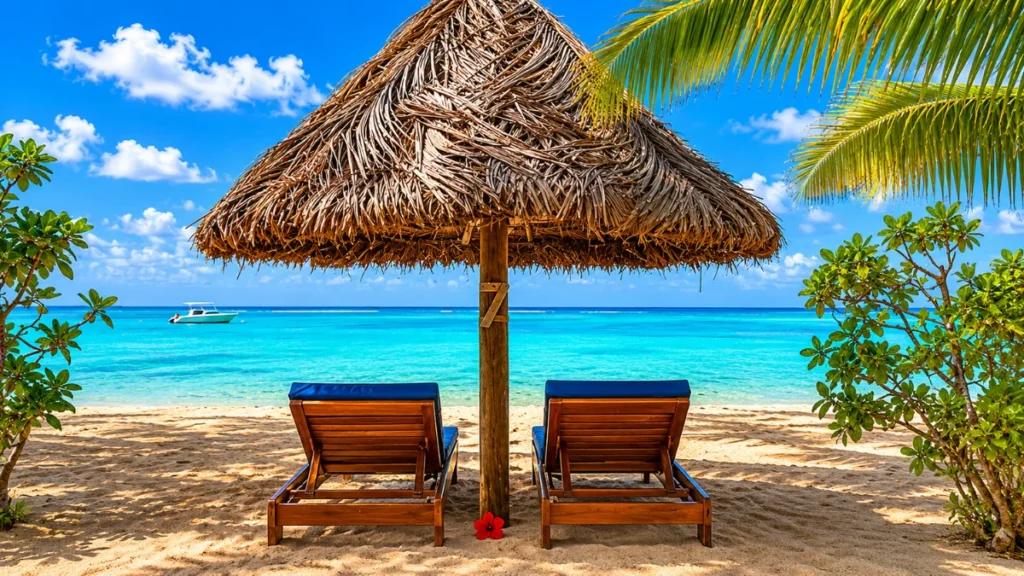
For many travelers, Fiji sits in an unusual place when planning a Pacific trip. It is famous enough to feel familiar, but the real cost can still be confusing. Some people see Fiji as a luxury honeymoon destination, while others hear about backpackers visiting on tighter budgets. That mix can make travelers wonder how expensive Fiji really is in 2026.
Fiji can feel moderately expensive in 2026, especially when travelers add island transfers, resort meals, imported goods, and activities. But Fiji is not only a luxury destination. The real cost depends on where you stay, how often you move between islands, your food choices, and whether you want a simple, mid-range, resort-focused, or luxury-style trip.
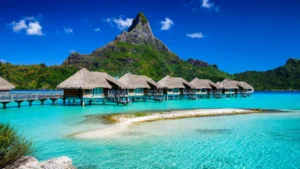
Part of the confusion comes from how Fiji is shown online. Social media often highlights polished resorts, empty beaches, private pools, and perfect weather, but it rarely shows transfer costs, food prices, slower island logistics, or the difference between staying on the main island and staying in remote resort areas.
This article will help you understand what Fiji genuinely feels like financially, where the costs usually rise, which travel styles suit Fiji best, and how to plan a trip that feels worth the journey without creating unrealistic expectations.
Fiji’s Real Cost Reality in 2026
Fiji is not cheap in the same way some Southeast Asian destinations can feel cheap, but it is also not automatically out of reach. The cost sits in a middle space. It can be manageable for travelers who plan carefully, but it can become expensive very quickly when the trip is built around island resorts, frequent transfers, private experiences, and imported food.
The main reason Fiji can feel expensive is geography. Many island areas rely on transported goods, fuel, imported products, and resort-based services. Once travelers move away from the main island, there are often fewer casual dining options and less pricing flexibility.
This does not mean Fiji is poor value. It simply means travelers need to understand what they are paying for. In Fiji, cost is often linked to location, convenience, comfort, remoteness, and how much of the trip is arranged around resort infrastructure.
What Many Travel Articles Miss About Fiji Costs
Many Fiji travel articles talk about hotels, beaches, and activities, but they do not always explain how the trip feels once the daily spending begins. A resort may look peaceful and simple online, but if every meal, drink, transfer, and activity is attached to resort pricing, the budget can rise quietly.
Another thing many articles miss is that Fiji has different cost personalities. Staying around Nadi, Denarau, or the Coral Coast feels very different from staying in the Mamanuca or Yasawa Islands. One version of Fiji gives travelers more choice and flexibility. Another version gives travelers beauty, remoteness, and convenience, but usually at a higher cost.
This is why Fiji is better understood as a destination with layers. The question is not only “Is Fiji expensive?” but “Which version of Fiji are you planning?”
Some travelers are not only comparing Fiji with other Pacific islands but also with larger tropical destinations. If that sounds familiar, our guide on whether Fiji is expensive compared to Hawaii explores where the costs differ and why the overall travel experience can feel surprisingly different.
Fiji Cost Expectation vs Reality
Fiji often feels most expensive when travelers arrive with expectations shaped by polished resort marketing. The destination can absolutely feel beautiful and calming, but the everyday costs are not always as light as the tropical imagery suggests.
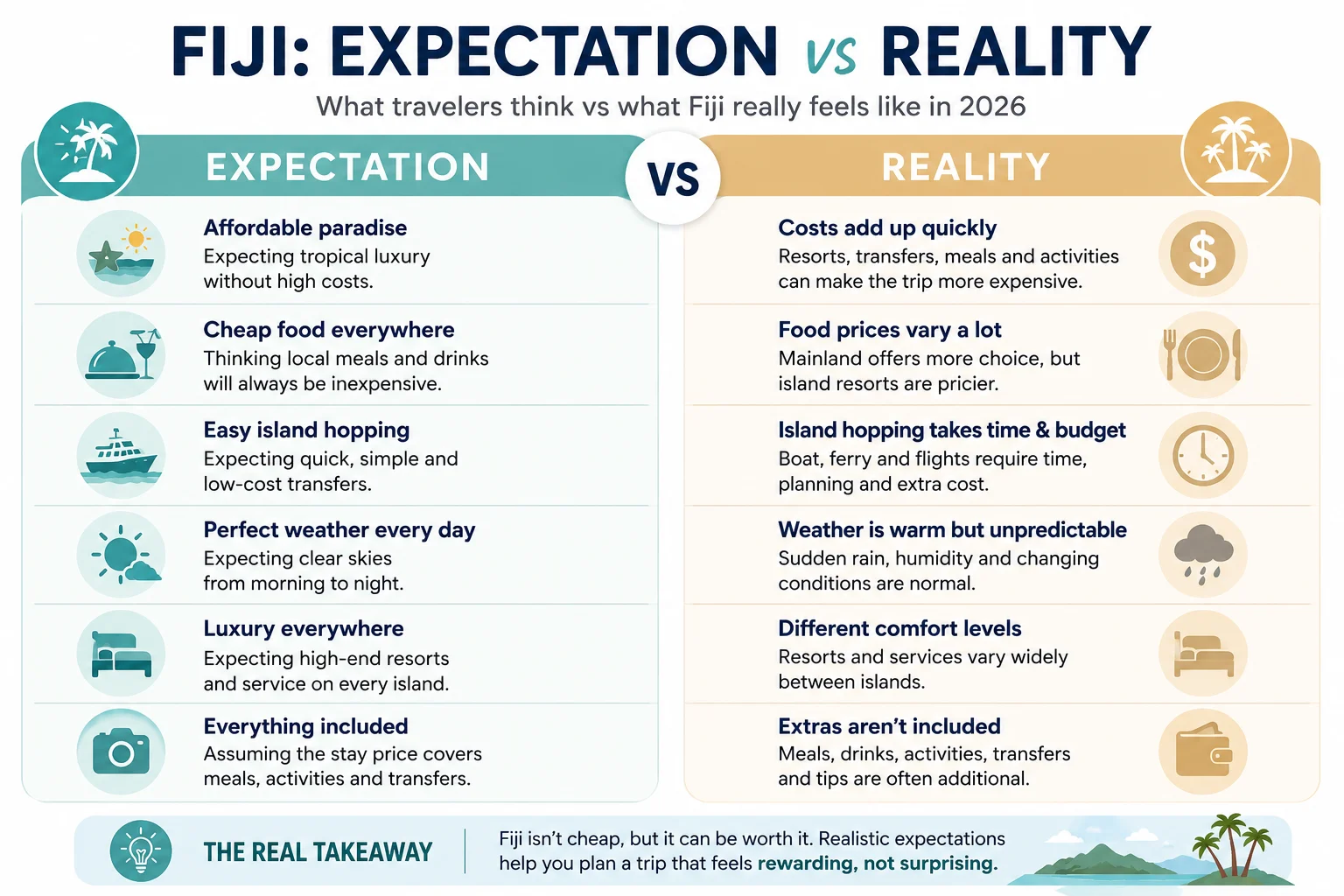
| What Travelers May Expect | What Fiji Often Feels Like |
|---|---|
| Affordable tropical luxury everywhere | Luxury exists, but polished resort areas can become expensive quickly |
| Cheap local food near every stay | Mainland areas offer more choice, while island resorts may limit dining options |
| Easy island hopping | Transfers require time, planning, and extra budget |
| Perfect weather every day | Tropical weather can change quickly, especially in wetter months |
| Every island feels similar | Mainland Fiji, resort islands, and remote island areas can feel very different |
This difference matters because Fiji is not disappointing when it costs more than expected. It simply needs to be planned with the right kind of expectations.
Fiji Budget Expectation Table
The easiest way to understand Fiji’s cost is by travel style. Two travelers can visit Fiji in the same year and have completely different financial experiences depending on where they stay and how they move.
| Travel Style | Budget Expectation | What It Usually Feels Like |
|---|---|---|
| Budget-conscious | Lower to moderate | Possible with simple stays, fewer transfers, local meals, and flexible expectations |
| Mid-range | Moderate | Comfortable, but costs build through meals, activities, transport, and island choices |
| Resort-focused | Moderate to high | Relaxing and convenient, but dining and activities are often less flexible |
| Luxury honeymoon | High to very high | Private, polished, and memorable, but usually priced around comfort and exclusivity |
| Slow mainland-based travel | More manageable | More choice around food, transport, accommodation, and day-to-day spending |
For many real travelers, a balanced Fiji trip often means mixing comfort with restraint. A few special experiences can feel more worthwhile than trying to turn the whole trip into a luxury itinerary.
Fiji Island Cost Comparison
Not every part of Fiji feels expensive in the same way. Some areas feel easier and more flexible, while others feel more remote, polished, and resort-dependent.
| Fiji Area | Cost Feel | Best For | What to Expect |
|---|---|---|---|
| Nadi | More flexible | Short stays, arrivals, departures, budget control | Practical and convenient, but not always the dream island atmosphere travelers imagine |
| Denarau | Moderate to high | Resort comfort, families, easy access | Polished and convenient, but more resort-oriented and less local-feeling |
| Coral Coast | Moderate | Families, couples, slower mainland stays | A good balance of beach atmosphere, resort choice, and mainland flexibility |
| Mamanuca Islands | High | Couples, resort escapes, short island stays | Beautiful and polished, but transfers, meals, and activities can add up |
| Yasawa Islands | Moderate to high | Remote scenery, slower island travel, simple beauty | More remote and atmospheric, with longer transfers and fewer casual spending choices |
| Vanua Levu | Variable | Quieter travelers, diving, less commercial trips | Less mainstream, often calmer, but logistics require more planning |
This is why comparing Fiji as one single price point can be misleading. The island or region you choose has a major impact on the emotional and financial shape of the trip.
Who Fiji Suits Best
Fiji can suit many travel styles, but it does not suit everyone equally. It works best when travelers choose the version of Fiji that matches their budget, pacing preference, and comfort expectations.
| Traveler Type | Fiji Fit | Why |
|---|---|---|
| Couples | Excellent | Fiji offers calm resort stays, beach settings, and slower romantic pacing |
| Families | Very good | Many resorts are family-friendly, especially around Denarau and the Coral Coast |
| Luxury travelers | Excellent | Private island stays and premium resorts can feel polished and deeply relaxing |
| Budget travelers | Moderate | Possible with careful planning, but Fiji is not always naturally cheap |
| Slow travelers | Very good | Fiji rewards relaxed days, fewer moves, and flexible timing |
| Fast-paced sightseers | Moderate | Moving too often can increase cost and reduce the calm feeling of the trip |
| Nightlife-focused travelers | Limited | Fiji is usually more about relaxation, resorts, beaches, and slower evenings |
Fiji is often best for travelers who want the trip to feel calm, warm, scenic, and relatively easy once they arrive. It is less ideal for travelers who want very cheap daily spending or constant movement.
If you are still deciding whether Fiji is the right first Pacific destination, our comparison of Hawaii vs Fiji for first-time Pacific travelers looks at the differences in comfort, planning, atmosphere, and overall travel style.
Where Fiji Costs Usually Rise
Fiji’s costs often rise in quiet ways. It may not be one single large expense, but a series of smaller resort and island costs that slowly increase the total trip price.
| Cost Area | Why It Adds Up | How to Think About It |
|---|---|---|
| Island transfers | Boats, ferries, private transfers, and domestic travel can increase the total budget | Move less often and choose islands carefully |
| Resort meals | Some island resorts have limited nearby alternatives | Check meal plans and menus before booking |
| Imported goods | Many products need to be transported into Fiji or between islands | Expect some everyday items to cost more |
| Activities | Snorkeling trips, boat tours, diving, and cultural experiences can add up | Choose fewer, more meaningful activities |
| Resort location | Remote settings often reduce food and transport flexibility | Pay attention to what is included |
A Fiji trip usually feels better when travelers leave room in the budget for the costs that do not always appear clearly in the first stage of planning.
What Fiji Feels Like Beyond the Price
Fiji often feels warm, gentle, and slower than travelers expect. In resort areas, mornings can feel quiet and polished, with soft ocean air, slow breakfasts, and a sense that the day does not need to be rushed.
Outside the more curated resort spaces, Fiji can feel more practical and everyday. Roads, towns, markets, villages, and local routines remind travelers that Fiji is not only a holiday backdrop. It is a real place with its own rhythm, limitations, warmth, and daily life.
This difference is important. The most expensive version of Fiji is not always the most meaningful. Sometimes the value comes from choosing a slower pace, staying longer in fewer places, and allowing the trip to feel less performed.
Price is only one part of value. Many visitors choose Fiji not because it is the cheapest option, but because of the atmosphere, hospitality, and slower island pace. You may also enjoy reading why some travelers prefer Fiji over Hawaii to see how travelers often weigh cost against overall experience.
Practical Budget Insights
Fiji becomes easier to plan when travelers think in terms of tradeoffs. You do not need to avoid beautiful experiences, but it helps to know which choices will shape the budget most strongly.
- Stay in fewer places if you want to reduce transfer costs.
- Compare mainland stays with island resort stays before booking.
- Check whether meals are included at remote resorts.
- Travel outside peak holiday periods when possible.
- Leave extra room in the budget for tours, drinks, transfers, and tips.
- Choose one or two special experiences instead of filling every day with paid activities.
- Read recent reviews carefully because value can vary between properties.
A realistic Fiji budget is not only about spending less. It is about spending on the parts of the trip that will actually matter to your travel style.
Common Fiji Cost Misunderstandings
One common misunderstanding is assuming Fiji is either cheap or extremely expensive. In reality, Fiji can sit anywhere between those two depending on how the trip is designed.
Another misunderstanding is thinking that a resort price tells the full story. A resort may look affordable at first, but meals, transfers, activities, drinks, and extra services can change the real cost quickly.
Travelers also sometimes assume island hopping will be simple and affordable because the islands look close on a map. In practice, water transfers and timing can make movement more expensive and slower than expected.
Seasonal and Local Cost Context
Seasonality can affect Fiji’s cost, weather mood, and crowd levels. The drier months are often more attractive for travelers who want easier beach days and more predictable outdoor conditions. Wetter months can still be enjoyable, but they require more flexibility.
Prices can also rise during school holidays and popular travel periods, especially for family-friendly resorts and island stays. Shoulder periods may offer a calmer balance, where weather can still be pleasant and prices may feel less pressured.
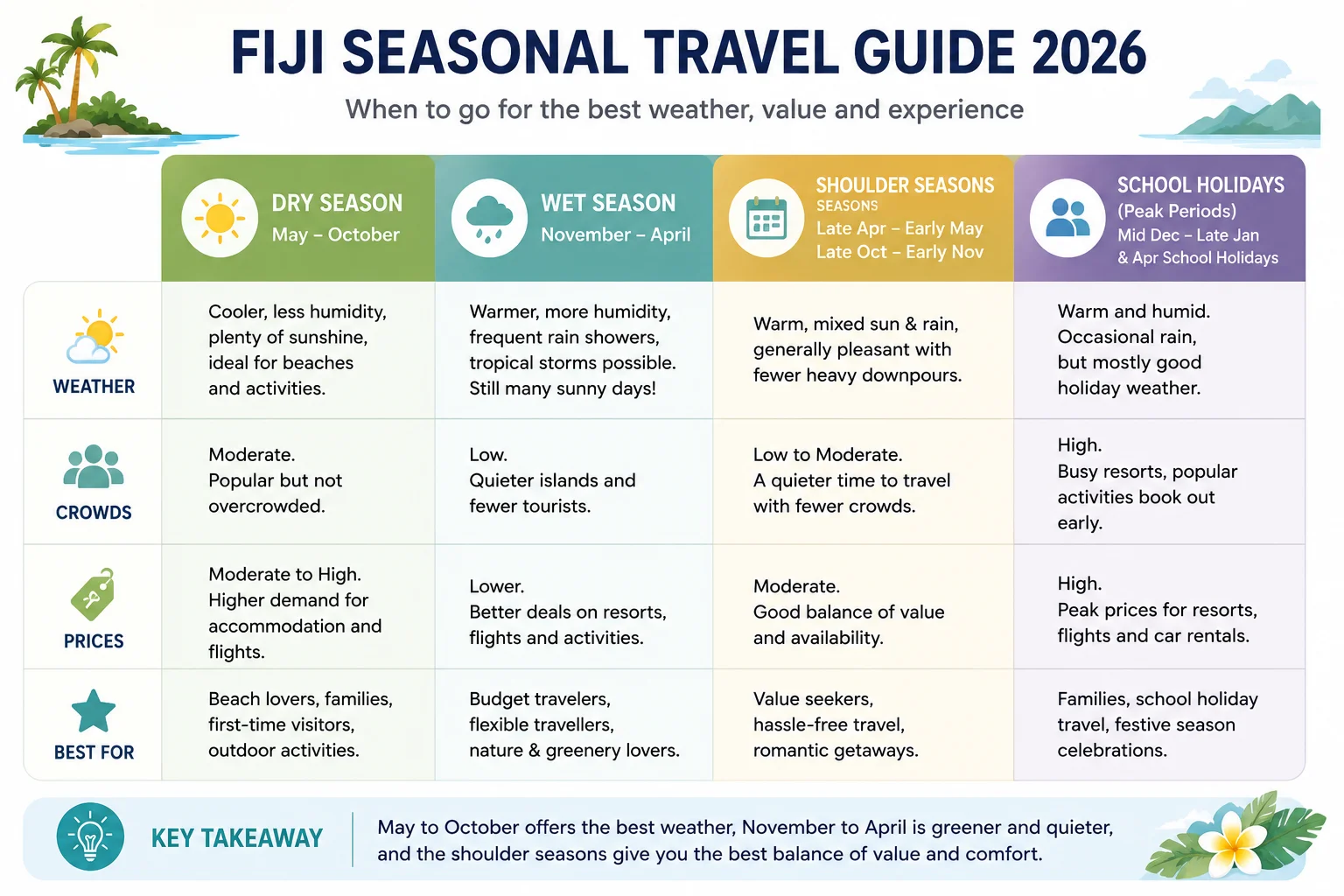
| Season / Period | Cost Feel | Travel Atmosphere | Best For |
|---|---|---|---|
| Dry season | Moderate to high | More comfortable, popular, and easier for outdoor plans | Couples, families, first-time Fiji travelers |
| Wet season | Often more flexible | Humid, greener, quieter, and more weather-dependent | Flexible travelers and slower trips |
| School holidays | Higher | Busier resorts and stronger demand | Families who need fixed dates |
| Shoulder periods | Often balanced | Calmer than peak periods with potentially better value | Travelers seeking a cost-and-comfort balance |
The best time to visit Fiji financially is not always the cheapest time. It is the time that gives you the best balance between cost, weather comfort, crowd levels, and the kind of atmosphere you want.
Pacific Worth Note: I think Fiji often feels more worthwhile when travelers stop trying to make every part of the trip look perfect. A slower stay, fewer transfers, and a few carefully chosen experiences can sometimes feel more memorable than a packed itinerary built around expensive highlights.
Frequently Asked Questions
How expensive is Fiji really in 2026?
Fiji can feel moderately expensive in 2026, especially for resort stays, island transfers, meals, and activities. However, the total cost depends heavily on whether travelers stay on the mainland, visit outer islands, choose simple accommodation, or build a luxury-style trip.
Is Fiji expensive for couples?
Fiji can be expensive for couples if the trip is built around private resorts, island transfers, romantic dinners, and premium experiences. Couples can keep costs more balanced by staying in fewer places, choosing mainland or Coral Coast stays, and selecting only a few special activities.
Can you visit Fiji on a budget?
Yes, Fiji can be visited on a budget, but it requires realistic expectations. Budget travelers usually need simpler accommodation, fewer transfers, local food options, and more flexibility. Fiji is not always naturally cheap, but it can be more manageable with careful planning.
Which part of Fiji is most affordable?
Mainland areas such as Nadi and parts of the Coral Coast usually give travelers more flexibility with accommodation, food, and transport. Remote island resorts often feel more expensive because dining and transfers are less flexible.
Is Fiji worth the cost?
Fiji can be worth the cost for travelers who want a warm, slower, beach-focused Pacific trip and who plan around realistic budgets. It may feel less worthwhile for travelers expecting very cheap luxury, fast island hopping, or constant low-cost entertainment.
Final Thoughts
So, how expensive is Fiji really in 2026? The honest answer is that Fiji is not a cheap destination for every traveler, but it is also not only for luxury visitors. It becomes expensive when travelers chase the most polished version of Fiji without understanding the hidden costs around transfers, meals, activities, and resort locations.
For many real travelers, Fiji feels most worthwhile when the trip is planned with calm expectations. Staying longer in fewer places, choosing the right region, understanding resort costs, and leaving room for slower island pacing can make the experience feel more balanced.
Fiji is not just a destination to price-check. It is a destination to match with your travel style. When the budget, atmosphere, and expectations line up properly, Fiji can still feel truly worth the journey.
Leave a Reply