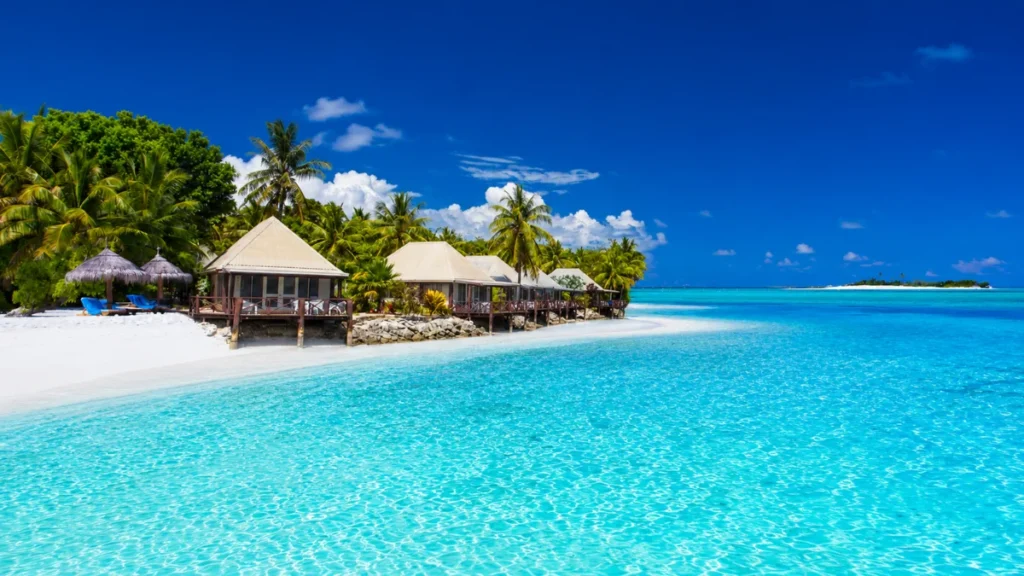
Travelers often compare Fiji and Hawaii because both are famous Pacific destinations with beaches, resorts, tropical scenery, and island experiences. But once people start planning seriously, the decision can feel more complicated. Flights are expensive, vacation time is limited, and social media often makes every island look equally perfect.
Many travelers prefer Fiji over Hawaii because Fiji often feels slower, quieter, more remote, and emotionally calmer. Hawaii usually offers more convenience, infrastructure, nightlife, shopping, and activities, while Fiji tends to appeal more to travelers wanting a softer pace, resort-focused relaxation, island disconnection, and a less commercial atmosphere.
Part of the confusion comes from how differently these destinations are shown online. Hawaii is often presented through polished tourism imagery and activity-focused travel content, while Fiji is frequently shown through honeymoon resorts, overwater-style luxury, and quiet island escapes. In reality, both destinations offer different versions of Pacific travel depending on budget, island choice, expectations, and travel style.
This article will help explain why some travelers prefer Fiji over Hawaii, what each destination genuinely feels like, where the tradeoffs sit, and which type of traveler may feel more naturally suited to each island experience.
Real Pacific Travel Reality Check
Pacific travel often feels slower and less predictable than many travelers expect. Weather can shift quickly, transfers can take longer than planned, ferry or boat schedules may require flexibility, and remote island stays rarely move with the same pace as major city holidays.
Fiji especially can feel more relaxed in both positive and challenging ways. Some travelers love this almost immediately. Others may find it frustrating if they expect fast service, tightly planned activities, or constant convenience.
Hawaii usually feels easier to navigate. Roads, supermarkets, transport options, internet access, restaurants, and tourism infrastructure are generally more developed. That convenience can reduce stress, but for some travelers it also makes Hawaii feel less emotionally removed from everyday life.
This is one reason Fiji can feel more memorable to certain travelers. The slower rhythm, quieter resort evenings, and sense of distance can make the trip feel less like a busy holiday and more like a true pause.
If you are comparing both destinations as a first Pacific trip, you may also find this guide helpful: Hawaii vs Fiji for first-time Pacific travelers. It looks more closely at comfort, planning, atmosphere, and which destination may feel easier for a first visit.
What Many Travel Articles Miss
Many travel articles compare Fiji and Hawaii through beaches, hotels, and activities. Those things matter, but they do not fully explain why a traveler might prefer one destination over the other.
The deeper difference is atmosphere. Hawaii often feels active, polished, social, and convenient. Fiji often feels slower, softer, quieter, and more disconnected. Neither feeling is automatically better. They simply suit different personalities.
This is why the question is not just “Which destination is better?” A more helpful question is: “Which destination matches the way I want my trip to feel?”
Fiji vs Hawaii Expectation vs Reality
Fiji and Hawaii can both disappoint travelers when expectations are shaped only by social media. Both destinations are beautiful, but neither is perfect every day, empty everywhere, or equally suited to every travel style.
| What Travelers Often Expect | What the Experience Often Feels Like |
|---|---|
| Fiji is luxury everywhere | Fiji ranges from simple stays and family resorts to private luxury islands |
| Hawaii feels purely relaxing | Some areas of Hawaii feel busy, active, traffic-heavy, and highly developed |
| Fiji is difficult and uncomfortable | Many Fiji resorts are very comfortable, but the pace is usually slower |
| Hawaii is the same on every island | Each Hawaiian island has its own atmosphere, crowd level, and travel rhythm |
| Fiji feels isolated in a negative way | Many travelers enjoy Fiji because the remoteness helps them disconnect |
| Island hopping is simple everywhere | Transfers in both destinations need planning, time, and realistic expectations |
This expectation gap matters because travelers often choose destinations based on images, but enjoy them based on daily rhythm, comfort, movement, weather, and atmosphere.
Destination Comparison Infographic
A simple visual comparison can help readers quickly understand why Fiji and Hawaii feel different even though both are Pacific island destinations.
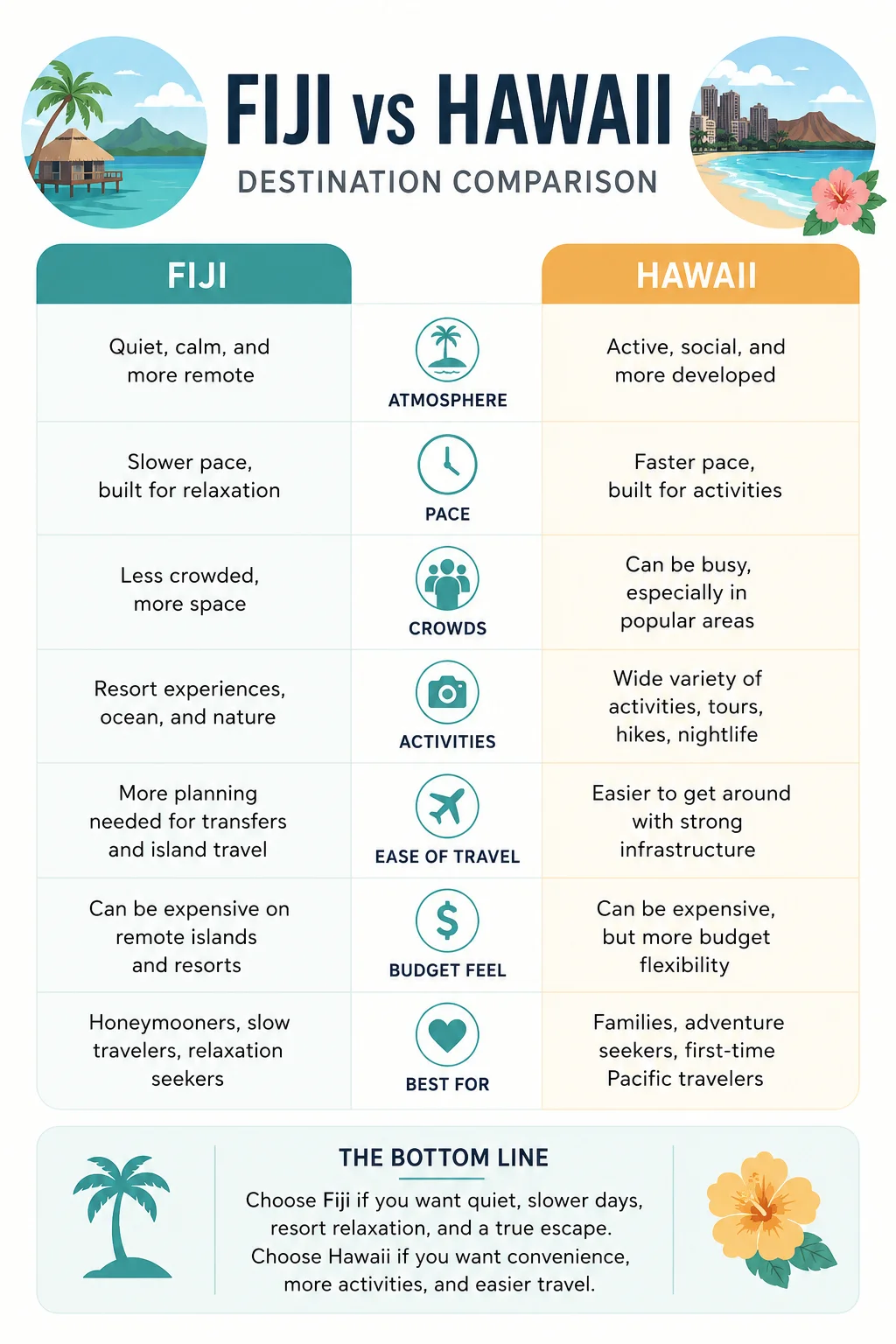
This diagram should compare Fiji’s slower, quieter, resort-focused feeling with Hawaii’s more active, convenient, and activity-rich travel style.
The Atmosphere Difference Matters More Than Many Travelers Expect
One reason some travelers prefer Fiji over Hawaii is the atmosphere itself. Fiji can feel softer and more removed from daily life. Smaller islands may become very quiet at night, and the daily rhythm often moves around meals, water, rest, weather, and gentle resort routines.
Hawaii often feels more developed and connected. Even when the scenery is dramatic, travelers may still feel close to roads, shops, restaurants, tours, traffic, and familiar conveniences. For some people, that is comforting. For others, it makes the trip feel less like a true escape.
Fiji’s atmosphere is not always polished in the same way Hawaii can be. But that slightly slower, more remote feeling is exactly what some travelers find meaningful.
Why Some Travelers Feel Hawaii Is Too Busy
Some travelers arrive in Hawaii expecting a quiet island escape and instead find crowded beaches, busy roads, large hotels, booked-out restaurants, and active tourism zones. This does not mean Hawaii is not beautiful. It simply means Hawaii’s popularity can change the feeling of the trip.
Hawaii often encourages movement. Travelers may drive between beaches, book tours, hike, shop, dine out, visit lookouts, and fill each day with activities. This can be exciting for people who enjoy variety, but tiring for travelers who wanted stillness.
For those travelers, Fiji may feel more emotionally aligned because the destination often gives permission to do less.
Why Fiji Feels More Disconnected
Fiji’s remoteness is one of its biggest tradeoffs. Some islands require boat transfers, domestic flights, limited schedules, and more flexibility. That can feel inconvenient if the traveler wants easy movement and full control over each day.
But for many travelers, this disconnection becomes part of the appeal. Once they arrive, they may stop checking the time as often, move more slowly, and settle into a quieter rhythm.
This is where Fiji can feel more emotionally powerful than Hawaii for some visitors. It may not always offer more to do, but it can offer more space to stop rushing.
Resort Atmosphere Comparison
Resorts in Fiji and Hawaii can both be beautiful, but they often create different emotional experiences. Fiji resorts are frequently built around stillness and staying put, while Hawaii resorts often sit closer to restaurants, roads, shops, and activity hubs.
| Fiji Resorts | Hawaii Resorts |
|---|---|
| Often quieter and slower | Often larger and more activity-focused |
| More isolated island settings | Easier access to towns, shops, and services |
| Frequently designed for longer relaxation | Often built around convenience and activity access |
| Strong honeymoon and retreat appeal | Appeals to families, couples, active travelers, and first-time visitors |
| Can feel more remote and disconnected | Can feel more polished and mainstream |
This difference is important because a traveler may not simply be choosing between two destinations. They may be choosing between two completely different holiday rhythms.
Budget Reality: Fiji Is Not Always Cheaper
Many travelers assume Fiji automatically costs less than Hawaii. That is not always true. Fiji can become expensive when the trip includes remote island resorts, meal plans, private transfers, boat trips, and limited dining flexibility.
Hawaii can also be expensive, especially for accommodation, car hire, resort fees, dining, and peak-season travel. But it often gives travelers more independent options, including supermarkets, casual food, self-driving, and a wider range of accommodation styles.
If cost is one of your biggest deciding factors, this separate guide on whether Fiji is expensive compared to Hawaii breaks down the budget side more directly and explains where each destination can feel cheaper or more expensive.
| Expense Category | Fiji | Hawaii |
|---|---|---|
| Flights | Moderate to high depending on departure city | Moderate to high depending on route and season |
| Resort meals | Often expensive on remote islands with fewer alternatives | Can be expensive, but usually more dining flexibility |
| Transport | Island transfers can add significant cost | Car hire and parking can be costly, but movement is easier |
| Luxury resorts | High, especially private island stays | High, especially major resort areas |
| Budget flexibility | Moderate, stronger on mainland areas | Often better for independent travelers |
| Independent travel | Possible, but more limited outside main areas | Easier and more flexible for most travelers |
Fiji is not always cheaper, but it may feel more worthwhile to travelers who value quiet, remoteness, and emotional disconnection more than constant choice.
Traveler-Fit Chart
The best choice often depends less on which destination is more famous and more on which one fits the traveler’s personality.
| Traveler Type | Fiji Fit | Hawaii Fit |
|---|---|---|
| Honeymoon couples | Excellent | Very good |
| Slow travelers | Excellent | Moderate |
| Adventure travelers | Moderate | Excellent |
| Families | Good | Excellent |
| Budget-conscious travelers | Moderate | Better for flexibility |
| Nightlife seekers | Limited | Better |
| Relaxation-focused travelers | Excellent | Good |
| First-time Pacific travelers | Very good if seeking calm | Very good if seeking convenience |
This is why some travelers return from Fiji feeling deeply rested, while others may have preferred Hawaii’s variety and convenience. The right destination depends on the kind of trip the traveler actually wants.
Best For and Not Ideal For
Fiji Is Often Best For
- Honeymoon travelers
- Slow-paced trips
- Couples wanting quiet resort time
- Travelers wanting emotional disconnection
- Resort-focused holidays
- Travelers prioritizing atmosphere over activity volume
Fiji May Not Be Ideal For
- Rushed itineraries
- Nightlife-focused travelers
- Travelers needing constant activities
- Ultra-budget travel expectations
- Travelers uncomfortable with slower logistics
Hawaii Is Often Best For
- Active travelers
- Families
- First-time Pacific visitors
- Road-trip style holidays
- Mixed adventure and relaxation
- Travelers wanting flexibility and convenience
Hawaii May Not Be Ideal For
- Travelers seeking extreme quiet
- Travelers wanting remote isolation
- Travelers expecting uncrowded tourism everywhere
- Travelers hoping for a deeply disconnected atmosphere
Practical Travel Insights
Before choosing between Fiji and Hawaii, it helps to think honestly about how you want your days to feel. The right choice is not always the destination with the most famous scenery. It is the one that matches your pace, budget, comfort level, and emotional expectations.
- Choose Fiji if you want slower days, fewer crowds, and a more remote resort feeling.
- Choose Hawaii if you want more activities, easier movement, and stronger infrastructure.
- Keep Fiji itineraries simple if you want the trip to feel restful rather than tiring.
- Expect Hawaii to feel busier in popular tourism areas and peak travel periods.
- Budget carefully for Fiji island transfers, meals, and resort-based activities.
- Budget carefully for Hawaii accommodation, car hire, dining, and parking.
- Leave flexible time in both destinations for weather changes and slower travel moments.
A good Pacific trip usually feels better when the itinerary leaves room for the destination’s natural rhythm instead of fighting against it.
For readers leaning toward Fiji but still trying to understand the real spending side, how expensive Fiji really is in 2026 gives a more focused look at where Fiji costs usually rise and how to plan around them.
Common Traveler Misunderstandings
One common misunderstanding is assuming all Pacific islands feel similar. Fiji and Hawaii may both sit in the Pacific imagination, but the daily experience can feel very different.
Another misunderstanding is assuming luxury resorts represent the whole destination. Fiji is more than private island resorts, and Hawaii is more than large hotel zones. Each destination has local life, practical realities, cultural depth, and areas that feel very different from tourism marketing.
Travelers also sometimes underestimate how much pacing affects enjoyment. A person who wants quiet may find Hawaii too busy. A person who wants variety may find Fiji too slow. Neither reaction is wrong. It simply shows why traveler fit matters.
Seasonal and Local Context
Seasonality can affect both Fiji and Hawaii. Fiji’s wetter season can bring humidity, tropical rain, and more weather uncertainty, while drier months may feel more comfortable for beach-focused travel. Hawaii has year-round appeal, but American holiday periods, school breaks, surf seasons, and regional weather differences can affect crowds and prices.
The quieter periods in both destinations can feel more relaxed, but travelers should still plan with flexibility. Island weather is part of the experience, not something that can be fully controlled.
| Planning Factor | Fiji | Hawaii |
|---|---|---|
| Weather mood | Can feel humid, tropical, and changeable, especially in wetter months | Varies by island and region, with different wet and dry sides |
| Peak crowds | Resorts can feel busier during holidays and popular travel periods | Popular areas can feel very busy during US holidays and school breaks |
| Best pacing | Slower stays with fewer transfers often work better | More movement is possible, but overplanning can still feel tiring |
| Flexible scheduling | Very helpful because island logistics can be slower | Helpful for weather, traffic, tours, and crowded attractions |
Travel Pacing Visual
One of the clearest ways to understand the Fiji vs Hawaii difference is to imagine the rhythm of a normal travel day.
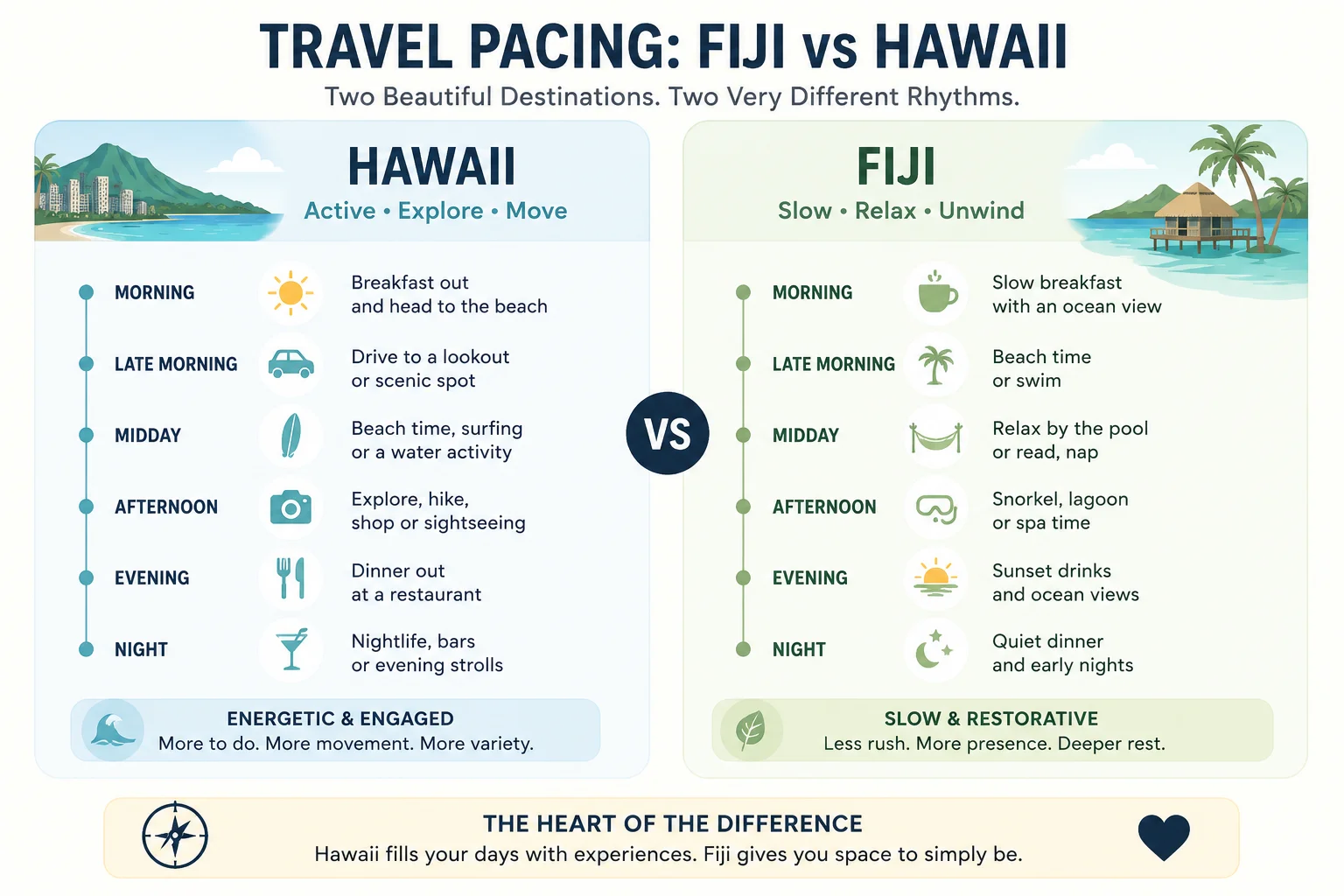
This visual should show Hawaii as more movement-based, with driving, beaches, hikes, dining, shopping, and activities. Fiji should feel slower, with breakfast, ocean time, pool time, rest, sunset, dinner, and quiet evenings.
Pacific Worth Note: I’ve noticed that travelers who enjoy Fiji most are often not looking for the most famous Pacific trip. They usually seem more interested in how a destination feels emotionally once the schedule slows down and everyday pressure starts fading into the background.
Frequently Asked Questions
Why do some travelers prefer Fiji over Hawaii?
Some travelers prefer Fiji over Hawaii because Fiji often feels slower, quieter, more remote, and more emotionally disconnected from daily life. Hawaii usually offers more convenience, activities, and infrastructure, while Fiji often appeals to travelers who want calm resort time and a softer island pace.
Is Fiji more relaxing than Hawaii?
For many travelers, Fiji feels more relaxing than Hawaii because the pace is slower and many resort areas feel quieter. However, Hawaii can also be relaxing if travelers choose the right island, area, and itinerary style.
Is Hawaii easier to travel around than Fiji?
Yes, Hawaii is generally easier to travel around because it has stronger infrastructure, more roads, more services, and more independent travel options. Fiji can require more planning, especially when traveling to outer islands.
Is Fiji cheaper than Hawaii?
Fiji is not always cheaper than Hawaii. Fiji can become expensive through resort meals, island transfers, and remote accommodation. Hawaii can also be costly, but it often provides more flexibility for food, transport, and independent planning.
Which destination is better for first-time Pacific travelers?
Hawaii may feel easier for first-time Pacific travelers who want convenience, activities, and familiar infrastructure. Fiji may feel better for first-time travelers who want slower days, quiet resorts, and a stronger sense of escape.
Final Thoughts
The reason some travelers prefer Fiji over Hawaii often has less to do with beaches and more to do with emotional atmosphere. Hawaii usually offers convenience, energy, flexibility, and variety. Fiji often offers stillness, slower pacing, softer resort rhythms, and a stronger feeling of disconnection from everyday life.
Neither destination is universally better. They simply suit different personalities, expectations, budgets, and travel styles.
For many travelers, the most worthwhile Pacific trip is not necessarily the most famous or luxurious one. It is the destination that matches how they genuinely want to feel once they arrive.
Leave a Reply