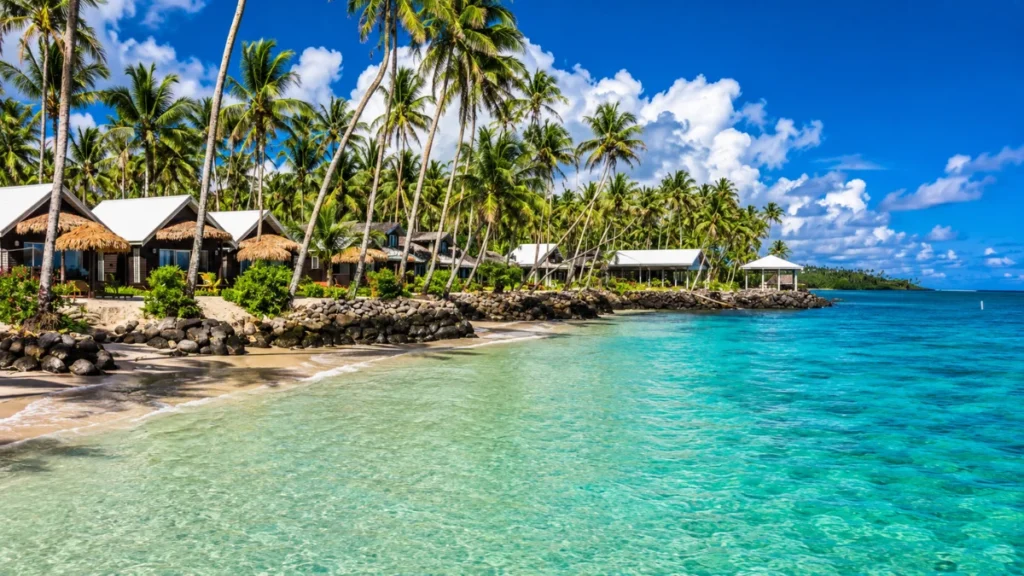
Planning a trip to Samoa can feel a little uncertain once you start checking the weather. The photos often show bright blue water, green mountains, waterfalls, and calm beaches, but real tropical weather is not always as simple as travel images make it look. Because Samoa takes time, money, and effort to reach, many travelers want to choose a season that gives them the best chance of comfortable weather.
The best time to visit Samoa for good weather is usually from May to October, when the islands tend to feel drier, less humid, and more comfortable for swimming, sightseeing, scenic drives, and relaxed outdoor travel. July to September often feels especially pleasant, although short tropical showers can still happen at any time of year.
The important thing to understand is that Samoa is still a tropical Pacific destination. Even during the better-weather months, rain can move through quickly, humidity can rise, and the mood of the day can shift between bright sunshine, cloud, and sudden showers.
This article will help you understand Samoa’s weather seasons, what each period genuinely feels like, who the drier months suit best, and how to plan with realistic expectations rather than relying on postcard-perfect assumptions.
Best Time to Visit Samoa for Good Weather
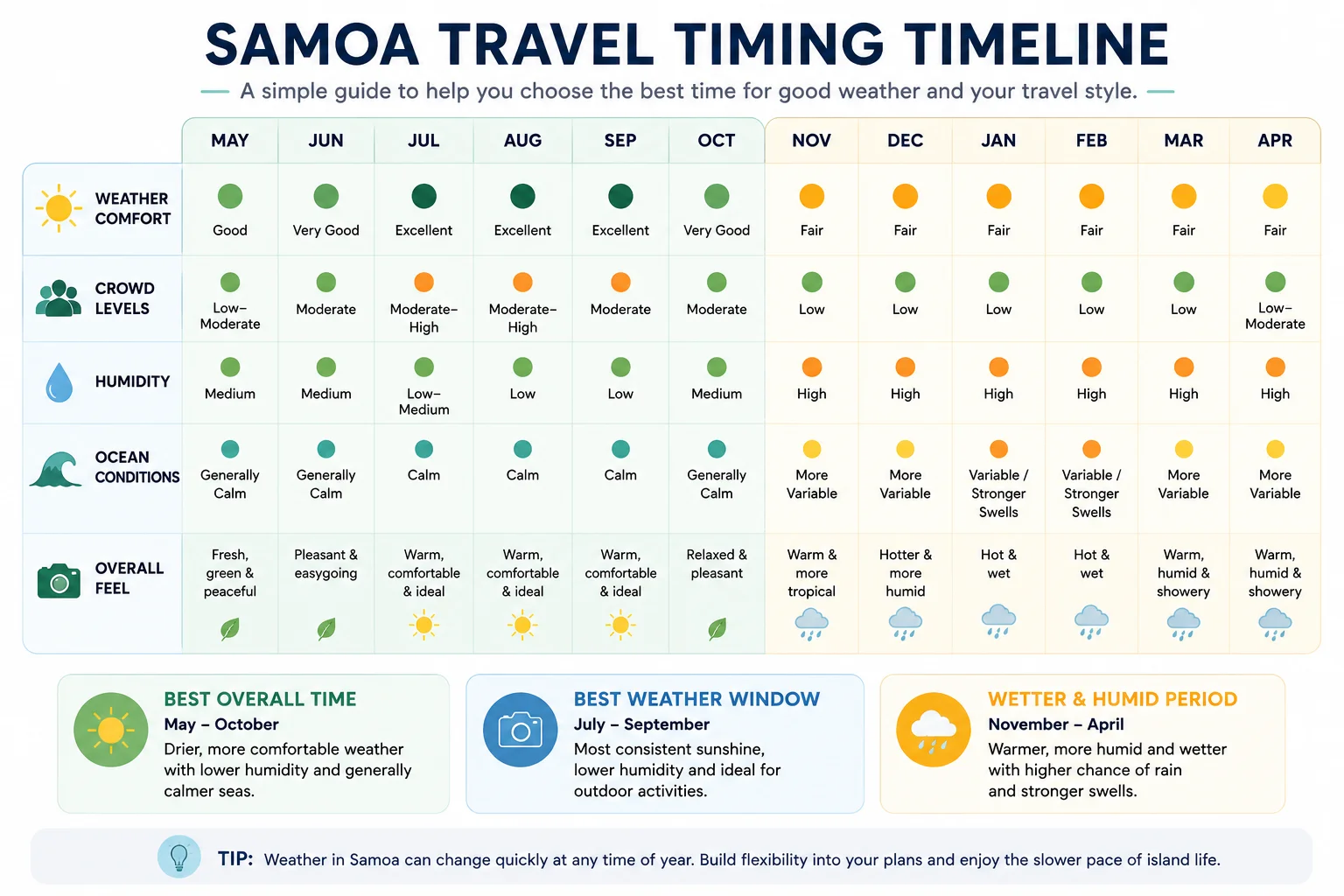
For most travelers, May to October is the most comfortable time to visit Samoa. These months generally sit within Samoa’s drier season, so the weather often feels easier for beach days, snorkeling, road trips, waterfalls, resort stays, and outdoor exploring.
July, August, and September are often the strongest months for travelers who want a comfortable balance of sunshine, warmth, and lower humidity. The days still feel tropical, but the air can feel lighter than the hotter and wetter months from November to April.
That does not mean May to October guarantees perfect weather every day. Samoa is still a warm island destination, and quick showers can happen even in the drier season. The difference is that rain is usually less dominant, humidity is often easier to manage, and outdoor plans tend to feel more reliable.
If you are a first-time Pacific traveler, a couple planning a relaxed trip, or someone who does not enjoy heavy humidity, the drier months are usually the safest and calmest choice.
Samoa Weather Season Comparison
A simple way to understand Samoa’s weather is to compare the overall feel of the drier and wetter seasons. The choice is not only about rain. It is also about comfort, atmosphere, flexibility, and how you prefer to travel.
| Season | Typical Weather Feel | Humidity | Travel Comfort | Best For |
|---|---|---|---|---|
| May to October | Drier, calmer, and more comfortable | Lower to moderate | Usually easier for beaches, road trips, and outdoor plans | First-time visitors, couples, families, and travelers wanting reliable comfort |
| November to April | Wetter, greener, warmer, and more unpredictable | Higher | Better with flexible plans and a slower itinerary | Slow travelers, quieter stays, lush scenery, and travelers comfortable with tropical rain |
This table should be treated as a realistic guide rather than a weather promise. Samoa’s climate can change quickly, and even good-weather months can include cloudy days or sudden showers.
The Pacific Travel Reality Check
Pacific travel often works differently from travel in larger tourism regions. Weather, flights, ferries, road conditions, local timing, and resort services can all feel more relaxed and less predictable than travelers may expect.
Samoa reflects this clearly. A sunny morning can turn into a humid afternoon. A coastal drive may take longer than expected. A planned outdoor day may work better when adjusted around rain, heat, or local rhythms.
This does not make Samoa difficult in a negative way. It simply means Samoa is better enjoyed with space in the itinerary. Travelers who leave breathing room often feel calmer and more open to the way the islands naturally unfold.
What Many Travel Articles Miss About Samoa Weather
Many travel articles describe Samoa’s weather in a simple way: dry season is good, wet season is bad. That is useful at a basic level, but it misses how the destination actually feels.
The drier season often feels easier, brighter, and more comfortable. It is usually the better choice for travelers who want a smoother trip. But the wetter season can bring a softer, greener, more atmospheric Samoa. Waterfalls may feel fuller, landscapes can look richer, and resorts may feel quieter.
The real question is not only, “Which month has the best weather?” It is also, “What kind of island mood do I want, and how flexible am I willing to be?” That is where Samoa becomes more useful to understand beyond a simple weather chart.
Samoa Weather Expectation vs Reality
Many travelers imagine Samoa through polished beach photos, but the real experience is more textured. Good weather can feel beautiful in Samoa, but the islands are still tropical, humid, and naturally changeable.
| What Travelers May Expect | What Samoa Often Feels Like |
|---|---|
| Perfect sunshine every day | Warm tropical weather with occasional rain, clouds, and shifting skies |
| Clear forecasts that always match the day | Weather that can change quickly between morning and afternoon |
| Dry season means no rain | Drier months are more comfortable, but short showers can still happen |
| Wet season means the trip is ruined | Wetter months can still feel beautiful, green, quiet, and peaceful with flexibility |
| Every beach day will feel the same | Ocean conditions, wind, cloud, and humidity can change the mood of each day |
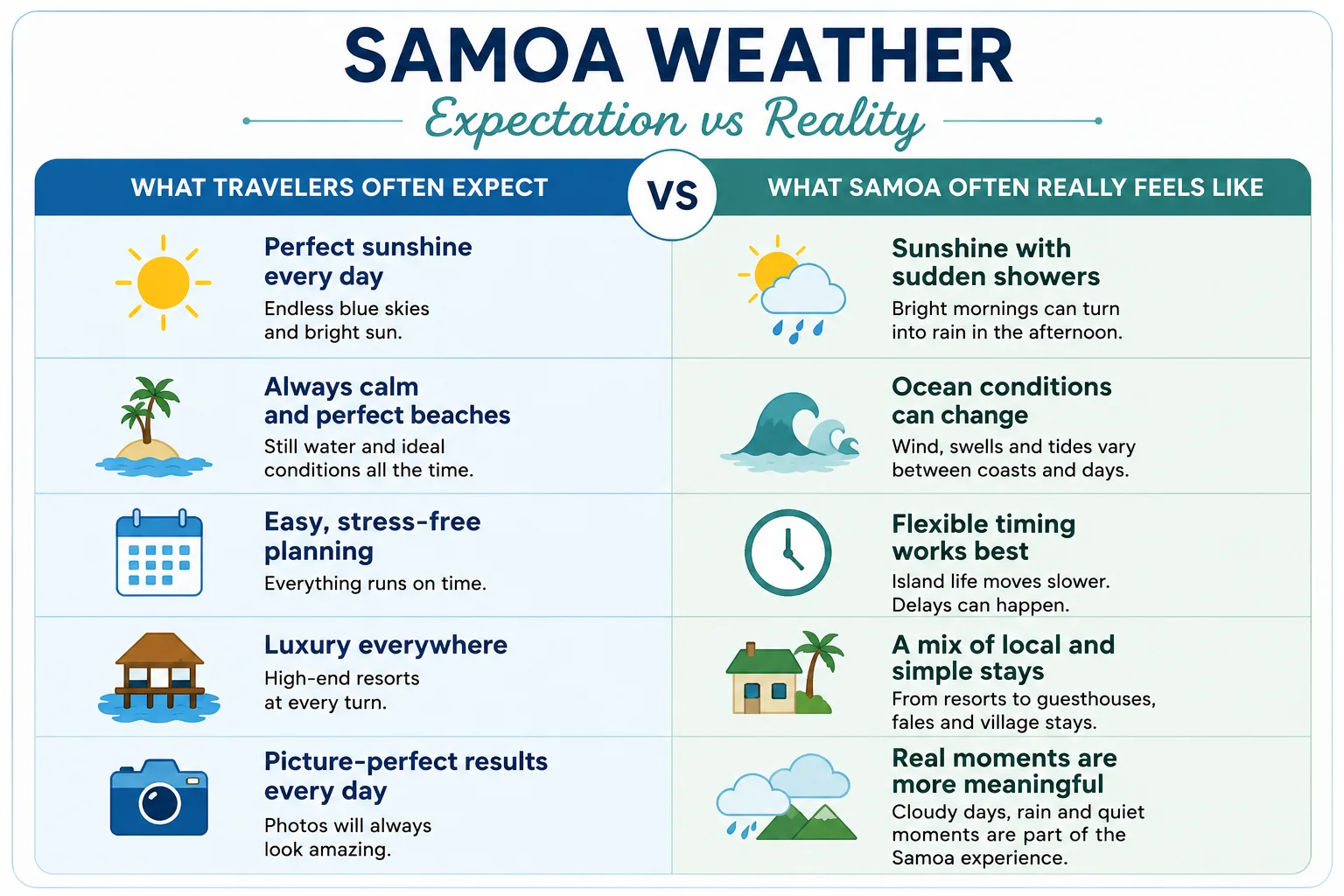
This is why Samoa suits travelers who can appreciate natural island conditions rather than expecting every day to look like a travel advertisement.
What Samoa Feels Like During Good Weather Months
During the drier months, Samoa often feels calm, open, and easier to settle into. The air may still feel warm and tropical, but the lower humidity can make long outdoor days more comfortable.
Beach time usually feels more relaxed in this period. Scenic drives can feel less tiring. Waterfalls, villages, coastal roads, and swimming spots become easier to enjoy without the same level of heat and rain interruption that can happen in wetter months.
The atmosphere is not usually loud or heavily commercial. Even during better weather months, Samoa often feels slower and more local than many mainstream island destinations. The pace is gentle, the evenings can feel quiet, and the best moments are often simple rather than highly staged.
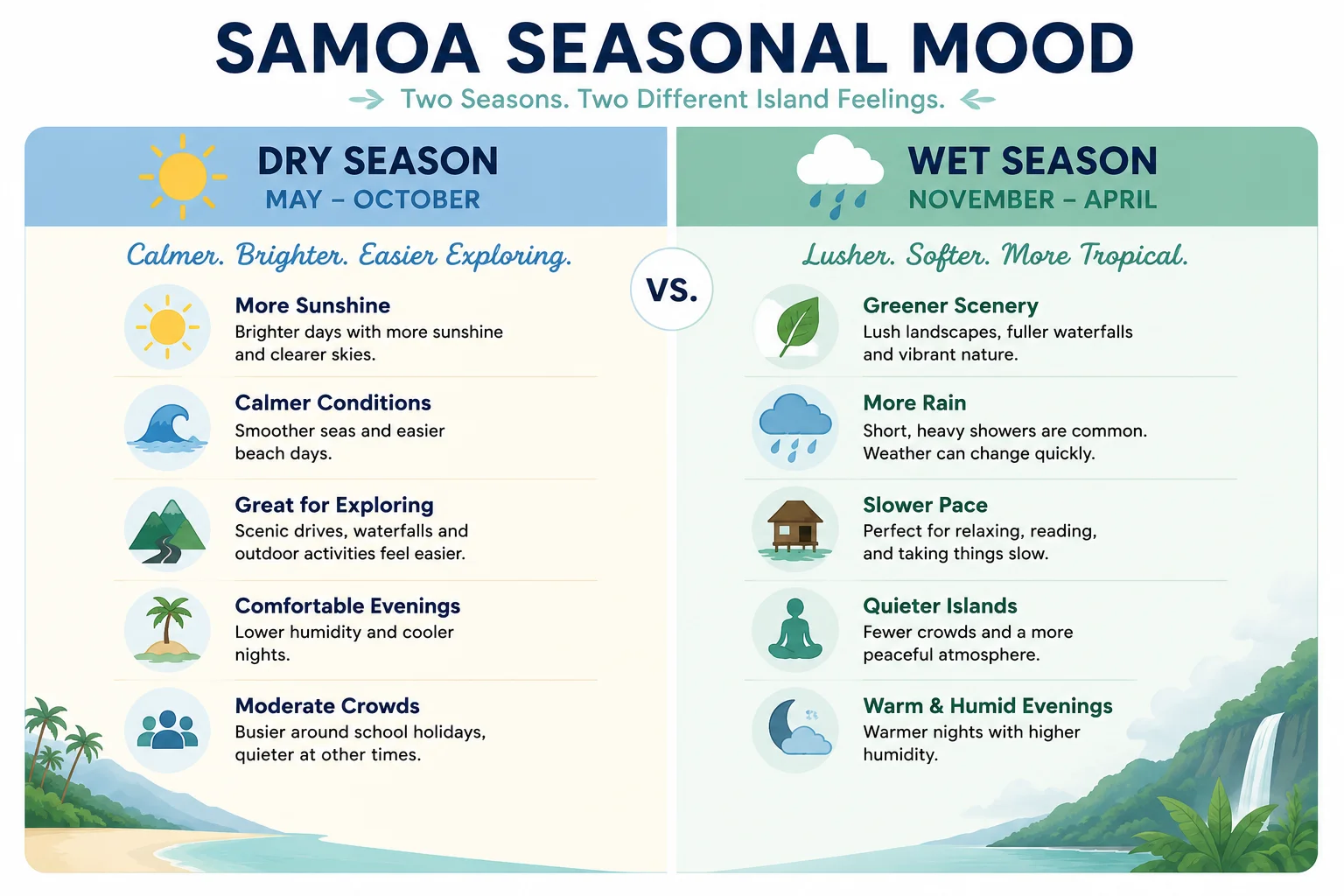
This is where Samoa can feel especially rewarding for travelers who enjoy quiet Pacific settings, open coastal roads, and destinations that do not feel overly polished.
Who the Drier Season Suits Best
The drier season is usually the easiest recommendation because it suits the widest range of travelers. It is especially helpful for people who want a smoother first Samoa trip and do not want weather to shape too much of the itinerary.
| Traveler Type | Fit for May to October | Why It Works |
|---|---|---|
| First-time Samoa visitors | Excellent | The weather is usually more comfortable and easier for planning |
| Couples | Very good | Calmer evenings, beach time, and scenic drives feel easier to enjoy |
| Families | Very good | Outdoor plans are usually less disrupted by heavy rain and humidity |
| Snorkeling and swimming travelers | Good | Conditions can feel more settled, although ocean conditions still vary |
| Travelers sensitive to humidity | Excellent | The air often feels more comfortable than the wetter months |
| Budget-flexible travelers | Moderate to good | Better weather may come with stronger demand during popular periods |
The drier season is not only about better weather. It also makes Samoa feel more accessible for travelers who want a peaceful but manageable Pacific trip.
Is Samoa Still Worth Visiting in the Wet Season?
Samoa can still be worth visiting during the wetter season, but it suits a different type of traveler. November to April tends to feel warmer, more humid, greener, and less predictable. For some people, that can feel too heavy. For others, it can feel peaceful and deeply tropical.
The wetter season works best when travelers do not expect every day to be filled with outdoor activities. It suits slower mornings, flexible sightseeing, covered resort areas, reading near the ocean, short drives between showers, and accepting that some plans may need to shift.
It may not be ideal for travelers with only a few days, a strict itinerary, or strong expectations of constant sunshine. But for those who enjoy quiet island moods, lush scenery, and a slower travel rhythm, the wetter season can still feel meaningful.
Practical Samoa Weather Planning Insights
Samoa becomes easier to enjoy when weather planning is realistic rather than rigid. The islands reward travelers who prepare well but do not try to control every detail.
- May to October is usually the best overall window for good weather.
- July to September often feels especially comfortable for outdoor travel.
- November to April is wetter, warmer, more humid, and more unpredictable.
- Short tropical showers can happen even in the drier season.
- Flexible itineraries usually work better than tightly packed daily plans.
- Travel insurance is sensible during cyclone season and remote Pacific trips.
- Accommodation with covered outdoor areas can make rainy days feel easier.
- Booking earlier may help during school holidays and popular travel periods.
Good planning does not mean avoiding every inconvenience. It means leaving enough space for Samoa to feel natural instead of forcing the trip to match a fixed picture.
Common Samoa Weather Misunderstandings
One common misunderstanding is thinking the dry season means completely dry weather. It does not. Samoa can still experience short rain showers, cloud cover, and humid days during the better-weather months.
Another misunderstanding is assuming the wet season has no value. While it is less predictable, it can also bring quieter stays, greener scenery, stronger tropical atmosphere, and a softer island mood.
Travelers also sometimes compare Samoa’s weather expectations with destinations that are more heavily resort-managed. Samoa often feels more natural and less controlled, which means weather becomes part of the experience rather than something hidden from it.
Seasonal and Local Context
Samoa is warm throughout the year, but the season strongly changes the comfort level of the trip. Drier months are usually easier for swimming, coastal drives, day trips, and relaxed exploring. Wetter months require more patience with humidity, rain, and possible disruptions.
Travel demand can also change with Australian and New Zealand school holidays, Christmas travel, and regional holiday periods. Even though Samoa often feels quieter than larger tourism destinations, popular resorts and flights can still become more expensive or limited at certain times.
Shoulder months such as May, June, and October can be appealing because they may offer a good balance of weather comfort and calmer atmosphere. They can work well for travelers who want Samoa to feel peaceful without arriving in the wettest part of the year.
Pacific Worth Note: I think Samoa is easier to appreciate when travelers stop chasing perfect tropical weather and allow the islands to feel natural. Some of the most memorable Pacific moments happen during quiet cloudy afternoons, soft rain near the coast, or calm evenings when the day slows down by itself.
Helpful Related Pacific Travel Reading
If you are still deciding whether Samoa suits your travel style, you may also find Is Samoa Worth Visiting for First-Time Pacific Travelers? helpful because it explains Samoa’s overall atmosphere, pacing, and traveler fit beyond weather alone.
For travelers comparing Samoa with another popular South Pacific destination, Fiji vs Samoa: Which Feels More Relaxing? can help clarify whether you prefer Samoa’s quieter local feeling or Fiji’s broader resort infrastructure.
If you are still trying to understand different Pacific travel moods, Why Do Some Travelers Prefer Fiji Over Hawaii? may also help you think about pace, atmosphere, and what makes a Pacific destination feel personally worth the journey.
Frequently Asked Questions
What is the best month to visit Samoa for good weather?
July, August, and September are often among the most comfortable months to visit Samoa because the weather usually feels drier, less humid, and easier for outdoor activities. However, May to October is generally the broader good-weather period.
Is Samoa rainy all year?
Samoa can experience rain throughout the year because it is a tropical destination. The drier season from May to October usually has less rainfall, while November to April tends to feel wetter and more humid.
When is Samoa’s wet season?
Samoa’s wetter season generally runs from November to April. During this time, travelers may experience heavier rain, higher humidity, warmer nights, and more unpredictable weather.
Is Samoa worth visiting during the wet season?
Yes, Samoa can still be worth visiting during the wet season if you are comfortable with humidity, rain, and flexible plans. The islands can feel greener, quieter, and more atmospheric, but the trip may not suit travelers who need reliable sunshine every day.
Does Samoa have cyclone season?
Yes, Samoa’s cyclone season generally falls within the wetter period from November to April. Severe weather is not constant, but travelers should plan carefully, monitor conditions, and consider travel insurance during this time.
Final Thoughts
So, what is the best time to visit Samoa for good weather? For most travelers, May to October is the best overall window, with July to September often feeling especially comfortable for sunshine, lower humidity, swimming, sightseeing, and relaxed outdoor travel.
But Samoa is not only about choosing the driest month. The islands feel best when travelers understand the slower pace, the tropical weather mood, and the need for flexibility. A perfect Samoa trip is not always a perfectly sunny one.
If you want easier conditions, choose the drier season. If you are comfortable with humidity and changing skies, the wetter season can still feel peaceful and beautifully green. The right choice depends on the kind of Pacific journey that feels worth it to you.
Leave a Reply