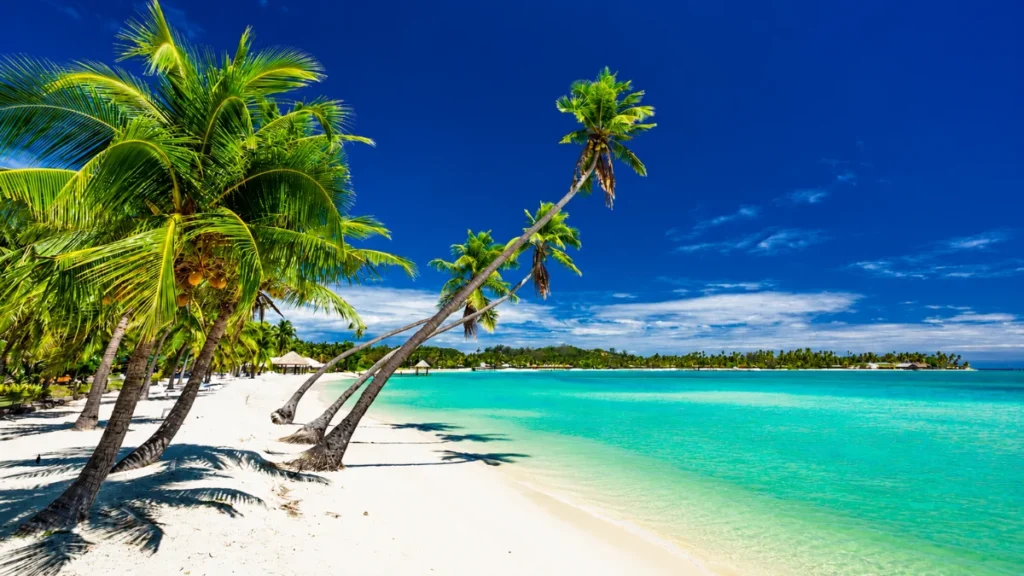
Many travelers start planning Fiji with the same practical question: when can I go without paying peak-season prices? Flights, resorts, meals, transfers, and activities can add up quickly, especially for families, couples, and travelers coming from Australia, New Zealand, or further away.
The cheapest time to visit Fiji is usually February, with January and March also often offering lower prices. These months fall during Fiji’s wet season, when demand is lower, resort deals are more common, and flights can be more affordable than during the dry season or school holiday periods.
The decision is not only about finding the lowest price. A cheaper month can bring real savings, but it may also mean more humidity, heavier rain at times, and a higher chance of weather interruptions. For some travelers, that tradeoff feels worthwhile. For others, paying more for better weather reliability may be the smarter choice.
This article explains what is the cheapest month to visit Fiji, what Fiji feels like during the lower-cost months, how prices change through the year, and how to decide whether the cheapest month is actually the best month for your travel style.
| Travel Goal | Best Time to Consider | Why It Fits |
|---|---|---|
| Lowest prices | February | Usually the strongest low-demand month for Fiji travel deals |
| Good value | May, June, or November | Often a better balance of price, weather, and crowd levels |
| Best weather | July, August, or September | Drier conditions and more reliable outdoor travel days |
| Fewer crowds | February or March | Lower visitor demand can make resorts feel quieter |
| Family convenience | School holiday periods | Easier scheduling, but usually with higher prices and more crowds |
The Real Pacific Travel Reality Check
Fiji is often promoted through sunny beaches, smiling resort photos, and calm blue water. Those images can be true, but they do not show the full travel picture. Like many Pacific destinations, Fiji has seasonal changes, remote logistics, imported goods, transport limitations, and weather patterns that affect both cost and experience.
The cheapest months are usually cheaper because fewer people travel then. That lower demand is connected to Fiji’s wet season, warmer humidity, school calendars, and the possibility of heavier rain or tropical weather systems.
This does not mean Fiji is a bad choice during the low season. Many travelers still enjoy warm ocean water, quieter resorts, friendly local interactions, slower island pacing, and good savings. But it does mean expectations need to be realistic.
If you are trying to understand the wider cost picture, our guide on How Expensive Is Fiji Really in 2026? may help you compare flights, resorts, food, and activities more clearly.
What Many Travel Articles Miss About Cheap Fiji Travel
Many travel articles answer this topic too simply. They name the cheapest month, mention the wet season, and stop there. But real travelers need more than a month name. They need to know what kind of trip that cheaper month actually creates.
A cheaper Fiji trip can feel quieter, slower, and more relaxed. Resorts may feel less crowded. Staff may have more time for conversation. Beaches and pools may feel easier to enjoy without peak-season pressure.
At the same time, a cheaper month can also mean weather flexibility matters more. A boat trip may need adjusting. A cloudy day may replace the bright blue sky you imagined. A tropical shower may change your afternoon plans. These are not always trip-ruining problems, but they are part of the real Fiji low-season experience.
Fiji Low Season Expectation vs Reality
Travelers often imagine the cheapest months in two extreme ways. Some expect constant rain and empty resorts. Others expect perfect Fiji at a lower price. The reality usually sits somewhere in the middle.
| What Travelers May Expect | What Fiji Often Feels Like |
|---|---|
| Constant rain every day | Warm tropical weather with a mix of sunshine, showers, humidity, and changing skies |
| Huge discounts everywhere | Better deals are possible, but savings vary by flight route, resort, and booking timing |
| Completely empty resorts | Usually fewer crowds, but popular resorts and family-friendly areas can still feel active |
| The same trip as dry season but cheaper | A softer, quieter, more flexible version of Fiji with more weather uncertainty |
| All activities are cheaper | Flights and accommodation usually offer the biggest savings, while food and tours may remain costly |
This is the key difference. The cheapest month can still be worthwhile, but it should be chosen with the right expectations.
Why February Is Usually the Cheapest Month to Visit Fiji
February is often the cheapest month to visit Fiji because it sits in the middle of the wet season and outside many major holiday travel periods. Demand is usually lower, so airlines and resorts may offer better prices to encourage bookings.
January and March can also be affordable, but January may be affected by early holiday travel, while March can begin to feel slightly more stable depending on the year. February often sits in the strongest low-demand window.
Travelers may find lower prices on:
- Return flights to Nadi
- Resort packages
- Room upgrades
- Free-night accommodation offers
- Family holiday packages
- Longer-stay resort deals
However, Fiji is still a remote Pacific destination. Imported food, resort operations, transfers, and activities do not suddenly become cheap just because the month is cheaper. This is why the lowest month is helpful, but it does not make Fiji a true ultra-budget destination.
If you are comparing Fiji against another familiar Pacific option, you may also find Is Fiji Expensive Compared to Hawaii? useful.
Cheapest Month vs Best Month to Visit Fiji
The cheapest month to visit Fiji is not always the best month for every traveler. February usually gives travelers the strongest chance of lower prices, but it also comes with wetter, warmer, and more changeable conditions. That can be fine for flexible travelers, but less ideal for people planning a once-in-a-lifetime honeymoon or a short trip with very little room for weather changes.
The best month depends on what you want from the trip. If price matters most, February is usually the first month to check. If you want a better balance of cost, comfort, and crowd levels, May, June, or November may feel more sensible. If your priority is reliable sunshine and easier outdoor planning, July to September usually feels safer, although prices are often higher.
This is why Pacific travel planning works best when travelers separate price from value. A cheaper trip can be excellent if it matches your expectations. A slightly more expensive trip can also feel more worthwhile if the weather, pace, and travel conditions suit you better.
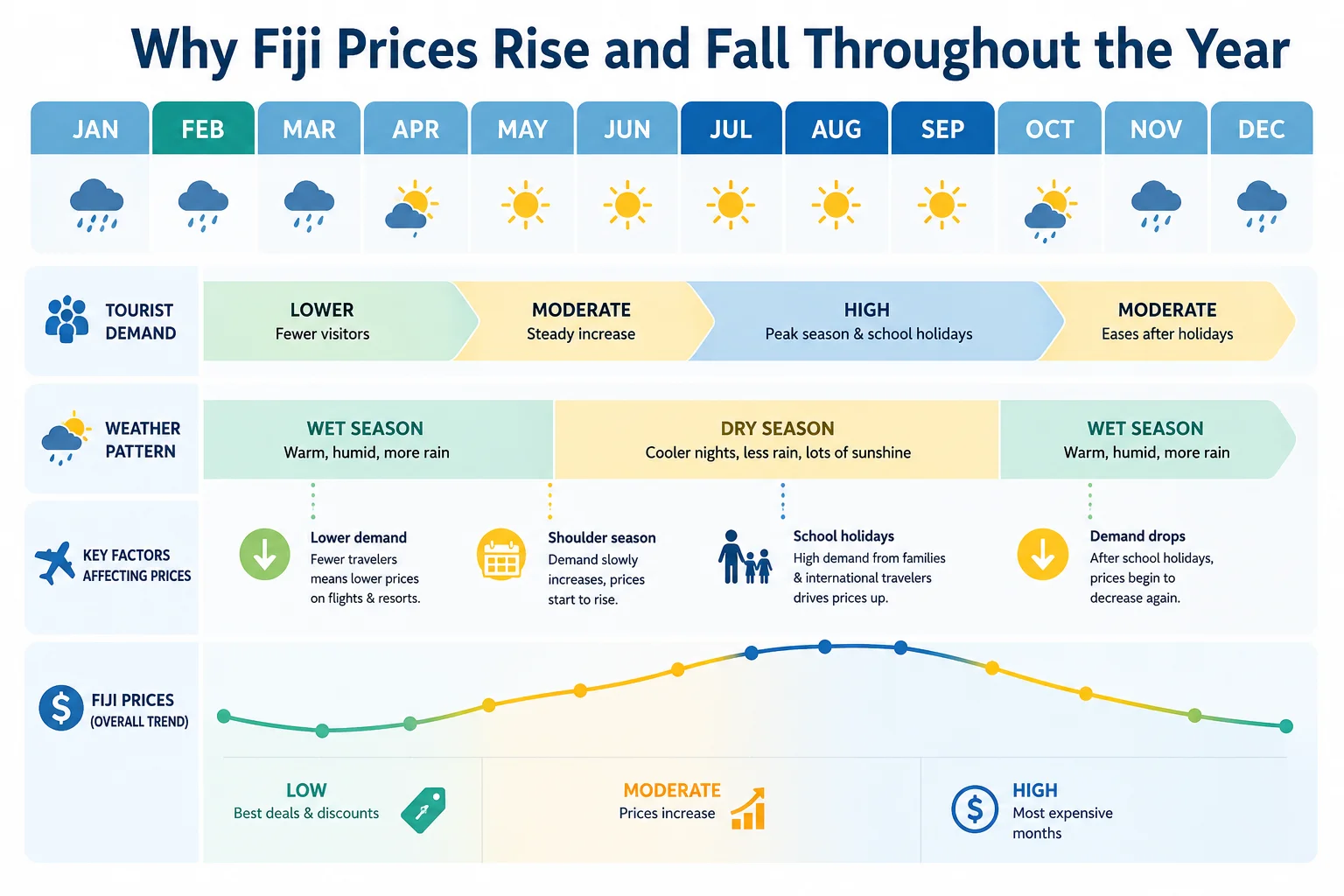
How Fiji Prices Rise and Fall Throughout the Year
Fiji prices usually follow demand. When weather is drier, school holidays begin, and international travelers have more vacation flexibility, prices tend to rise. When weather becomes more variable and fewer people book, prices often soften.
| Travel Period | Typical Price Level | What Usually Drives the Cost |
|---|---|---|
| January | Low to moderate | Wet season pricing, but early holiday demand can still affect some dates |
| February | Usually lowest | Low demand, wet season conditions, fewer school holiday travelers |
| March | Low to moderate | Still wet season, but prices can begin to vary more by resort and route |
| May to June | Moderate | Better weather balance before peak demand becomes stronger |
| July to September | High | Dry season, school holidays, strong family and couple travel demand |
| October | Moderate to high | Good weather conditions and continued visitor interest |
| November | Moderate | Shoulder-season value before deeper wet-season conditions |
| December | Mixed to high | Wet season begins, but holiday travel can push prices up |
This is why February often stands out. It usually combines low demand, lower seasonal confidence, and fewer holiday travelers.
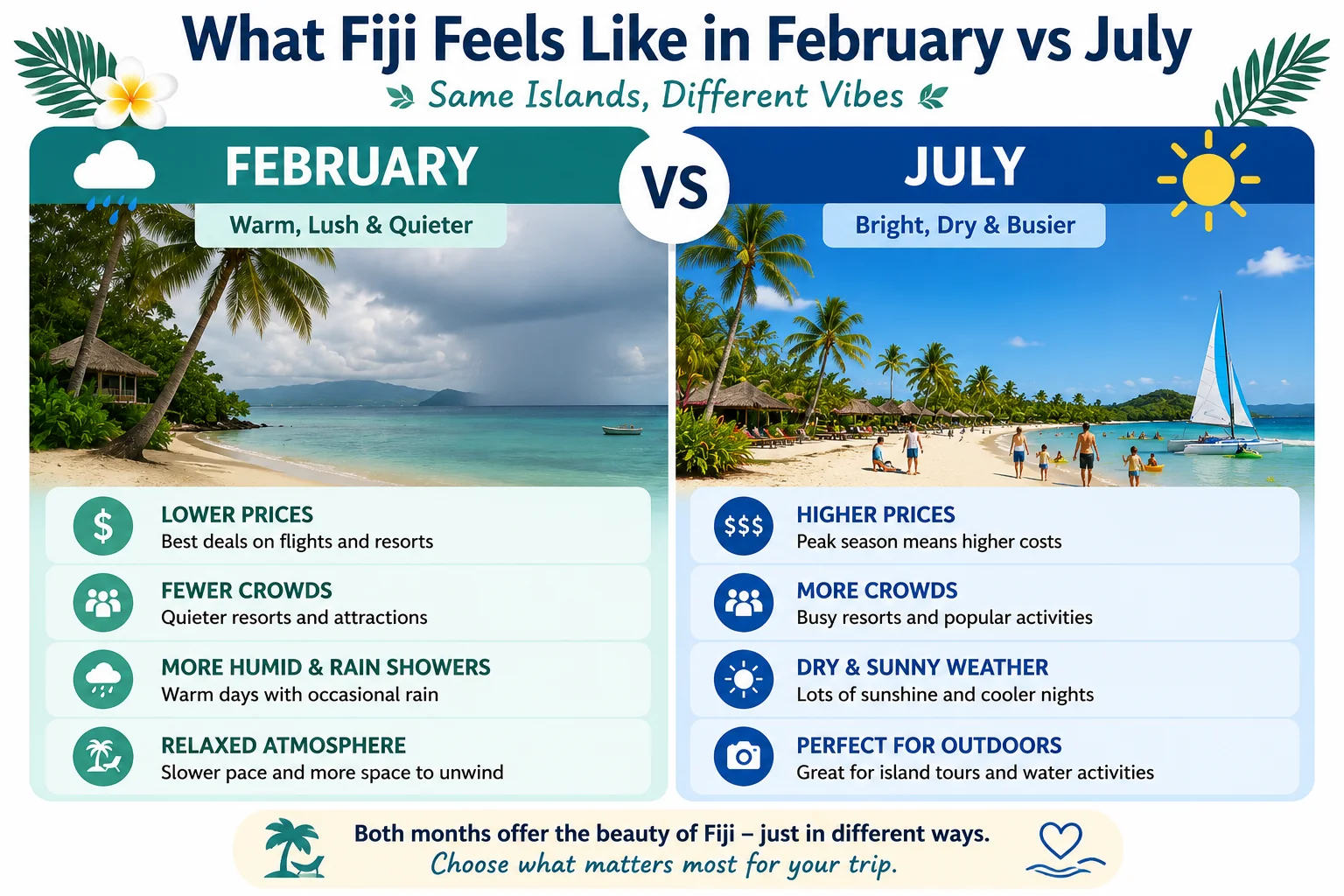
What Fiji Feels Like in February vs July
February and July can feel like two different versions of Fiji. The islands are the same, but the travel mood changes.
February often feels warmer, slower, quieter, and more humid. Resorts may feel less crowded. The atmosphere can be more relaxed, but travelers need patience with changing weather.
July usually feels drier, brighter, busier, and more predictable. It is easier for families and first-time visitors who want stronger weather reliability, but prices are usually higher and popular resorts may feel more active.
| Travel Feel | February | July |
|---|---|---|
| Cost | Usually lower | Usually higher |
| Weather | More humid and changeable | Drier and more comfortable |
| Crowds | Often quieter | Busier, especially around school holidays |
| Resort mood | More relaxed and flexible | More polished, active, and peak-season focused |
| Best suited to | Flexible budget travelers | First-timers wanting safer weather |
If you want to understand why some travelers still choose Fiji again and again despite the cost, our article on Why Do Travelers Keep Returning to Fiji? explains the emotional side of the destination more clearly.
Lowest Price vs Best Value vs Best Weather
The cheapest month is not always the best month for every traveler. It depends on what you value most.
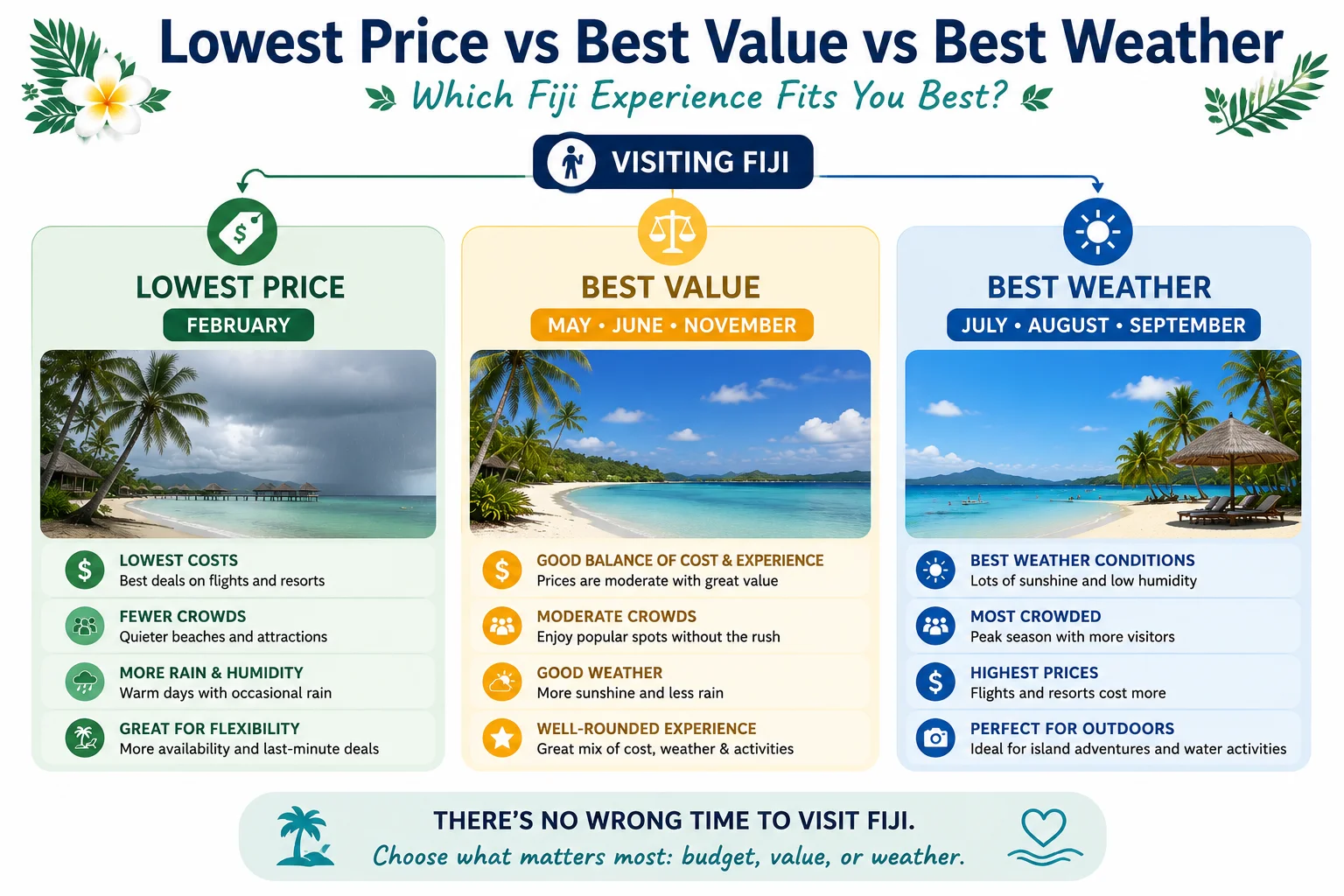
| Traveler Priority | Best Month Range | Why It Works |
|---|---|---|
| Lowest price | February | Usually the strongest low-demand month for flights and accommodation deals |
| Good value balance | May, June, or November | Often a better mix of price, weather, and crowd levels |
| Best weather reliability | July, August, or September | Drier conditions and stronger confidence for outdoor plans |
| Family convenience | School holiday periods | Easier scheduling, but usually higher prices and more crowds |
For many travelers, the best-value month may be more useful than the cheapest month. Saving money matters, but so does enjoying the trip without constantly adjusting expectations.
Best For and Not Ideal For
Visiting Fiji in the cheapest month works well for some travelers and poorly for others. The difference usually comes down to flexibility.
Best For
- Budget-conscious couples
- Flexible travelers
- Repeat Fiji visitors
- Slow travelers who do not need perfect weather every day
- Travelers happy to spend time at the resort between showers
- People who value fewer crowds and a quieter atmosphere
Not Ideal For
- Honeymooners expecting near-perfect weather
- Families with fixed school-holiday dates
- Travelers with only a very short stay
- Visitors planning many weather-dependent activities
- People who feel disappointed by cloudy or rainy tropical days
- Travelers who want the most polished peak-season resort feel
This does not mean one season is better for everyone. It means Fiji is most rewarding when the month fits the traveler.
Fiji Budget Expectations by Travel Month
Budget planning for Fiji should include more than flights and accommodation. Meals, airport transfers, island transfers, tours, drinks, tips, and resort extras can affect the final cost.
| Month Type | Budget Feeling | What to Expect |
|---|---|---|
| Cheapest month | Lower upfront cost | Good savings possible, but weather flexibility is important |
| Shoulder month | Balanced value | Often a better mix of comfort, cost, and crowd levels |
| Peak dry season | More expensive | Better weather confidence, but higher resort and flight demand |
| School holiday period | Often expensive | Convenient for families, but busier and less flexible for deals |
If Fiji is part of a wider Pacific comparison, Hawaii vs Fiji for First-Time Pacific Travelers may help you think beyond price and compare destination feel.
Practical Travel Insights
If you want to visit Fiji during its cheapest period, planning calmly matters more than chasing every discount.
- Look first at February if your main goal is the lowest price.
- Compare January and March as backup low-season options.
- Check May, June, and November if you want better balance rather than the cheapest possible trip.
- Build flexibility into boat transfers, island activities, and outdoor plans.
- Consider travel insurance during cyclone season.
- Compare resort packages against booking flights and accommodation separately.
- Do not assume all food, drinks, and tours become cheaper in low season.
- Choose accommodation carefully because resort style strongly affects the Fiji experience.
If ease of travel from Australia matters to you, our guide on Which Pacific Islands Are Easiest to Reach from Australia? may also help with route planning.
Common Traveler Misunderstandings
One common misunderstanding is thinking the cheapest month means Fiji becomes cheap overall. It usually becomes cheaper than peak season, but Fiji can still feel expensive because many goods are imported and remote island tourism has higher operating costs.
Another misunderstanding is assuming the wet season means rain every minute of the day. Tropical weather can be changeable. A rainy morning may become a bright afternoon, and a cloudy day may still feel warm and enjoyable.
Travelers also sometimes assume the cheapest month creates the same experience as the dry season. It does not. The mood can be quieter and more relaxed, but weather reliability is lower.
Finally, some travelers believe the best month must be the most expensive month. That is not always true. If you enjoy quieter travel and can handle occasional rain, the lower-cost months may feel more personal and less crowded.
Seasonal and Local Context
Fiji’s wet season generally runs from November to April. This period is warmer, more humid, and more likely to bring heavier rain. It also overlaps with cyclone season, so travelers should keep flexibility in mind.
The dry season usually runs from May to October. These months are more popular because conditions are often more comfortable for beach days, boat trips, snorkeling, family holidays, and resort stays.
Shoulder periods such as May, June, and November can be especially useful for travelers who want a thoughtful balance. They may not always be the cheapest, but they can feel more comfortable than the deepest wet-season months while still avoiding some peak-season pricing.
If you are choosing between Fiji and another Pacific island with a different atmosphere, Fiji vs Samoa: Which Feels More Relaxing? may help you compare the feeling of each destination.
Pacific Worth Note: Personally, I think many travelers spend too much time chasing the absolute cheapest fare. In Fiji, a slightly more expensive month can sometimes create a noticeably better experience. The best trip is usually the one where your expectations match the season you choose.
Frequently Asked Questions
What is the cheapest month to visit Fiji?
February is usually the cheapest month to visit Fiji. January and March can also offer lower prices because they fall within Fiji’s wet season and usually have lower visitor demand.
Is February a good time to visit Fiji?
February can be a good time to visit Fiji if you want lower prices, fewer crowds, and do not mind humidity, rain showers, or possible weather changes. It is better for flexible travelers than for visitors who need guaranteed sunshine.
What is the best-value month to visit Fiji?
May, June, and November are often good-value months because they can offer a better balance between cost, weather, and crowd levels. They may not be the cheapest, but they can feel more comfortable for many travelers.
Is Fiji cheaper in the wet season?
Fiji is often cheaper during the wet season, especially for flights and accommodation. However, food, drinks, tours, transfers, and resort extras may still feel expensive because Fiji is a remote island destination.
Should I avoid Fiji during cyclone season?
You do not always need to avoid Fiji during cyclone season, but you should plan with flexibility. Travel insurance, flexible bookings, and realistic weather expectations are especially important from November to April.
Final Thoughts
So, what is the cheapest month to visit Fiji? For most travelers, the answer is February. It often brings the lowest combination of flight and accommodation prices because demand is lower during the wet season.
But the cheapest month is not automatically the best month. February can offer excellent value for flexible travelers, repeat visitors, and budget-conscious couples. It may not suit honeymooners, short-stay visitors, or travelers who want strong weather reliability.
If your main goal is saving money, February is worth checking first. If your goal is the best balance between cost and comfort, May, June, or November may be more sensible. If your goal is the most reliable weather, the dry season will usually feel safer, though more expensive.
The most worthwhile Fiji trip is not always the cheapest one. It is the trip where the price, weather, pace, resort feel, and expectations all fit the kind of traveler you are. When those pieces match, Fiji can feel truly worth the journey.


Leave a Reply