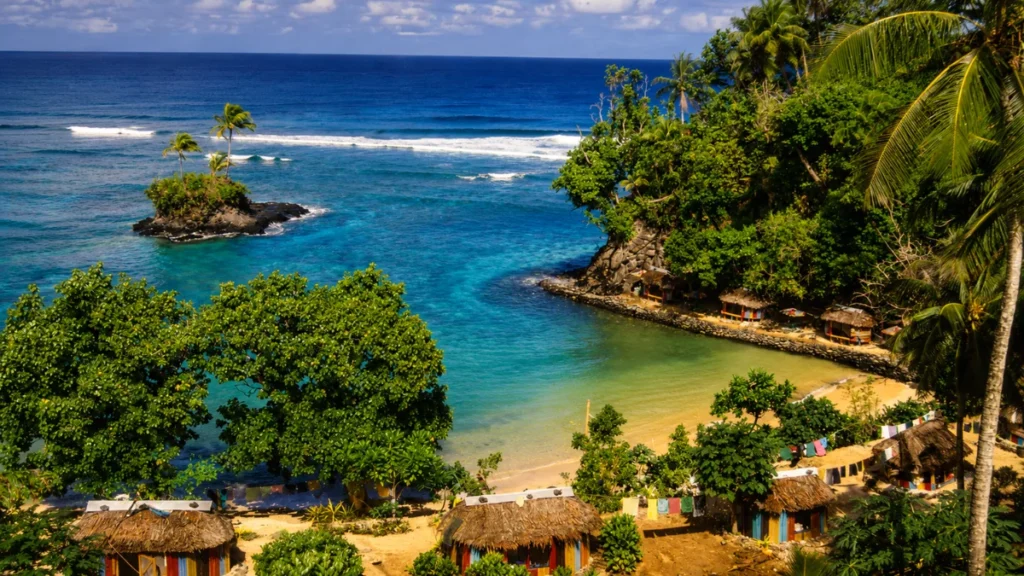
Many travelers compare Samoa and Fiji because they are both well-known South Pacific destinations, but they often feel very different once you are actually there. The beaches, resorts, culture, pacing, and daily rhythm can create two very different kinds of island memories.
Samoa usually feels more traditional, local, quiet, and culturally grounded, while Fiji often feels more developed for tourism, easier for resort stays, and more polished for first-time Pacific travelers. Neither destination is better for everyone. The right choice depends on whether you want a smoother holiday experience or a slower, more local island atmosphere.
This difference can surprise travelers who expect Pacific islands to feel mostly the same. Social media often shows beaches, palm trees, waterfalls, and blue water, but it rarely explains how a place feels during meals, road trips, village visits, resort stays, rainy afternoons, or quiet evenings.
This article explains Why Does Samoa Feel Different from Fiji? in a realistic way, including atmosphere, culture, resorts, beaches, budget expectations, transport, traveler fit, and the kind of trip each destination tends to suit best.
The Real Pacific Travel Reality Check
Before comparing Samoa and Fiji, it helps to remember that Pacific travel is different from visiting larger mainstream holiday destinations. Island time, weather changes, transport schedules, road conditions, imported goods, and local rhythms can all shape the trip.
Fiji is generally easier for many travelers because it has a larger tourism industry, more resort infrastructure, more international flight options, and a wider range of organized experiences. This can make the holiday feel smoother, especially for families, couples, and first-time Pacific travelers.
Samoa can feel more independent and less packaged. You may need to be more comfortable with slower travel, simpler accommodation options, fewer luxury layers, and a stronger sense of everyday local life around you. That can feel deeply rewarding for some travelers, but less convenient for others.
This is why comparing Samoa and Fiji is not only about beaches or hotels. It is really about the kind of island experience you want and how much polish, structure, comfort, and local immersion you prefer.
What Many Travel Articles Miss About Samoa and Fiji
Many travel articles compare Samoa and Fiji through lists of attractions. They mention beaches, waterfalls, resorts, markets, and snorkeling spots. Those things matter, but they do not fully explain why the two destinations feel different in real life.
The real difference is atmosphere. Fiji often feels more used to welcoming holidaymakers. Samoa often feels more like a place where tourism exists within local life, rather than local life being shaped around tourism. This difference affects how you move around, how resorts feel, how quiet the days are, and how much independence the trip may require.
For travelers trying to decide between the two, the better question is not simply “Which is nicer?” A more useful question is: which destination matches your travel personality, budget, expectations, comfort level, and reason for going?
If you are still comparing the two directly, you may also find Fiji vs Samoa: Which Feels More Relaxing? helpful because it focuses more closely on the relaxation side of the decision.
Samoa vs Fiji Expectation vs Reality
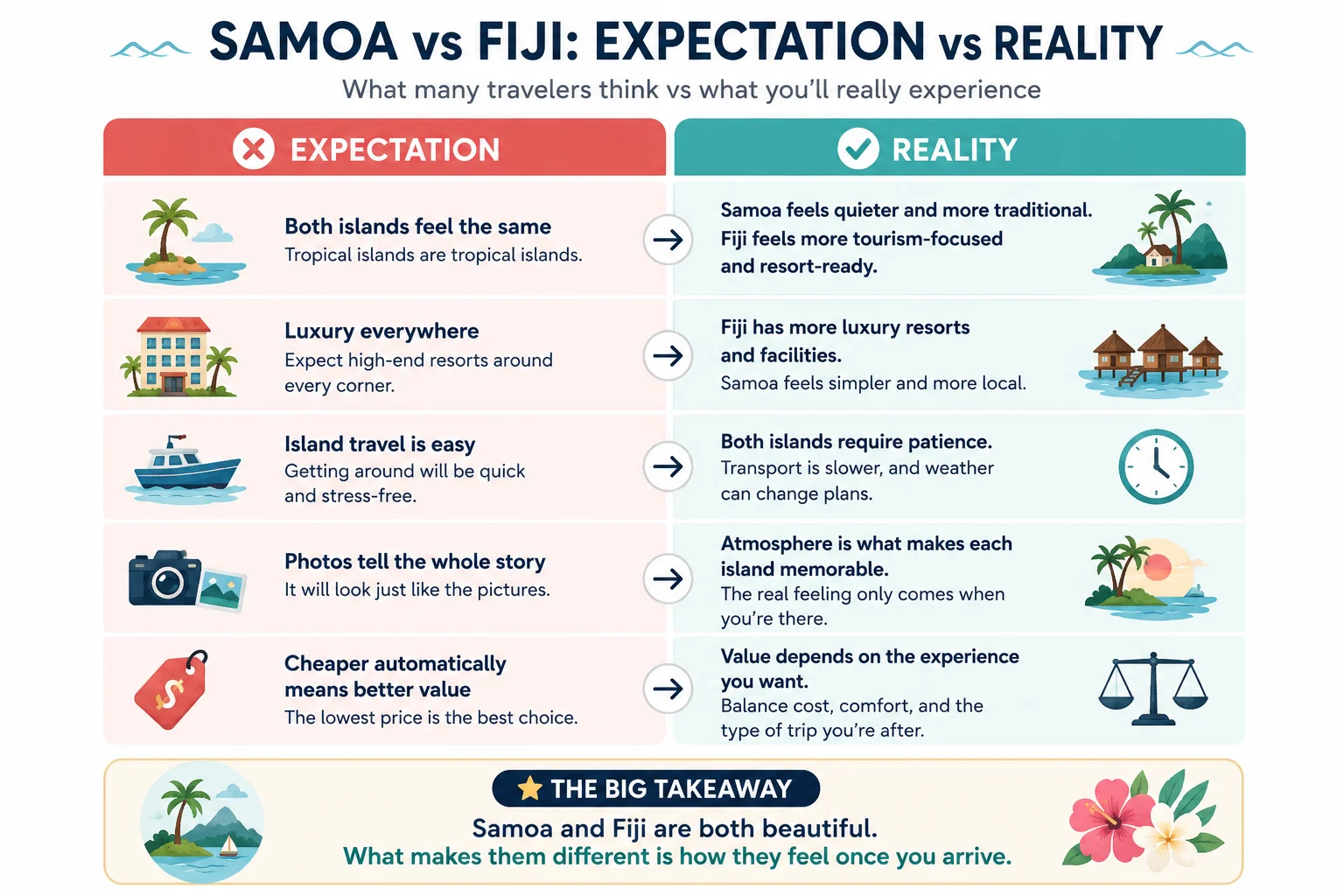
Travelers often arrive with expectations shaped by resort photos, short videos, and broad ideas of “South Pacific paradise.” In reality, Samoa and Fiji can both be beautiful, but they deliver that beauty in different ways.
| What Travelers May Expect | What Samoa Often Feels Like | What Fiji Often Feels Like |
|---|---|---|
| Both islands feel similar | More traditional, slower, and locally grounded | More tourism-ready, resort-friendly, and polished |
| Easy beach holiday everywhere | Beautiful, but more independent and less packaged | Easier to arrange through resorts, tours, and transfers |
| Perfect weather every day | Tropical weather can shift quickly, especially in wetter months | Weather also varies, but more resort options help soften disruptions |
| Luxury is the main experience | Culture, villages, landscapes, and local pace often stand out more | Resorts, service, activities, and holiday comfort often shape the trip |
| Both are equally easy to travel around | Requires more patience, planning, and comfort with slower logistics | Usually easier for transfers, tours, and family-friendly planning |
This is why Why Does Samoa Feel Different from Fiji? is such a useful question. It points to the real travel decision: not which island looks better, but which one feels right for the way you like to travel.
The Main Atmosphere Difference
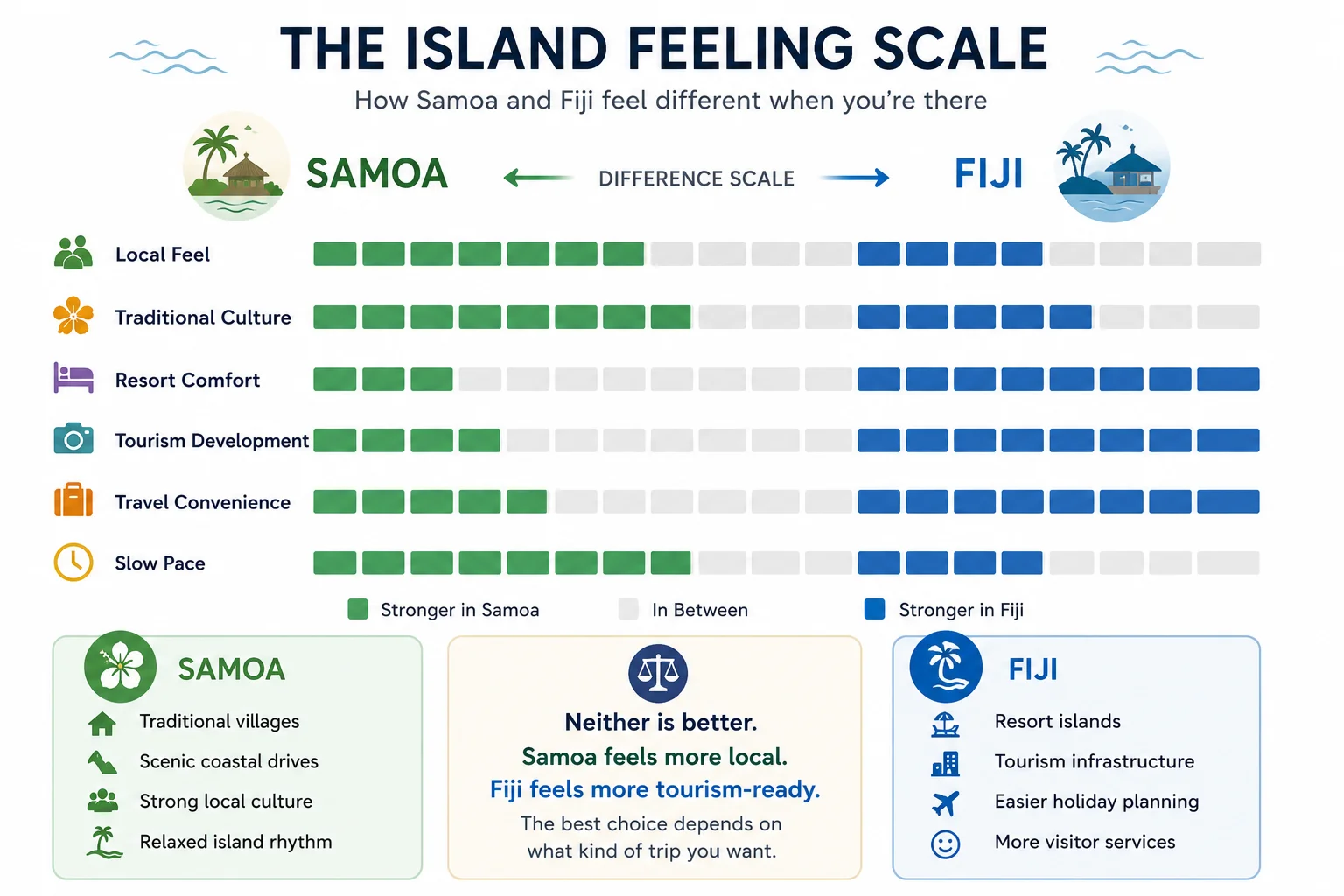
The simplest way to understand the difference is this: Samoa often feels more rooted in local life, while Fiji often feels more shaped around the visitor experience.
In Samoa, the pace can feel slower and more traditional. The island atmosphere is often quieter, less commercial, and more connected to villages, churches, family life, coastal roads, natural swimming holes, waterfalls, and everyday routines. It can feel less polished, but also more grounded.
In Fiji, especially in popular areas such as Denarau, the Coral Coast, and resort islands, the travel experience often feels more organized. There are more resorts, more tours, more activities, more visitor services, and more systems built around making holidays easier.
| Travel Feeling | Samoa | Fiji |
|---|---|---|
| Overall atmosphere | Traditional, quiet, local, slower | Warm, social, resort-ready, easier |
| Tourism polish | Lower to moderate | Moderate to high, depending on area |
| Local life visibility | Very strong | Present, but often softened inside resort areas |
| Ease for first-time visitors | Good, but better for flexible travelers | Very good for most first-time Pacific travelers |
| Best emotional fit | Travelers seeking culture, quiet, and authenticity | Travelers seeking comfort, activities, and easier planning |
Why Samoa Feels More Local and Traditional
Samoa often feels different because local culture is not hidden behind the travel experience. Village life, church routines, family spaces, local roads, markets, and traditional customs are part of what travelers notice as they move around.
This can make Samoa feel more personal and less staged. You may not always feel like you are inside a tourism bubble. Instead, you are more likely to feel that you are visiting a country with its own strong rhythm, values, and way of life.
For some travelers, this is exactly what makes Samoa memorable. The trip can feel slower, more thoughtful, and more connected to place. It may not always be as convenient or polished as a resort-heavy holiday, but it can leave a stronger emotional impression.
If Samoa is new to you, our article Is Samoa Worth Visiting for First-Time Pacific Travelers? explains the destination from a beginner-friendly perspective.
Why Fiji Often Feels More Polished and Tourism-Ready
Fiji often feels different from Samoa because it has a more mature tourism industry. Many travelers visit Fiji for a smoother holiday experience, especially when they want resorts, activities, airport transfers, family-friendly facilities, and easier planning.
This does not mean Fiji lacks culture or local character. Fiji has strong traditions, warm local hospitality, village experiences, markets, and meaningful cultural moments. However, in many popular visitor areas, those experiences are often wrapped inside a more developed tourism structure.
That polish can be valuable. Families may find Fiji easier. Couples may appreciate the resort choices. First-time Pacific travelers may feel more comfortable with clearer travel systems. Travelers with limited vacation time may prefer the convenience of having more things organized for them.
This is one reason many visitors return. Our article Why Do Travelers Keep Returning to Fiji? explores that repeat-visitor appeal in more detail.
Resort Feel: Samoa vs Fiji
The resort experience is one of the biggest reasons Samoa and Fiji feel different. Fiji generally has a wider range of resorts, from family-friendly properties to private island escapes, large beach resorts, and luxury stays. This gives travelers more choice and often makes the trip easier to shape around comfort.
Samoa has resorts and beach stays too, but the overall feel is usually smaller, quieter, and less internationally polished. Accommodation may feel more connected to the local setting rather than separated from it. That can be peaceful and meaningful, but travelers expecting the full resort-machine experience may find Samoa simpler than expected.
| Resort Factor | Samoa | Fiji |
|---|---|---|
| Range of resort choices | More limited and often smaller scale | Wide range from budget-friendly to luxury |
| Family resort options | Available, but fewer choices | Strong family-friendly resort market |
| Luxury polish | More modest overall | Stronger luxury and private island options |
| Local connection | Often feels closer to everyday island life | Can feel more separated inside resort zones |
| Ease of planning | Requires more careful research | Usually easier for packaged stays and tours |
If your dream holiday is mostly about resort comfort, Fiji may feel easier. If you want something quieter and less polished, Samoa may feel more meaningful.
Culture, Local Life, and Everyday Interactions
Both Samoa and Fiji have strong cultures, but travelers often experience them differently. Samoa can feel more culturally visible in everyday life. Village structures, Sunday rhythms, traditional respect, family spaces, and local customs can be felt throughout the trip.
Fiji’s culture is also warm and important, but many travelers experience it through resort welcomes, cultural nights, village visits, staff interactions, and organized activities. These can still be genuine, but they may feel more guided for visitors.
This is not a weakness in either destination. It simply creates different travel feelings. Samoa may feel more immersive and less filtered. Fiji may feel more welcoming, social, and accessible, especially for travelers who prefer cultural experiences to be easier to understand and arrange.
If you are drawn to destinations that feel less packaged, you may also like Samoa vs Vanuatu for Authentic Island Experiences.
Beaches, Landscapes, and Natural Feel
Fiji is often easier for travelers who want classic resort beaches, island-hopping, boat trips, snorkeling tours, and a more familiar tropical holiday shape. The country has many islands, which gives travelers more variety depending on where they stay.
Samoa’s natural feel can be more dramatic and less packaged. Beaches, lava fields, waterfalls, blowholes, coastal drives, forested areas, and ocean pools can make the island feel rawer and more grounded. Some places may feel less developed, but that is part of the atmosphere.
The difference is not that one destination has better nature. It is that Fiji often presents nature through a smoother tourism experience, while Samoa often feels closer to the landscape itself.
Budget and Value Expectations
Budget can also affect how different Samoa and Fiji feel. Fiji has more accommodation options across different price levels, but popular resort areas can still become expensive, especially when meals, transfers, tours, and imported goods are included.
Samoa may sometimes feel better value for travelers who do not need luxury polish, but it is not always “cheap.” Like many Pacific destinations, imported goods, limited competition, remote logistics, and transport costs can affect prices.
The better way to think about value is not simply which destination costs less. It is whether the money you spend matches the kind of experience you actually want.
| Budget Expectation | Samoa | Fiji |
|---|---|---|
| Accommodation range | Smaller range, often simpler | Wider range, from basic stays to luxury resorts |
| Meal costs | Can be reasonable, but imported items may cost more | Resort meals can be expensive, especially in tourist zones |
| Tour costs | Often more limited and location-dependent | More options, but costs can add up quickly |
| Best value feeling | Travelers who enjoy simple, local, slower trips | Travelers who value convenience, resort choice, and organized experiences |
For Fiji-specific cost planning, you may find How Expensive Is Fiji Really in 2026? useful before comparing total trip budgets.
Which Destination Suits Which Traveler?
The best choice depends less on which country is “better” and more on what kind of traveler you are. Samoa and Fiji reward different expectations.
| Traveler Type | Better Fit | Why |
|---|---|---|
| First-time Pacific travelers | Fiji | Usually easier to plan, with more resorts, tours, and visitor support |
| Culture-focused travelers | Samoa | Local life and traditional rhythms often feel more visible |
| Families with children | Fiji | More family resorts, activities, and easier holiday structures |
| Slow independent travelers | Samoa | Quieter, less polished, and better for travelers who enjoy local pacing |
| Resort-focused couples | Fiji | More choice for romantic resorts, private island stays, and packages |
| Travelers avoiding heavy tourism | Samoa | Often feels less commercial and less built around visitors |
If you are planning a shorter Pacific trip and want to compare destination practicality, Which Pacific Islands Are Best for a One-Week Trip? may help you decide whether Samoa or Fiji fits your available time.
Best For and Not Ideal For
Samoa and Fiji both have strong reasons to visit, but they are not ideal for the same traveler. Matching the destination to your expectations matters more than choosing the one that looks better online.
Samoa Is Best For
- Travelers who want a slower and more traditional island atmosphere
- Visitors interested in culture, villages, local life, and natural landscapes
- Couples or solo travelers who do not need a highly polished resort experience
- People who enjoy quieter roads, simple stays, and a less commercial feel
- Travelers who are comfortable planning more independently
Samoa Is Not Ideal For
- Travelers expecting large resort zones and constant activities
- Visitors who want everything arranged easily through tourism operators
- People who prefer nightlife, shopping, and busy tourist energy
- Travelers who may feel uncomfortable with slower logistics or simpler infrastructure
Fiji Is Best For
- First-time Pacific travelers who want an easier introduction
- Families looking for child-friendly resorts and organized activities
- Couples who want resort comfort, beach time, and smoother planning
- Travelers who want more choice in accommodation, tours, and island experiences
- Visitors who prefer a more polished holiday structure
Fiji Is Not Ideal For
- Travelers trying to avoid resort-focused tourism completely
- People expecting untouched local life in every visitor area
- Strict budget travelers who plan to stay mainly in resort zones
- Visitors who want a very quiet, traditional, less commercial atmosphere
Practical Travel Insights
Choosing between Samoa and Fiji becomes easier when you think about how the trip will work day to day, not only how the destination looks in photos.
- Choose Samoa if you want a slower, more local, less polished island experience.
- Choose Fiji if you want more resort choice, easier planning, and more visitor infrastructure.
- Allow flexibility in both destinations because tropical weather can affect tours, transfers, and beach days.
- Do not compare only accommodation prices; include meals, transport, tours, and imported goods.
- Think carefully about trip length. Samoa may reward slower travel, while Fiji can work well for shorter resort-based breaks.
- Expect Sunday and local rhythms to matter more in Samoa than in heavily resort-focused areas of Fiji.
- Choose your island or region carefully in Fiji, because the experience can vary widely between the mainland, outer islands, and resort areas.
If weather is part of your decision, our guide on the best time to visit Samoa for good weather may help you understand Samoa’s seasonal feel more clearly.
Common Traveler Misunderstandings
One common misunderstanding is thinking all Pacific islands feel similar because they share tropical scenery. In reality, island culture, tourism development, transport, accommodation style, and local pacing can make two destinations feel completely different.
Another misunderstanding is assuming Samoa is simply a less developed version of Fiji. That is not a fair or useful way to see it. Samoa has its own identity, rhythm, and appeal. Its quieter and more traditional feeling is not a weakness for the right traveler.
Travelers also sometimes assume Fiji is only resorts. While resorts are a major part of Fiji’s visitor image, Fiji also offers local markets, villages, cultural experiences, outer islands, waterfalls, beaches, and everyday life beyond tourist areas.
Finally, some travelers expect both destinations to deliver perfect beach weather every day. Samoa and Fiji are tropical places. Passing rain, humidity, cloudy periods, strong sun, and seasonal changes are all part of the real Pacific travel experience.
Seasonal and Local Context
Season can affect how Samoa and Fiji feel. Drier periods often make beach days, driving, tours, and outdoor activities easier. Wetter periods can still be beautiful, but they may feel more humid, quieter, greener, and less predictable.
In Samoa, weather can strongly affect the mood of a trip because many experiences are outdoors, including beaches, waterfalls, coastal drives, swimming holes, and village visits. A flexible schedule can make the trip feel much calmer.
In Fiji, larger resorts and more organized tourism options can sometimes make weather interruptions easier to manage. Even so, rain, wind, humidity, and seasonal conditions still matter, especially for island transfers, snorkeling, and boat trips.
If you are comparing Fiji by season, Is It Better to Visit Fiji During Wet Season? may help you understand the tradeoffs more clearly.
Pacific Worth Note: I think Samoa and Fiji are often compared because they sit close together in people’s minds, but they do not leave the same kind of memory. Fiji often makes travel feel easier, while Samoa can make the place itself feel more present. For the right traveler, that quieter and more local feeling is exactly what makes Samoa worth considering.
Frequently Asked Questions
Why does Samoa feel different from Fiji?
Samoa feels different from Fiji because it is generally more traditional, quieter, less resort-focused, and more connected to everyday local life. Fiji often feels more developed for tourism, with more resorts, tours, transfers, and visitor-friendly systems.
Is Samoa better than Fiji for authentic travel?
Samoa may suit travelers looking for a more local and traditional island experience. Fiji can also offer authentic cultural moments, but popular visitor areas often feel more polished and tourism-focused.
Is Fiji easier to visit than Samoa?
For many first-time Pacific travelers, Fiji is easier to visit because it has more resorts, flights, transfers, tours, and family-friendly services. Samoa is still accessible, but it usually rewards travelers who are comfortable with slower and more independent planning.
Which is better for families, Samoa or Fiji?
Fiji is usually easier for families because it has more family resorts, kids’ clubs, organized activities, and visitor infrastructure. Samoa can work for families too, especially those who prefer quieter travel and cultural experiences, but it may require more planning.
Which feels less touristy, Samoa or Fiji?
Samoa usually feels less touristy than Fiji, especially outside the main accommodation areas. Fiji has many local and quiet areas too, but its most popular visitor regions often feel more developed around tourism.
Final Thoughts
So, Why Does Samoa Feel Different from Fiji? The main reason is that Samoa often feels more traditional, local, quiet, and less shaped around tourism, while Fiji often feels more polished, resort-ready, and easier for visitors to navigate.
That does not make one destination better than the other. Fiji may be the better choice if you want comfort, activities, family-friendly resorts, smoother logistics, and more travel support. Samoa may be the better choice if you want a slower pace, stronger local atmosphere, cultural depth, and a less commercial island feeling.
The best choice depends on what you want the trip to feel like. If you want an easier holiday, Fiji may suit you better. If you want a quieter and more grounded Pacific experience, Samoa may stay with you in a different way.
For Pacific Worth, that is the real value of comparing these islands. The goal is not to chase the most famous destination, but to choose the Pacific experience that is genuinely worth the journey for you.
Leave a Reply