
Many travelers planning a Fiji holiday eventually ask the same practical question: is the rainy period really a bad time to go? Flights can be expensive, resort prices change by season, and most travelers do not want to spend their limited vacation time worrying about weather.
For many travelers, Fiji’s wetter months can still be a worthwhile time to visit, especially if lower prices, fewer crowds, and a quieter resort atmosphere matter more than having perfect sunshine every day.
The decision can feel confusing because Fiji is often shown online as bright, blue, sunny, and effortless. But real Pacific travel is more changeable than that. A wet-season trip may include sunshine, passing showers, humid afternoons, lush scenery, quieter resorts, and some weather-related flexibility.
This article explains Is It Better to Visit Fiji During Wet Season? in a realistic way, including what the season actually feels like, who it suits best, what tradeoffs matter, and when the dry season may still be the better choice.
The Real Pacific Travel Reality Check
Travel in the Pacific rarely follows the same rhythm as major city destinations. Weather can shift quickly, boat trips may depend on sea conditions, and island transfers sometimes require patience.
Fiji is one of the easier Pacific destinations to visit, especially compared with more remote island nations. But it still has island pacing. Schedules can feel slower, service can feel relaxed, and some imported goods may cost more than visitors expect.
This matters during the wet season because flexibility becomes more important. A day of rain does not always ruin a trip, but a tightly packed itinerary can make weather changes feel more stressful than they need to be.
Travelers who understand this before arriving usually enjoy Fiji more. Instead of expecting every day to look like a resort brochure, they are prepared for a real island experience with warm weather, changing skies, slower movement, and relaxed local rhythms.
What Many Travel Articles Miss About Fiji’s Wet Season
Many travel articles describe Fiji’s wet season as either a problem to avoid or a secret bargain. The truth is more balanced. It can be a good time to visit, but only for the right kind of traveler.
Luxury marketing often shows Fiji at its most polished: calm water, blue skies, empty beaches, and perfect resort lighting. Those moments do happen, but they are not the whole story. During wet season, Fiji can also feel humid, green, quiet, cloudy, dramatic, relaxed, and occasionally unpredictable.
That does not make it less worthwhile. For some travelers, the quieter pace and lower prices make the trip feel more comfortable. For others, the uncertainty around weather makes the dry season a better choice.
Fiji Wet Season Expectation vs Reality
One of the biggest reasons travelers worry about wet season is that the word “wet” sounds stronger than the experience often feels. Many days include a mix of sunshine, cloud, humidity, and short tropical showers rather than constant rain from morning to night.
| What Travelers Often Expect | What Fiji Often Feels Like During Wet Season |
|---|---|
| Constant heavy rain every day | Warm days with a mix of sunshine, cloud, and tropical showers |
| Beaches become unusable | Many beach periods are still enjoyable, especially between showers |
| Resorts feel closed or empty | Most major resorts continue operating, often with a quieter atmosphere |
| All activities are cancelled | Many tours continue, but some boat trips may change with weather conditions |
| The trip feels like poor value | Lower prices and fewer crowds can improve value for flexible travelers |
This is why wet season is not automatically better or worse. It depends on what kind of Fiji trip you want.
Fiji Wet Season vs Dry Season Tradeoffs
The most helpful way to compare Fiji’s seasons is not to ask which one is perfect. Neither season guarantees a perfect trip. Instead, it is better to compare what improves and what becomes less predictable.
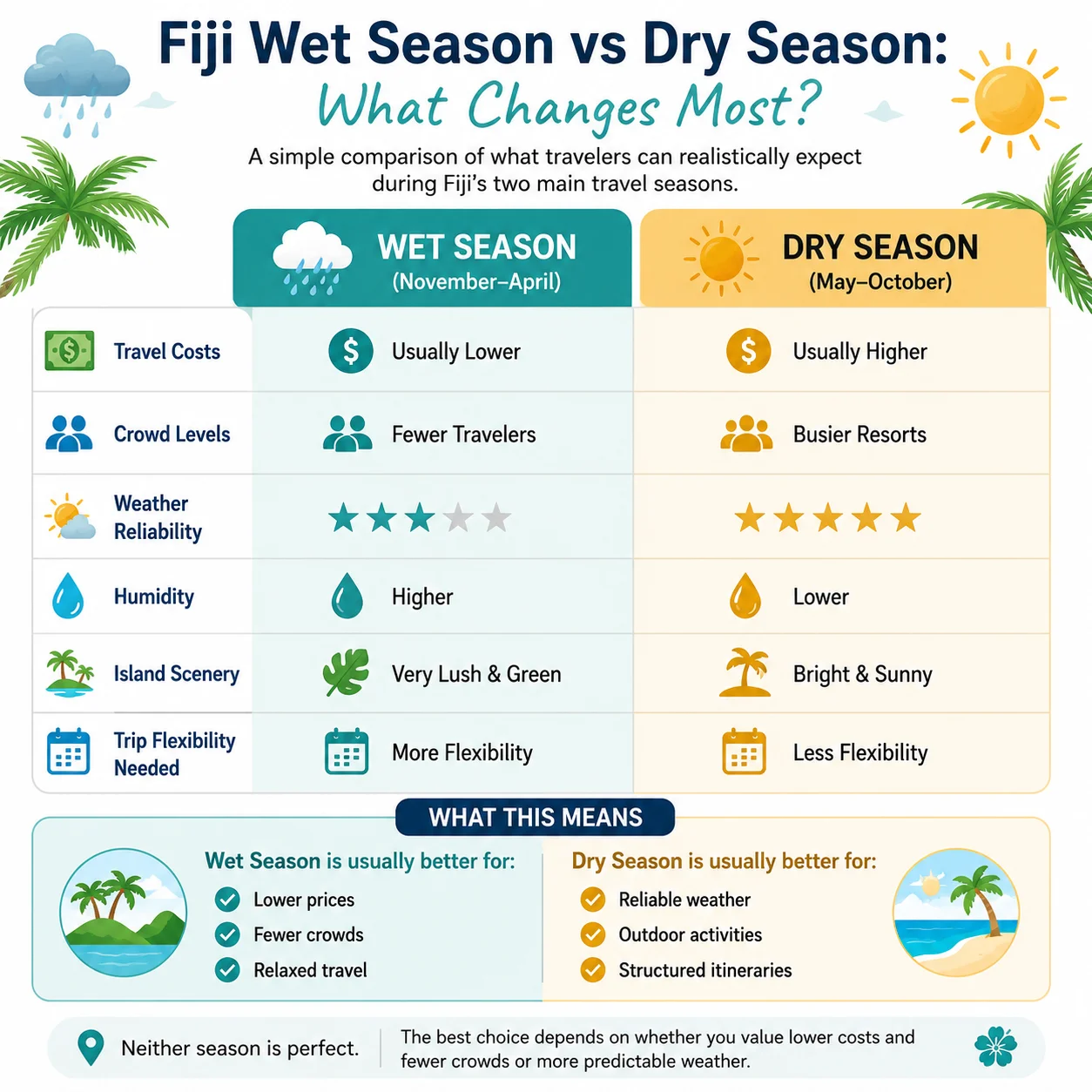
The diagram above shows the biggest seasonal changes in a simple way. Wet season usually improves affordability and crowd levels, while dry season usually gives travelers more stable weather and easier outdoor planning.
This is the real decision. Wet season is not simply the “bad” season, and dry season is not automatically perfect. Each one gives something and asks for something in return.
| Factor | Wet Season | Dry Season |
|---|---|---|
| Prices | Often lower | Often higher |
| Crowds | Usually quieter | Busier, especially during holidays |
| Weather | More variable | More reliable overall |
| Humidity | Higher | Usually more comfortable |
| Scenery | Lush, green, tropical | Drier, brighter, more predictable |
| Trip Planning | Needs more flexibility | Easier to plan outdoor days |
If budget is a major part of your decision, you may also find What Is the Cheapest Month to Visit Fiji? helpful because it looks more closely at Fiji travel timing and value.
What Fiji Feels Like During Wet Season
Fiji during wet season often feels warmer, greener, quieter, and more relaxed than many first-time visitors expect. The landscapes can look lush after rain, gardens feel alive, and tropical clouds can create a dramatic mood across the islands.
Resorts may feel calmer because there are often fewer travelers than in peak periods. Pools, restaurants, beaches, and lounge areas can feel less crowded, which some visitors find more restful.
The mood is not always polished in the way travel advertising suggests. Some days may feel humid and still. Some afternoons may bring rain. Paths may be damp, skies may look heavy, and outdoor plans may need adjusting.
But for travelers who enjoy slower island pacing, this can still feel rewarding. Wet season Fiji often feels less like a busy holiday machine and more like a real tropical destination moving at its own rhythm.
Why Some Travelers Prefer Fiji During Wet Season
Some travelers genuinely prefer Fiji during wet season because the trip can feel quieter and better value. This is especially true for visitors who are not trying to fill every day with scheduled excursions.
Accommodation prices may be lower, and resorts may offer more availability. Flights can also be more affordable depending on travel dates and demand. For couples, slow travelers, and repeat visitors, this can make the whole trip feel less pressured.
Fewer crowds can also change the feeling of the destination. A resort that feels lively in peak season may feel more peaceful during wetter months. Restaurants may feel easier, pools may feel less crowded, and some tours may feel more personal.
If you are comparing Fiji with other Pacific destinations, our guide on Fiji vs Samoa: Which Feels More Relaxing? may help you understand how atmosphere and pace differ across islands.
The Tradeoffs You Should Understand
The main tradeoff is weather reliability. Fiji’s wet season does not mean rain every hour, but it does mean you need to accept more uncertainty.
Humidity is another factor. Some travelers enjoy the warm tropical feeling, while others find the air heavier and less comfortable than during the dry season.
Boat trips, snorkeling tours, island transfers, and outdoor excursions may occasionally be delayed, changed, or cancelled when weather conditions are poor. This is not usually a constant problem, but it matters more if your trip is short or tightly scheduled.
This is where expectations matter. If you expect Fiji to provide perfect beach weather every day, wet season may disappoint you. If you expect a warm, relaxed island trip with some weather changes, it can still feel worthwhile.
Which Fiji Season Matches Your Travel Style?
Choosing between wet season and dry season is easier when you think about your travel personality. Some travelers want reliability. Others want value, quietness, and flexibility.
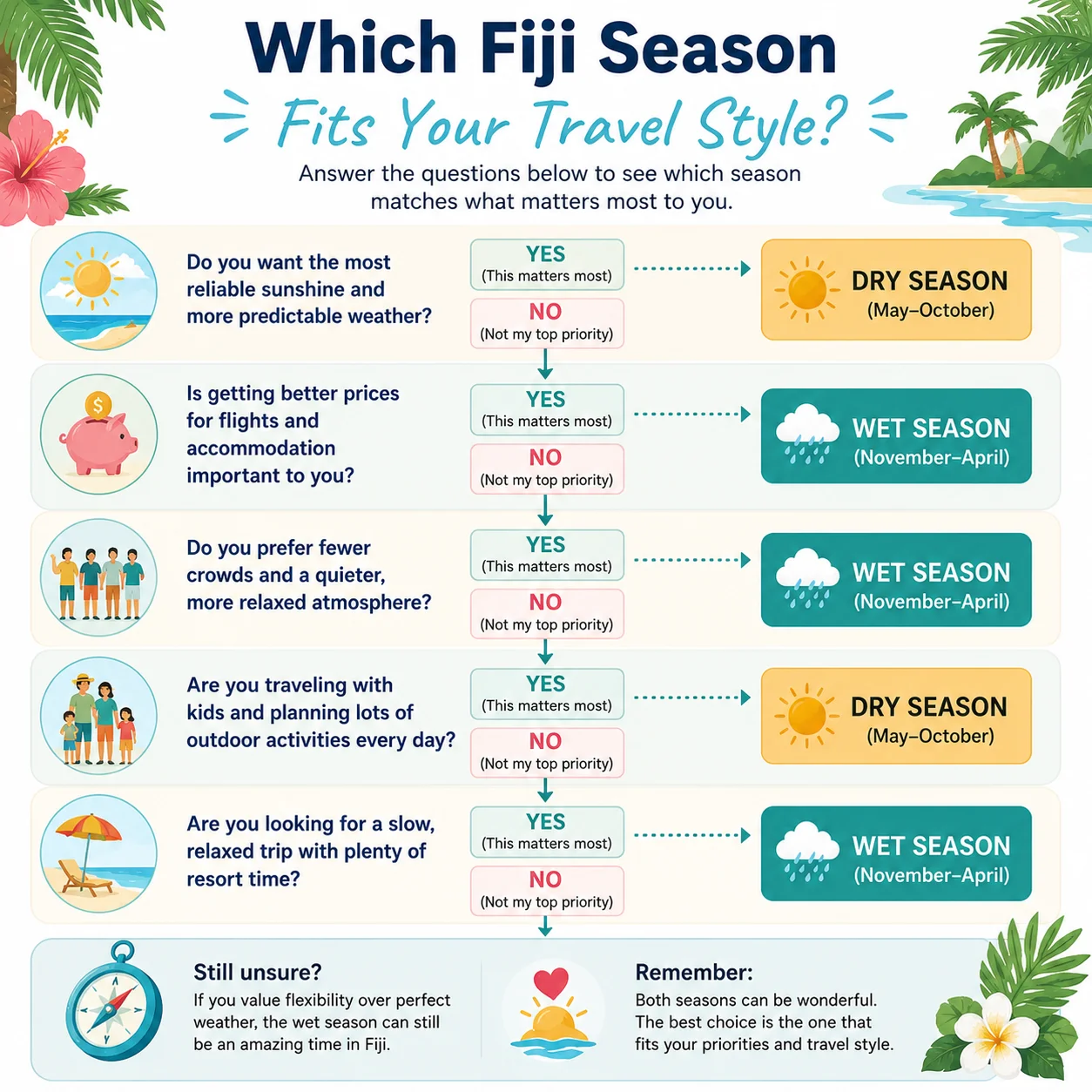
The diagram above is useful because it turns the season question into a traveler-fit question. Instead of asking whether wet season is good or bad, it asks what kind of trip you are actually trying to have.
If your trip depends on daily outdoor plans, dry season may feel easier. If your trip is more about rest, value, quiet resorts, and slower pacing, wet season may still suit you very well.
| If You Value… | Better Choice | Why |
|---|---|---|
| Lower prices | Wet season | Flights and accommodation are often more affordable outside peak demand. |
| Fewer crowds | Wet season | Resorts and popular areas can feel quieter and more relaxed. |
| Reliable weather | Dry season | Outdoor plans are usually easier when weather is more predictable. |
| Structured family activities | Dry season | Families with fixed plans may prefer more stable conditions. |
| Flexible resort relaxation | Wet season | Rain matters less when the trip is slower and more resort-focused. |
Families comparing Fiji with another familiar Pacific option may also find Fiji vs Hawaii for Families from Australia useful.
Best For and Not Ideal For
Fiji’s wet season can be very enjoyable, but it is not suitable for every traveler. The best experience usually comes when your expectations match the season.
Best For
- Travelers looking for lower prices
- Couples seeking a quieter resort atmosphere
- Flexible travelers who can adjust plans calmly
- Repeat visitors who already understand Fiji’s pace
- Slow travelers who enjoy rest more than packed sightseeing
- Travelers who like lush tropical scenery
Not Ideal For
- Travelers wanting guaranteed sunshine every day
- Families with very structured activity schedules
- Visitors taking a very short trip
- People who dislike humidity
- Travelers who become frustrated by weather changes
- Visitors planning many boat-based activities in a short time
If you are still unsure whether Fiji suits your travel style in general, Why Do Travelers Keep Returning to Fiji? explains why many visitors choose Fiji again after their first trip.
Seasonal and Local Context
Fiji’s wet season generally runs from November to April. This period is warmer, more humid, and more likely to bring rainfall than the drier months from May to October.
The wettest period is often around the middle of the season, although weather can vary from year to year. Cyclones are possible during the wet season, but they are not happening constantly. For most travelers, the more common experience is changing weather rather than nonstop severe weather.
Shoulder months can sometimes offer a useful middle ground. Months near the edge of the wet season may provide better value than peak dry season while still feeling easier to plan than the middle of the wetter months.
For a broader cost view, you may want to read How Expensive Is Fiji Really in 2026?, especially if your season choice is mainly about budget.
What You Gain and What You Risk During Fiji’s Wet Season
The clearest way to answer whether wet season is better is to compare what you gain against what you risk. For some travelers, the gains are worth it. For others, the risks matter too much.
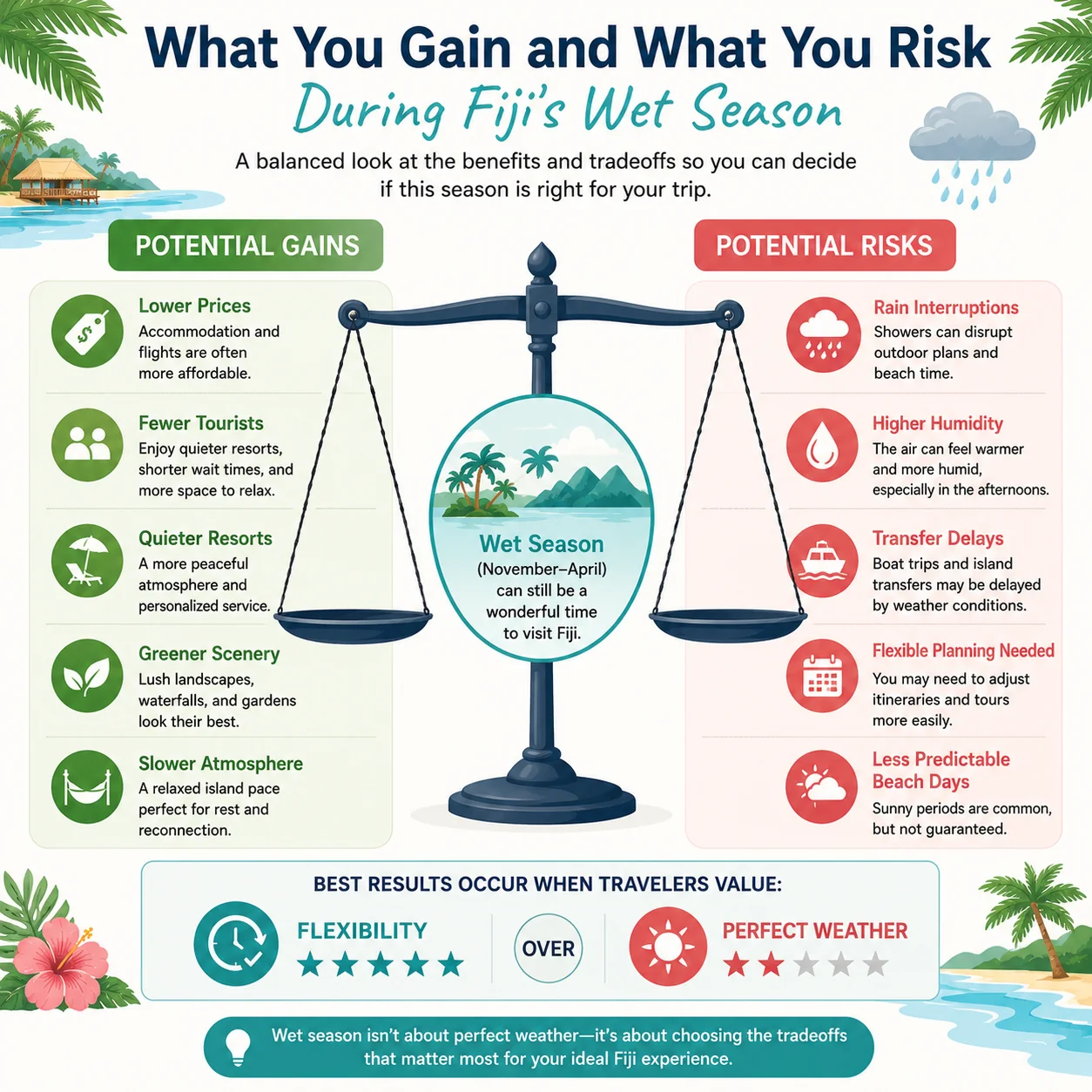
This diagram brings the whole decision together. Wet season can give travelers real advantages, but those advantages come with conditions. The season works best when you are comfortable trading some weather certainty for better value and a slower travel mood.
For travelers with flexible expectations, the gains may feel stronger than the risks. For travelers who need reliable sunshine every day, the risks may feel too noticeable.
| Potential Gains | Potential Risks |
|---|---|
| Lower accommodation prices | Rain may interrupt outdoor plans |
| Fewer tourists | Higher humidity can feel uncomfortable |
| Quieter resort atmosphere | Boat trips may depend more on conditions |
| Lush green scenery | Beach days may feel less predictable |
| More relaxed pacing | Short trips have less room for weather flexibility |
The best results usually happen when travelers value flexibility more than perfect weather.
Practical Travel Insights
If you decide to visit Fiji during wet season, the goal is not to avoid every possible inconvenience. The goal is to plan in a way that makes changing conditions easier to handle.
- Choose accommodation with comfortable indoor and covered spaces.
- Leave flexibility in your itinerary instead of booking every day tightly.
- Plan important tours earlier in the trip in case they need to be moved.
- Pack light rain protection and quick-drying clothing.
- Consider travel insurance that covers weather-related disruptions.
- Stay longer if your budget allows, because extra days reduce pressure.
- Expect humidity, not just rain.
- Focus on overall atmosphere, not only daily weather forecasts.
If you are comparing Fiji with another popular Pacific destination, Why Do Some Travelers Prefer Fiji Over Hawaii? may help you understand Fiji’s softer, slower appeal.
Common Traveler Misunderstandings
One common misunderstanding is that Fiji’s wet season means constant rain. Many travelers still experience sunshine, warm evenings, and enjoyable beach time.
Another misunderstanding is that the dry season guarantees perfect weather. Fiji is tropical, so even the drier months can bring rain, wind, clouds, or humid days.
Travelers also sometimes assume wet season means poor value. For people who want perfect weather, that may be true. But for flexible travelers, lower prices and quieter resorts can make the trip feel like better value.
Finally, some visitors expect island travel to run with large-city convenience. Fiji is accessible, but island transfers, local timing, and weather conditions can still affect the pace of the trip.
Pacific Worth Note: I think Fiji’s wet season is easiest to appreciate when travelers stop expecting every day to look perfect. The slower pace, greener scenery, and quieter resort feeling can be genuinely enjoyable if you leave enough room for weather changes.
Frequently Asked Questions
Is It Better to Visit Fiji During Wet Season?
It can be better for travelers who want lower prices, fewer crowds, and a quieter resort atmosphere. However, the dry season is usually better for travelers who want more reliable sunshine and easier outdoor planning.
What months are Fiji’s wet season?
Fiji’s wet season generally runs from November to April. These months are usually warmer, more humid, and more likely to bring rain than the drier months from May to October.
Does it rain all day in Fiji during wet season?
Not always. Many wet-season days include a mix of sunshine, cloud, humidity, and short tropical showers. However, longer rainy periods can happen.
Is Fiji cheaper during wet season?
Fiji can be cheaper during wet season because demand is often lower. Accommodation and flights may cost less, although prices still vary by resort, school holidays, and travel dates.
Is Fiji’s wet season good for families?
It can work for families who are flexible and staying at a resort with good facilities. However, families wanting outdoor activities every day may prefer the dry season.
Final Thoughts
So, is it better to visit Fiji during wet season? For some travelers, yes. For others, no.
If you want lower prices, fewer crowds, greener scenery, and a quieter resort atmosphere, Fiji’s wet season can feel genuinely worthwhile. It may offer a calmer version of Fiji that suits slow travelers, couples, and flexible visitors.
If your dream trip depends on reliable sunshine, clear beach days, and a full schedule of outdoor activities, the dry season is probably the safer choice.
The best decision depends on your expectations. Fiji during wet season is not the flawless postcard version of island travel, but it can still be warm, beautiful, relaxed, and worth the journey when your travel style matches the season.
For most flexible travelers seeking value, fewer crowds, and a quieter island atmosphere, Fiji’s wet season can be a surprisingly worthwhile time to visit. Travelers who prioritize reliable sunshine, structured outdoor activities, and easier weather planning will usually feel more comfortable during the dry season.



Leave a Reply