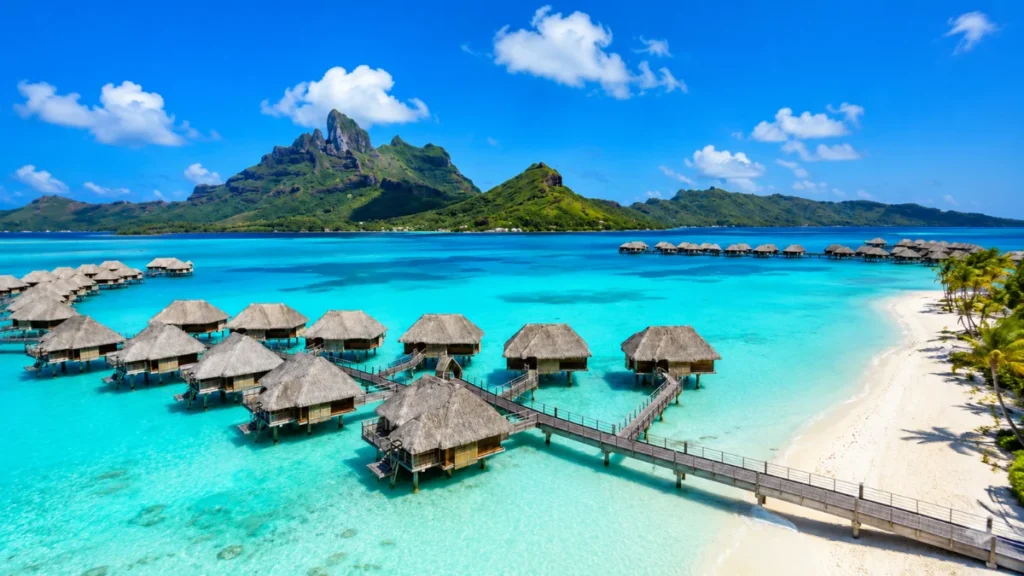
Bora Bora is marketed so heavily as a honeymoon destination that travelers visiting alone, with friends, with family, or simply as a couple on an ordinary holiday may wonder whether they will feel out of place. The concern is understandable: the trip is expensive, the island is remote, and much of the advertising focuses on overwater bungalows, private dinners, and romantic celebrations.
Bora Bora can be very worthwhile for non-honeymoon travelers who genuinely enjoy lagoons, snorkeling, quiet resort days, polished service, and a slower pace. It is less rewarding for travelers who want nightlife, frequent cultural encounters, low-cost spontaneity, or a packed sightseeing schedule. The island is not reserved for romance, but its value depends heavily on whether you enjoy the experience it is actually built around.
The difficult part is separating Bora Bora’s real appeal from the version presented through travel campaigns and social media. The island is visually remarkable, but beauty alone does not guarantee that the cost, atmosphere, or daily rhythm will suit every traveler.
This article answers Is Bora Bora Worth It for Non-Honeymoon Travelers? by looking at what the island genuinely feels like, who enjoys it most, what the price buys, how much there is to do, and when Moorea or Tahiti may offer a better fit.
The Short Answer: Bora Bora Is Not Only for Honeymoons
Bora Bora’s strongest experiences are not exclusively romantic. The lagoon, reef life, mountain backdrop, boat excursions, warm water, and slower island atmosphere can be enjoyed by solo travelers, friends, families, anniversary travelers, and couples taking an ordinary holiday.
However, the island’s tourism structure does lean toward couples and premium resort stays. Many properties are quiet, private, and designed around spending long periods on-site. Evening entertainment is usually limited. Restaurants can be expensive, and independent movement is not always as simple as it appears on a map.
The right question is therefore not whether you are celebrating a honeymoon. It is whether you would enjoy paying a premium for a lagoon-centered, resort-oriented trip where the scenery, water, and calm pace matter more than constant variety.
Bora Bora for Different Travel Styles
This table gives a quick overview of how well Bora Bora tends to suit different non-honeymoon travelers. It is not a rule, but it can help you recognize where the island’s strengths and tradeoffs are likely to matter most.
| Traveler Type | Likely Fit | Why It Can Work | Main Tradeoff |
|---|---|---|---|
| Solo relaxation traveler | Good | Quiet surroundings, lagoon activities, wellness, and time to disconnect | Single supplements, couple-focused resort atmosphere, and expensive private transfers |
| Friends traveling together | Possible to good | Shared boat trips, snorkeling, diving, paddleboarding, and memorable scenery | Limited nightlife and fewer casual social spaces than larger island destinations |
| Families with older children | Good | Calm lagoon experiences, marine life, resort facilities, and water activities | High food and accommodation costs, especially for larger rooms |
| Families with very young children | Possible | Some resorts offer calm water and family-friendly facilities | Boat transfers, room layouts, deep water access, and limited budget dining require planning |
| Active adventure traveler | Moderate | Lagoon tours, diving, snorkeling, cycling, hiking, and water sports | Most activities are water-based, and the island is not built for nonstop land exploration |
| Luxury traveler | Excellent | High-end service, private-feeling stays, iconic accommodation, and polished experiences | Premium prices do not guarantee perfect weather or complete privacy |
| Strict budget traveler | Weak | A more affordable trip is possible with guesthouses and careful planning | Flights, food, tours, and transfers remain expensive even without a luxury resort |
| Nightlife-focused traveler | Weak | Resort bars and relaxed dinners can be enjoyable | The island becomes very quiet after dinner and has little nightlife variety |
Bora Bora is strongest for travelers who want a beautiful setting in which to slow down. It becomes harder to justify when the traveler expects the destination itself to provide constant entertainment, broad cultural immersion, or city-style convenience.
The Real Bora Bora Travel Reality Check
Bora Bora is remote even by Pacific travel standards. Most international travelers first arrive in Tahiti and then take a domestic flight to Bora Bora. From the airport, which sits on a motu, travelers usually continue by boat. Depending on the accommodation, that transfer may be included, arranged privately, or charged separately.
This creates a different arrival feeling from stepping out of an airport into a town. The lagoon becomes part of the transport system, and many resorts feel deliberately separated from the main island. That separation can feel peaceful and special, but it can also make spontaneous dining, shopping, and independent exploring less convenient.
Imported food, building materials, fuel, equipment, and resort supplies contribute to high prices. A modest meal can cost more than travelers expect, while premium resort dining may become a major part of the total trip budget. Travelers staying on a motu may have limited alternatives unless they take a boat back to the main island.
Weather also matters. Bora Bora’s lagoon can look extraordinary under mixed cloud and sunlight, but the destination is not guaranteed to deliver uninterrupted blue skies. Tropical showers, humidity, wind, cloud, and rougher lagoon conditions can change the mood of a day or affect excursions.
None of these realities makes Bora Bora a poor destination. They simply explain why planning the island as if it were an easy, flexible beach town can lead to disappointment.
What Many Travel Articles Miss About Bora Bora
Many Bora Bora articles focus on whether the island is beautiful enough to justify the price. That is only part of the decision. The island’s scenery is widely admired, but travelers spend more time living through the pace of the trip than looking at one perfect viewpoint.
A traveler may wake to a dramatic lagoon, spend the morning snorkeling, have a long lunch, swim again, rest during the afternoon, and watch the light change over Mount Otemanu. For someone who values quiet, this can feel deeply rewarding. For someone who feels restless without a busy schedule, the same day may feel surprisingly empty.
Luxury marketing can also hide how resort-centered the experience may become. A beautiful overwater bungalow provides direct lagoon access and privacy, but it can also encourage travelers to remain within one controlled environment. That is not automatically a weakness. It only becomes a problem when visitors expected a highly varied island experience.
Another overlooked point is that Bora Bora can feel emotionally calm rather than openly romantic. Honeymoon imagery may dominate the advertising, but the lived experience is often about water, space, quiet service, and an unusually slow daily rhythm. Those qualities can matter to many travelers who are not celebrating anything.
Some destinations reward curiosity. Bora Bora rewards stillness. Its value does not come from having an endless list of attractions. It comes from making simple experiences—swimming, watching the lagoon, sharing a slow meal, or doing very little—feel like the purpose of the trip rather than time between activities.
What Bora Bora Actually Feels Like
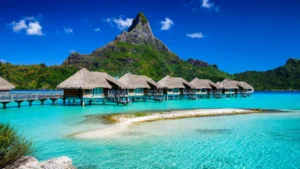
Bora Bora feels polished, contained, and visually focused. The lagoon dominates the experience. Water is not simply something you visit for an afternoon; it is often visible from breakfast, your room, the transfer boat, the restaurant, and most organized activities.
The main island has roads, homes, shops, churches, small restaurants, guesthouses, and everyday local movement. Yet many visitors spend much of their time at resorts on surrounding motu. This creates two overlapping versions of Bora Bora: a lived-in Polynesian island and a highly curated international resort destination.
The resort atmosphere is usually calm rather than social. You may hear water against the bungalow supports, boat engines in the distance, soft restaurant music, and occasional activity around a pool or jetty. Large crowds are uncommon within many premium properties, although popular excursions, arrival points, and famous snorkeling areas can become busy.
Evenings are often quiet. Dinner may be the main event, followed by a drink, a walk, or time in the room. Travelers who enjoy early mornings and relaxed nights may appreciate this. Those hoping to meet many people or move between lively venues may find the island subdued.
The destination also feels more polished than raw. Tours are usually organized, transfers are coordinated, and resorts work hard to create ease. Travelers looking for a less packaged Pacific experience may find stronger cultural texture elsewhere, while those wanting a smooth and visually impressive escape may see this polish as part of the value.
Beyond the Honeymoon: Is Bora Bora Right for Your Travel Style?
This first diagram should help readers identify whether Bora Bora’s actual strengths match their preferred style of travel. It should not rank people from “best” to “worst.” Instead, it should group travel styles into strong fit, possible fit, and weak fit, with one short reason for each.
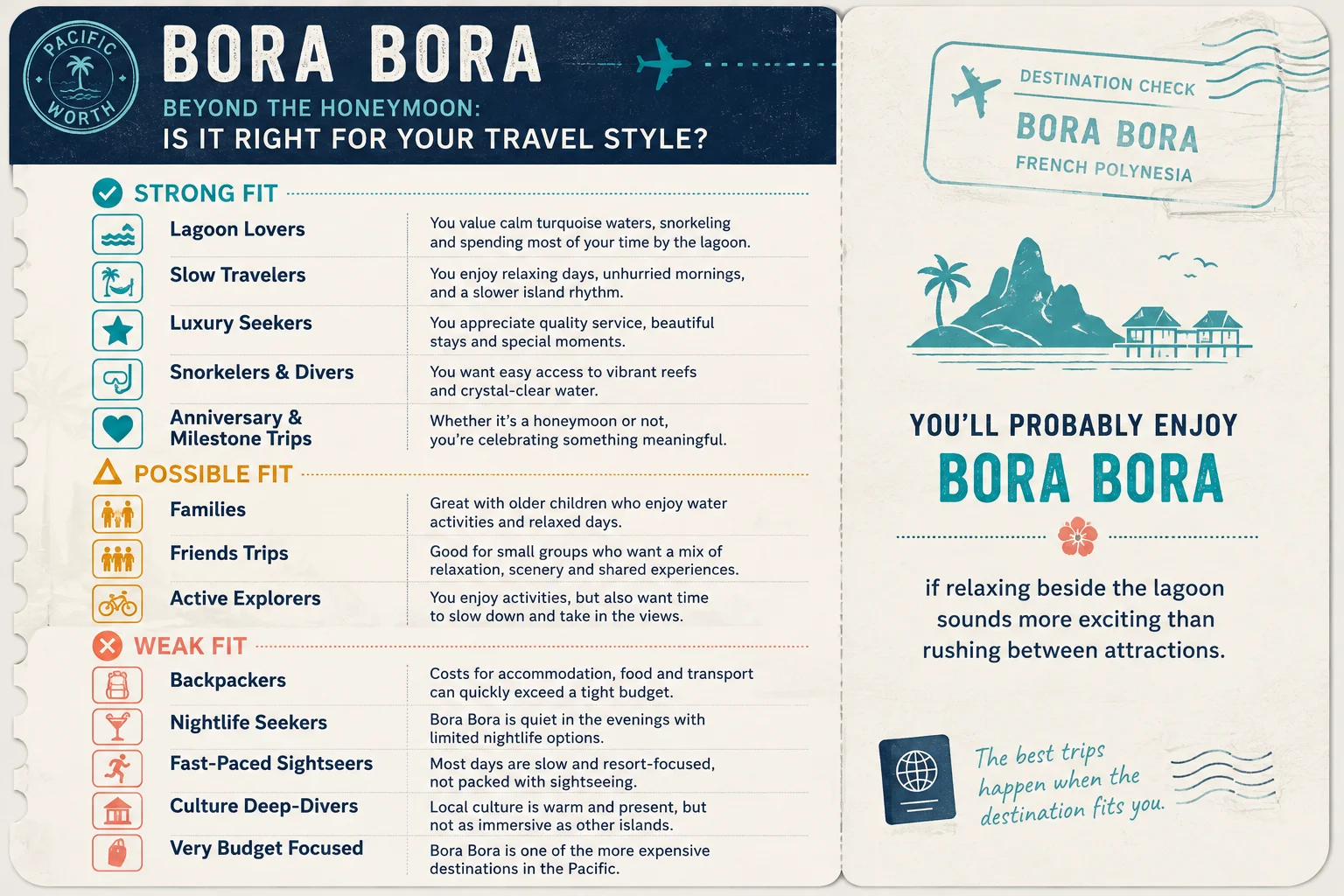
The most important message is that being a non-honeymoon traveler does not make someone a poor fit. A solo traveler seeking peace may suit Bora Bora better than a honeymoon couple who wants nightlife and constant sightseeing. Travel style matters more than relationship status.
Why Non-Honeymoon Travelers Still Enjoy Bora Bora
The Lagoon Is an Experience, Not Just a View
Bora Bora’s lagoon is the strongest reason many non-honeymoon travelers find the trip worthwhile. The range of blue tones, shallow sand areas, coral gardens, mountain views, and marine life creates an environment that can fill several days without feeling identical.
Snorkeling tours may include coral areas, rays, reef fish, and stops in shallow water. Diving can reveal another side of the lagoon and surrounding ocean. Kayaking, paddleboarding, swimming, and boat trips allow travelers to experience the landscape at different speeds.
This matters because Bora Bora is more rewarding when the traveler actively enjoys being on and in the water. Someone who does not swim can still appreciate the scenery and boat trips, but the island’s value may feel narrower. Our guide to Which Pacific Islands Are Best for Non-Swimmers? can help travelers compare this more carefully.
The Island Makes It Easy to Slow Down
Some destinations require travelers to work hard to create rest. Bora Bora makes slowing down almost unavoidable. Transport takes time, meals can be unhurried, the heat encourages breaks, and many resorts are designed around staying close to the water.
For travelers recovering from a busy period, taking a milestone trip, or wanting a genuine pause from normal routines, this can feel valuable even without romance. The island offers permission to do less without making the day feel completely wasted.
It Can Mark More Than a Wedding
Bora Bora can suit birthdays, retirement trips, family celebrations, personal milestones, reunion trips, or simply a long-planned Pacific holiday. The destination feels significant because reaching it requires effort and the scenery feels distinct from ordinary life.
The risk is treating the island’s reputation as proof that every expensive choice is necessary. A meaningful Bora Bora trip does not require the most famous overwater bungalow, a private dinner every evening, or constant premium upgrades. The experience can still feel special when the spending is directed toward what the traveler actually values.
Quiet Can Feel Luxurious Without Being Romantic
Privacy, low noise, space, warm water, and attentive service can be enjoyable for many reasons. A solo traveler may appreciate reading without interruption. Friends may value a relaxed setting after years of talking about taking a trip together. Families may enjoy having fewer competing demands than they would in a larger destination.
Bora Bora works best when luxury is understood as ease and environment rather than only romantic presentation.
Social Media Expectations vs What Bora Bora Actually Feels Like
This second diagram should set realistic expectations without trying to make the island look disappointing. Its purpose is to show that the real experience can still be excellent, but often differs from the edited version seen online.
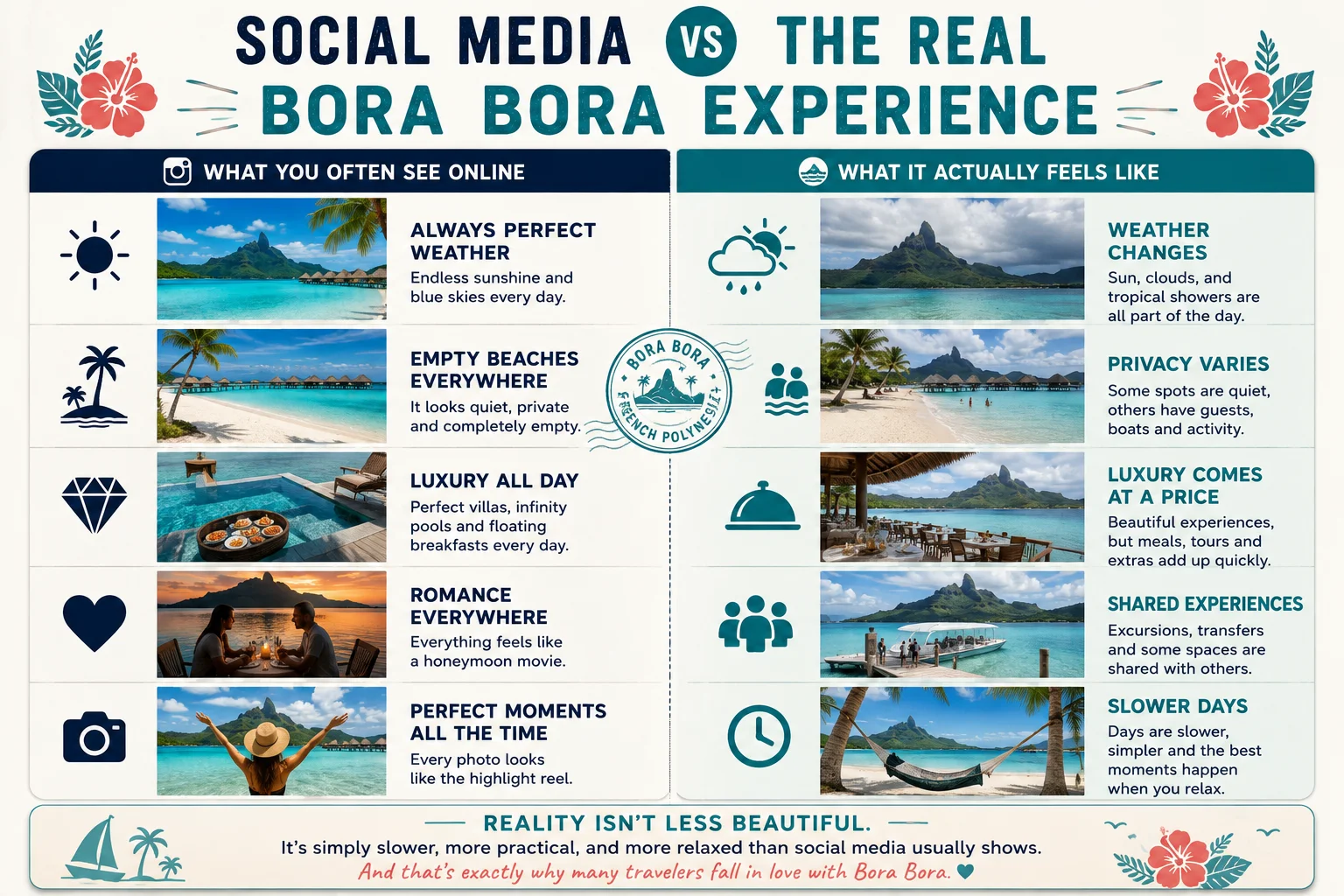
| What Travelers Often Expect | What the Experience Often Feels Like |
|---|---|
| A constant romantic atmosphere | Quiet, scenic, and resort-centered, with plenty to enjoy even when romance is not the purpose |
| Empty beaches and complete privacy | Privacy varies by resort, room location, excursion, transfer time, and season |
| Perfect weather from arrival to departure | Tropical sunshine mixed with cloud, wind, humidity, showers, and changing lagoon conditions |
| Endless things to do | A smaller number of memorable activities surrounded by long, intentionally slow periods |
| Complete isolation | Private-feeling accommodation combined with shared boats, restaurants, excursions, and airport transfers |
| Luxury automatically creates good value | Value depends on how much you enjoy the lagoon, room, service, food, and slower pace |
Social media usually captures the most visually dramatic seconds of a trip. It rarely shows waiting for a boat, deciding whether to pay resort prices for another meal, spending a cloudy afternoon in the room, or realizing that most evening activity has ended by nine.
Those quieter moments do not automatically reduce the experience. They are simply part of understanding whether Bora Bora’s rhythm feels peaceful or limiting to you.
Is Bora Bora Worth the Cost for Non-Honeymoon Travelers?
Bora Bora is expensive even when the trip is not built around a honeymoon package. The total cost may include international flights to Tahiti, domestic flights, boat transfers, accommodation, meals, lagoon excursions, travel insurance, and possible resort fees or taxes.
The island can still offer value, but not in the usual budget-travel sense. Value in Bora Bora often comes from the quality and distinctiveness of the setting. A traveler may spend more per day while doing less than they would in Fiji, Hawaii, or Tahiti. The trip feels worthwhile when the lagoon, quiet, service, and accommodation experience are exactly what they wanted.
It can feel poor value when travelers book Bora Bora mainly because it is famous. Paying premium prices for a slow resort holiday can become frustrating if the traveler would rather be exploring roads, markets, villages, restaurants, hikes, and different neighborhoods each day.
For a more detailed breakdown of the likely expenses, see How Much Does a Bora Bora Trip Actually Cost?.
Where the Money Often Feels Most Worthwhile
- A well-located room with a lagoon view you will actually use
- One high-quality lagoon excursion rather than several repetitive tours
- Accommodation that includes breakfast, transfers, equipment, or useful facilities
- Enough nights to enjoy the island without rushing through arrival and departure days
- A split stay that combines Bora Bora with a more active island
Where Travelers Can Overspend
- Choosing the most famous room category without considering privacy, sun direction, or access
- Booking every premium romantic extra even when romance is not the purpose
- Staying on an isolated motu without budgeting for all meals and transfers
- Adding too many similar boat excursions
- Visiting for so few nights that transfer costs dominate the experience
Bora Bora is often easiest to justify as part of a longer French Polynesia trip rather than as the only destination. Combining it with Tahiti or Moorea can provide a broader sense of place and make the slower resort days feel more intentional.
Is There Enough to Do in Bora Bora?
There is enough to do for several days, but the activity range is narrower than some travelers expect. Bora Bora is strongest in lagoon-based experiences rather than broad sightseeing variety.
| Experience | Why It Appeals | Realistic Consideration |
|---|---|---|
| Lagoon snorkeling tour | Marine life, shallow water, mountain views, and a strong sense of place | Routes can feel similar across operators, and conditions depend on weather |
| Scuba diving | Reef life, rays, sharks, and deeper underwater scenery | Certification, sea conditions, and seasonal visibility matter |
| Kayaking or paddleboarding | Quiet independent time on the lagoon | Wind can make paddling harder, especially away from sheltered areas |
| Matira Beach | Accessible public beach, shallow water, and sunset atmosphere | It can become busier than resort marketing suggests |
| Main-island drive or cycling | Local shops, churches, viewpoints, villages, and a wider sense of the island | The road circuit is relatively small and does not fill many days |
| Hiking | Elevated views and a more active experience | Routes can be steep, weather-sensitive, and better with local guidance |
| Resort day | Swimming, reading, spa time, lagoon access, and rest | Travelers who dislike inactivity may feel confined |
A four- or five-night stay is often enough for travelers who want one or two excursions, time at the resort, and a main-island visit. Longer stays suit travelers who genuinely enjoy repeating simple pleasures: swimming, reading, paddling, watching the lagoon, and eating slowly.
Our article How Many Days Do You Really Need in Bora Bora? explores this balance in more detail.
Bora Bora for Solo Travelers, Friends, and Families
Solo Travelers
Solo travelers can enjoy Bora Bora when they are comfortable with quiet and do not need frequent social interaction. The destination can provide space to reset, read, swim, photograph the lagoon, join group excursions, and enjoy a high level of personal freedom.
The main challenges are cost and atmosphere. Some room rates effectively assume two guests, while restaurants and resort spaces may feel couple-oriented. A solo traveler who enjoys their own company may barely notice this. Someone hoping to meet many other independent travelers may find the social scene limited.
Friends
Bora Bora can work well for close friends celebrating a milestone or sharing an activity-focused trip. Lagoon tours, diving, jet skiing, cycling, spa treatments, and relaxed dinners can create an easy itinerary without much daily planning.
The island is less suitable for friend groups who want bars, clubs, large restaurant districts, shopping, or a strong late-night atmosphere. Room layouts also require attention, as some premium accommodation is designed around couples rather than separate beds or larger groups.
Families
Families can find Bora Bora rewarding when the children enjoy water and are old enough to participate safely in lagoon activities. Calm shallows, marine life, resort pools, paddleboards, and boat trips can make the island memorable without requiring long sightseeing days.
The cost rises quickly for larger rooms, multiple meals, transfers, and excursions. Parents should also check bungalow access, railings, water depth, boat-transfer arrangements, child policies, and whether the resort offers enough casual food choices.
Bora Bora is not automatically an adults-only destination, but families benefit from choosing accommodation for practical comfort rather than relying on the island’s reputation alone.
Local Life and Cultural Expectations
Bora Bora is part of French Polynesia, and local life continues beyond the resort experience. The main island includes communities, churches, schools, small businesses, homes, fishing activity, and ordinary routines that are easy to miss when visitors remain on a private motu.
Travelers should not expect the resort experience to represent the full culture of the island. Polynesian performances, local dishes, craft demonstrations, and guided stories can offer an introduction, but they are often presented within a visitor setting.
Travelers wanting stronger day-to-day cultural visibility may prefer spending time on Tahiti, Moorea, Raiatea, or another island alongside Bora Bora. This does not make Bora Bora culturally empty. It means its tourism experience is often more separated from everyday life.
A simple main-island visit can create useful context. Eating at a casual local restaurant, walking near Vaitape, visiting small shops, and seeing the road beyond the resorts may make the destination feel more complete.
Bora Bora vs Moorea vs Tahiti for Non-Honeymoon Travelers
Travelers who are interested in French Polynesia but uncertain about Bora Bora should compare the islands by atmosphere rather than fame. Each offers a different balance of scenery, independence, resort comfort, culture, and cost.
| Destination | Overall Feel | Best For | Main Tradeoff |
|---|---|---|---|
| Bora Bora | Polished, lagoon-centered, quiet, and resort-oriented | Iconic scenery, snorkeling, luxury stays, and slow days | High cost, limited nightlife, and less independent variety |
| Moorea | Scenic, lived-in, active, and easier to explore independently | Road trips, mountain views, lagoon activities, food stops, and varied days | Still expensive and less private than a Bora Bora motu resort |
| Tahiti | Urban in parts, locally grounded, practical, and culturally visible | Markets, food, local life, transport connections, surfing, and road exploration | Less consistently “postcard-like” and more traffic around Papeete |
Moorea is often the strongest alternative for non-honeymoon travelers who want French Polynesian scenery with more freedom to drive, stop, explore, and change plans. Our comparison Bora Bora vs Moorea: Which Is More Worth It? looks closely at that choice.
Tahiti is more useful for travelers interested in everyday life, food, culture, and practical connections. It can also balance Bora Bora by adding movement and local context before or after a resort stay.
For many non-honeymoon travelers, the strongest itinerary is not choosing one island as the winner. It is combining different island personalities so Bora Bora’s stillness becomes one part of a broader journey.
Best For and Not Ideal For
Bora Bora Is Best For
- Travelers who consider lagoon scenery and water activities central to the trip
- Solo travelers, friends, couples, or families who genuinely enjoy quiet resort time
- Visitors celebrating a milestone other than a honeymoon
- Travelers comfortable paying more for setting, service, and ease
- People who prefer a small number of memorable experiences to a packed itinerary
- Travelers combining Bora Bora with Moorea, Tahiti, or another French Polynesian island
Bora Bora May Not Be Ideal For
- Travelers seeking nightlife, shopping districts, or constant entertainment
- Backpackers working with a very strict total budget
- Visitors who become restless during slow resort days
- Travelers wanting strong cultural interaction every day
- People who do not enjoy boats, swimming, snorkeling, or lagoon-based scenery
- Travelers expecting luxury prices to guarantee perfect weather and complete privacy
Practical Planning Insights
Bora Bora becomes easier to enjoy when the practical choices support the kind of trip you actually want.
- Allow enough time for the Tahiti connection and avoid building a fragile same-day international itinerary.
- Check whether airport boat transfers are included before comparing accommodation prices.
- Look at the property’s location carefully; main-island stays and motu resorts create different levels of freedom.
- Confirm what meals, equipment, breakfast, and activities are included.
- Do not assume an overwater bungalow is essential; a beachfront or garden room may free budget for excursions.
- Schedule one flexible day in case weather affects a lagoon tour, dive, or boat transfer.
- Consider four to five nights in Bora Bora and spend the remaining time on a more active island.
- Compare the total cost of the trip, not only the nightly room rate.
Weather and Seasonal Context
Bora Bora has a tropical climate, so warmth, humidity, rain, wind, and sunshine can occur in changing combinations. The drier period is often preferred for lower humidity and more settled conditions, but it can also bring stronger demand and higher prices.
Wetter months may offer better accommodation value and greener scenery, but travelers should be comfortable with heavier showers, cloudier periods, and greater flexibility around excursions. Rain does not always last all day, yet a slow-moving weather system can affect several days of a short trip.
Wind is also important because it influences lagoon conditions, paddleboarding, boat comfort, and how exposed some bungalow decks feel. A bright day can still feel less calm when the trade winds are strong.
School holidays, festive periods, and high-demand travel months may increase occupancy. Bora Bora rarely feels like a large crowded destination, but restaurants, flights, popular room categories, and excursions can book well ahead.
Common Traveler Misunderstandings
“Everyone in Bora Bora is on a honeymoon.” Honeymooners are common, but so are anniversary travelers, families, friend groups, solo visitors, and people taking a long-planned holiday. Most guests are focused on their own trip rather than judging why others are there.
“You need an overwater bungalow for the trip to be worthwhile.” Overwater rooms can be memorable, but the lagoon, excursions, scenery, and island atmosphere remain available from other accommodation types. The best room is the one that supports your budget and how you plan to spend the day.
“Bora Bora is completely private.” Some resorts feel very private, but airport transfers, restaurants, boat tours, beaches, and popular snorkeling sites are shared spaces. Privacy is usually strongest within the accommodation rather than across the entire destination.
“Luxury means every part of the trip will be effortless.” Premium service can reduce friction, but weather, domestic flights, boat transfers, limited supplies, and remote-island logistics still exist.
“There is nothing to do except sit in a bungalow.” There are meaningful activities, particularly on the lagoon. The more accurate concern is whether the traveler enjoys repeating water-based and slow-paced experiences rather than seeking constant variety.
Quick Decision: Is Bora Bora Right for You?
After comparing the atmosphere, cost, activities, and practical tradeoffs, this final traveler check can help turn the article into a clearer decision.
| If This Sounds Like You… | What It Suggests |
|---|---|
| You love calm water, quiet mornings, snorkeling, polished resorts, and days that do not need a full schedule. | Bora Bora is probably worth it. Its lagoon-centered pace closely matches the experience you already enjoy. |
| You want some relaxation but also road trips, local food stops, independent exploring, and more variety between days. | Consider combining Bora Bora with Moorea or Tahiti. Bora Bora can become the quiet part of a more varied French Polynesia trip. |
| You need nightlife, a strict budget, constant sightseeing, easy spontaneity, or strong cultural interaction every day. | Bora Bora may not be the best fit. Moorea, Tahiti, Fiji, or another Pacific destination may offer better value for your travel style. |
The clearest test is simple: if a slow day beside the lagoon sounds satisfying rather than incomplete, Bora Bora is much easier to justify.
Pacific Worth Note: One pattern I keep noticing when comparing Bora Bora experiences is that disappointment rarely begins with the scenery. It usually begins when travelers expect a different kind of holiday—more movement, more variety, or more independence than the island naturally provides. Bora Bora makes the most sense when its stillness is treated as the experience, not as empty time between experiences.
Related Pacific Worth Articles
These guides can help you compare Bora Bora’s cost, trip length, and overall fit within French Polynesia:
- How Much Does a Bora Bora Trip Actually Cost?
- How Many Days Do You Really Need in Bora Bora?
- Bora Bora vs Moorea: Which Is More Worth It?
- Tahiti vs Bora Bora: Which Island Offers More Value?
- Is French Polynesia Worth Visiting on a Short Trip?
- Fiji vs French Polynesia: Which Feels More Memorable?
Frequently Asked Questions
Is Bora Bora awkward for travelers who are not on a honeymoon?
No. Honeymooners are visible, but most resorts also host anniversary couples, families, solo travelers, friend groups, and guests celebrating other milestones. The atmosphere is usually quiet and private enough that travelers are not expected to explain why they are visiting.
Is Bora Bora worth visiting alone?
Bora Bora can be worthwhile alone for travelers who enjoy quiet, swimming, snorkeling, photography, reading, wellness, and unstructured time. It is less suitable for solo travelers who want a strong backpacker scene, easy socializing, or active nightlife.
Is Bora Bora good for a friends trip?
It can be a memorable friends trip when the group enjoys lagoon excursions, diving, water sports, spa time, and relaxed dinners. It is not the strongest choice for groups focused on bars, clubs, shopping, or a busy evening atmosphere.
Can families enjoy Bora Bora?
Yes, especially families with children who are comfortable around water and old enough to enjoy lagoon activities. Families should compare room layouts, transfer costs, meal plans, child policies, water access, and safety around overwater accommodation before booking.
Is Moorea better than Bora Bora for non-honeymoon travelers?
Moorea may be better for travelers who want more independent exploration, road trips, local food stops, mountain scenery, and varied days. Bora Bora is stronger for iconic lagoon scenery, polished resorts, privacy, and a deliberately slower experience.
Final Thoughts
So, Is Bora Bora Worth It for Non-Honeymoon Travelers? Yes, it can be—but not simply because the lagoon is beautiful or because the island is famous.
Bora Bora is worthwhile for non-honeymoon travelers who enjoy water, calm surroundings, polished accommodation, a small number of memorable activities, and days that do not need to be filled from morning to night. Solo travelers, friends, families, and ordinary couples can all find real value there when the island matches their pace.
It is harder to recommend for strict-budget travelers, nightlife seekers, fast-paced sightseers, or visitors who want the destination to deliver constant cultural and social variety. The high cost makes traveler fit especially important.
The most useful way to decide is to look beyond the honeymoon image. Ask whether you would still want the lagoon, quiet, boat travel, resort atmosphere, and slow evenings if no romantic celebration were attached to them.
Bora Bora is not only worth visiting when love is the occasion. It is worth visiting when the island’s water, stillness, and pace are the experience you genuinely want.
That is what makes the journey meaningful: not choosing Bora Bora because it represents a dream holiday, but choosing it because the reality of the island fits the way you truly want to travel.
Leave a Reply