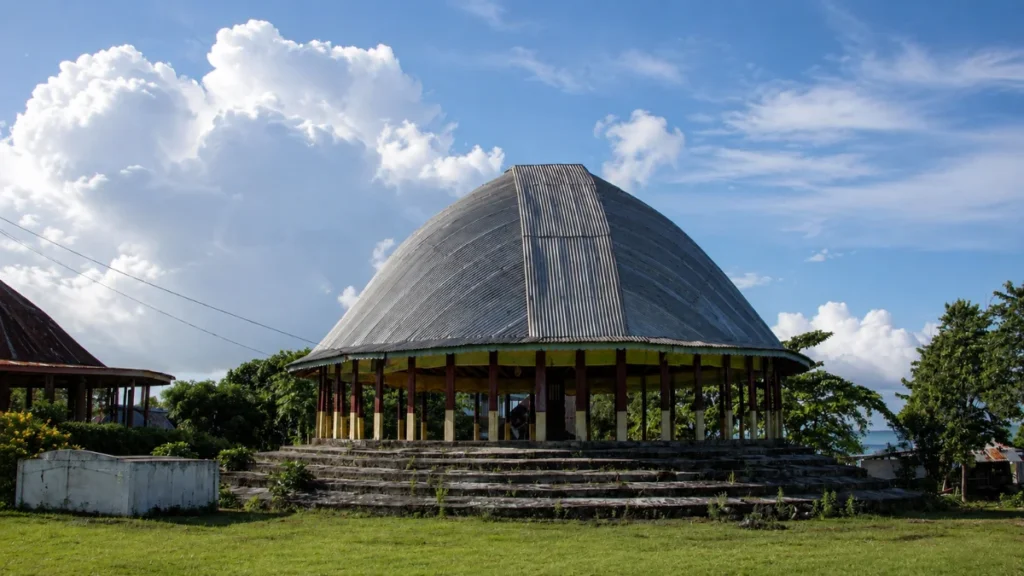
Many travelers assume Samoa and Fiji offer similar cultural experiences because both are known for warm hospitality, village traditions, church life, communal values, music, dance, and strong Pacific identities. In reality, the way visitors encounter those cultures can feel surprisingly different once the holiday begins.
Samoa is generally better for travelers seeking everyday cultural immersion through village life, family traditions, church rhythms, and a slower local atmosphere. Fiji is generally better for travelers who want cultural experiences alongside resorts, guided tours, broader island choice, and easier trip planning.
Online travel images often show similar scenes: smiling welcomes, traditional clothing, performances, tropical food, village visits, and oceanfront ceremonies. They rarely explain whether culture feels present throughout the day or mainly appears through planned activities, how comfortable visitors feel joining in, and how tourism changes the setting.
This comparison of Samoa vs Fiji for Cultural Experiences looks beyond performances and short village stops. It explores atmosphere, local interaction, food, church life, ceremonies, resort culture, pacing, costs, and the practical differences that may decide which destination feels more worthwhile for you.
Samoa vs Fiji at a Glance
Both are living Pacific societies with strong cultural identities. The key difference is how often visitors notice culture in ordinary surroundings, how often tourism presents it through organized activities, and how much independence the traveler wants.
| Cultural Factor | Samoa | Fiji |
|---|---|---|
| Overall cultural feel | Deeply visible in village structure, family life, church traditions, clothing, land, and daily routines | Strong and welcoming, but the visitor experience varies more between resorts, towns, villages, and islands |
| Ease for first-time visitors | Rewarding but sometimes less explained or packaged | Usually easier through resorts, organized visits, guides, and established tourism services |
| Everyday cultural visibility | Often highly noticeable while driving, staying locally, attending church, or visiting villages | Very present, though major resort areas can create more separation from everyday life |
| Resort cultural programs | Available, but generally less dominant in the overall trip | Common and easy to access in many established resorts |
| Destination atmosphere | Slower, quieter, more socially structured, and strongly shaped by village life | More varied, ranging from polished resort areas to busy towns and quiet outer islands |
| Best general fit | Slow travelers, independent visitors, culturally curious couples, and people comfortable observing before joining | First-time Pacific travelers, families, mixed-interest groups, resort travelers, and visitors wanting culture plus convenience |
Samoa may feel more culturally continuous because daily life remains visible between major attractions. Fiji may feel more culturally accessible because visitors are offered more structured opportunities to participate. Neither approach is automatically deeper. The better experience depends on whether you value natural immersion or convenient access.
Travelers who are still deciding how the two countries differ emotionally may find Why Does Samoa Feel Different from Fiji? useful. It explores the wider difference in pace, tourism scale, landscapes, and social atmosphere beyond culture alone.
The Real Pacific Cultural Travel Reality Check
Cultural travel in the Pacific is not always a scheduled attraction that begins and ends at a convenient time. Community events may follow local priorities. Church services can be longer than visitors expect. Village visits may require respectful dress, patient listening, and flexibility. A cultural experience can feel quiet and ordinary rather than dramatic.
Island pacing also matters. Buses, ferries, tours, and local activities may not move with large-city urgency. Weather can alter boat trips and road plans. Imported food and supplies can be expensive. Some villages and outer islands have limited visitor facilities, and internet access may be less reliable than travelers assume.
These realities are not necessarily disadvantages. They are part of why Pacific travel feels different from a highly managed holiday. Travelers who leave room for slower meals, conversation, unplanned stops, and local timing are more likely to notice the experiences that never appear in a brochure.
Samoa often rewards road travel and a slower stay on Upolu or Savai‘i, where village after village shapes the journey. Fiji requires more careful location choices because a holiday in Denarau, the Coral Coast, Suva, Taveuni, Vanua Levu, or an outer-island resort can produce very different levels of cultural contact.
What Many Cultural Comparisons Miss
Many articles compare the number of cultural shows, village tours, markets, festivals, and traditional meals. Those details are helpful, but they do not explain how culture feels during the hours between planned experiences.
This is why “authentic” can be a misleading word. A cultural show can still be rooted in real tradition, while an unscheduled encounter can still be shaped by tourism. A better question is whether the experience feels connected to the community, handled respectfully, and appropriate for the traveler’s expectations.
Expectation vs Reality: Travelers often expect the most meaningful cultural moment to be a scheduled performance or ceremony. In practice, a church choir, market conversation, shared meal, roadside village scene, or quiet evening near a family-run fale may become the memory that lasts longest.
Samoa vs Fiji: Two Different Ways of Experiencing Culture
The first diagram should show the main difference without declaring a winner. Samoa generally places visitors closer to everyday cultural surroundings, while Fiji often gives visitors more organized entry points through resorts, guides, village visits, and tourism programs.
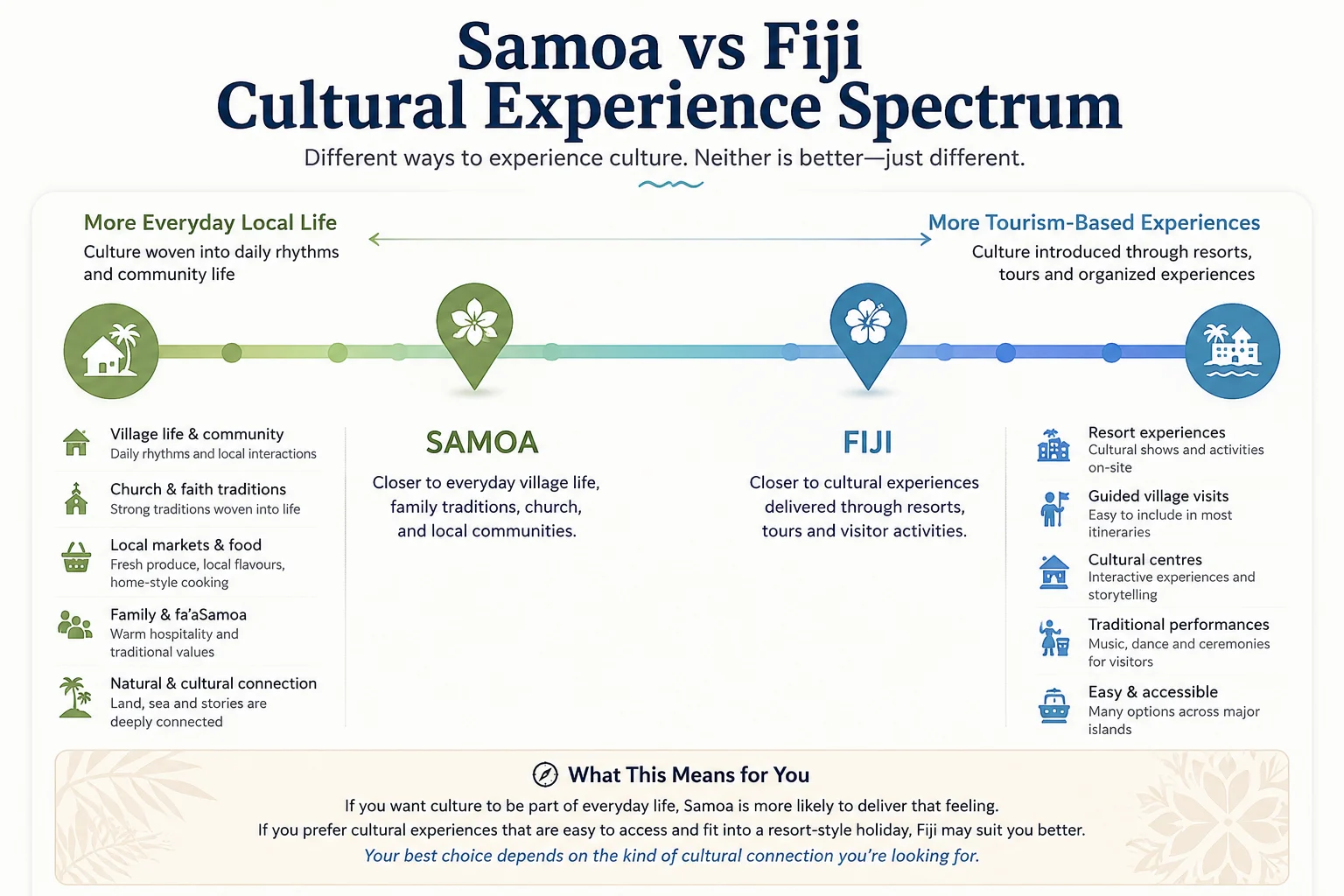
| Experience Dimension | Samoa Often Feels | Fiji Often Feels |
|---|---|---|
| How culture appears | Present throughout the road journey, villages, churches, homes, clothing, and social routines | Visible through both everyday life and more organized tourism experiences |
| Visitor entry point | Observation, local accommodation, church, markets, guides, and respectful village interaction | Resort programs, guided village visits, markets, town life, ceremonies, and island-based stays |
| Typical emotional reward | “I felt surrounded by a culture that shaped the whole island experience.” | “I was welcomed into several cultural experiences without needing to plan everything independently.” |
| Main tradeoff | The experience can be quieter, slower, and less clearly interpreted for visitors | Some experiences may feel more packaged, especially within large resort settings |
| Best pace | Slow road travel with time to notice daily life | A balanced trip combining culture, resort time, towns, villages, and activities |
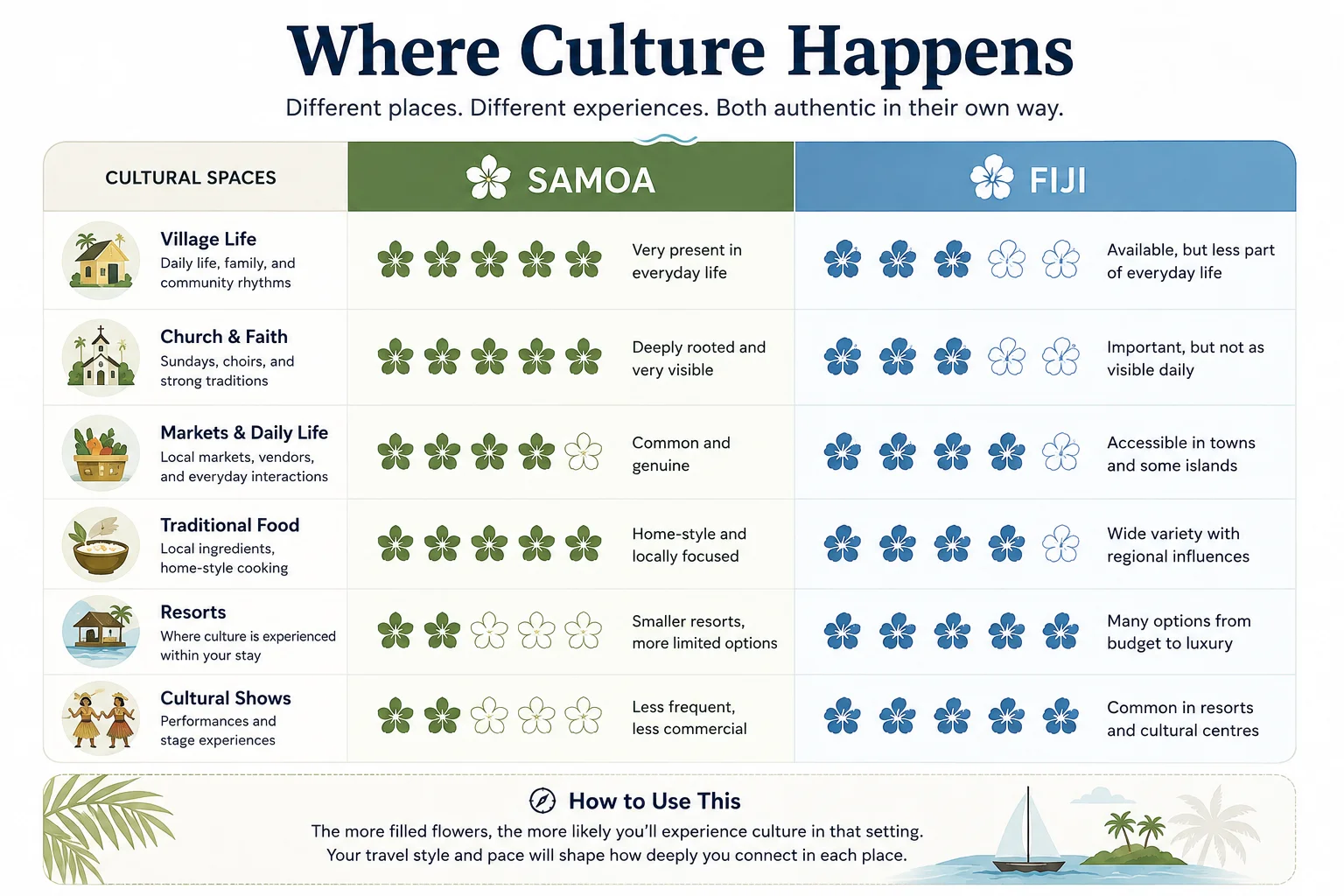
The visual matters because cultural depth is not measured only by the number of ceremonies a traveler attends. It is also shaped by where the traveler stays, how long they remain, whether they leave the resort, and how much attention they give to ordinary island life.
Island Atmosphere and Everyday Feel
Samoa often feels socially ordered, quiet, and closely tied to village identity. Driving around Upolu or Savai‘i, travelers pass family homes, churches, meeting spaces, plantations, graves cared for beside homes, and villages that feel like distinct communities rather than an unbroken tourism corridor. Even when visitors do not understand every custom, the cultural structure is visible.
Fiji feels more varied. Denarau is polished and resort-led; Nadi is busier; Suva has an urban, multicultural rhythm; the Coral Coast mixes villages, resorts, roads, and tours. Outer islands may feel much quieter, while Taveuni and parts of Vanua Levu offer greener, more locally grounded experiences.
Fiji’s cultural atmosphere is also shaped by its diverse population, including Indigenous iTaukei traditions and Indo-Fijian history, food, religion, business, and family life. Travelers who see only a resort dance performance may miss how culturally layered the country really is.
For a comparison focused specifically on relaxation and pace, read Fiji vs Samoa: Which Feels More Relaxing?. The article helps explain why Samoa’s quietness can feel deeper while Fiji may offer easier relaxation through organized resort comfort.
What Cultural Travel Feels Like in Samoa
Samoa’s cultural identity is often described through fa‘a Samoa, commonly understood as the Samoan way of life. For travelers, it is visible in family responsibilities, village organization, respect for elders, church life, ceremonial customs, language, traditional hospitality, communal living, and the relationship between family land and community.
The strongest impression often comes from continuity. Travelers may wake near an open fale, drive through several villages, stop at a local shop, notice preparations for Sunday, hear church music, and spend the evening in accommodation run by a family with deep ties to the area. A fiafia night may introduce dance, music, food, and storytelling, but culture is not limited to a scheduled hour.
Samoa’s Strongest Cultural Qualities
- Culture feels connected to everyday village and family life rather than separated into tourist zones.
- Church traditions and Sunday rhythms are highly visible.
- Locally run stays can create more direct contact with hosts and community life.
- The slower pace gives travelers time to notice customs, clothing, language, and social structure.
- Road travel makes it easier to see how villages shape the island landscape.
- The destination often feels culturally consistent even outside formal tours.
Samoa is not automatically easy for every cultural traveler. Some experiences are not heavily explained, and visitors may need to research etiquette before arrival. Those who expect constant entertainment or highly polished interpretation may find the trip quieter than anticipated.
First-time visitors can prepare more confidently with Is Samoa Worth Visiting for First-Time Pacific Travelers?, which looks at pace, transport, accommodation, cultural visibility, and the practical realities of choosing Samoa for an initial Pacific journey.
What Cultural Travel Feels Like in Fiji
Fiji’s cultural strength lies partly in its accessibility. Many resorts introduce visitors to iTaukei culture through music, welcoming traditions, storytelling, craft, food, village etiquette, and a guided kava ceremony. These experiences can be a comfortable starting point for first-time travelers, especially when they are unsure how to approach village life independently.
Fiji’s Strongest Cultural Qualities
- Organized cultural introductions are widely available and easy for first-time visitors to join.
- Resort staff interaction often feels warm, social, and memorable.
- Village visits can be combined with beaches, diving, family activities, and resort stays.
- Towns and markets reveal a culturally diverse society beyond the resort image.
- Travelers can choose between polished tourism areas and quieter local settings.
- Fiji works well for groups where only some travelers prioritize culture.
The risk is remaining inside a tourism bubble and assuming it represents the whole country. A resort cultural evening can be meaningful, but it should be understood as an introduction rather than a complete picture of Fijian life.
For more context on the country’s repeat appeal, Why Do Travelers Keep Returning to Fiji? explains how hospitality, island variety, resort choice, family friendliness, and different travel styles encourage visitors to return.
Village Life, Community, and Local Interaction
Samoa usually gives travelers a stronger sense that village life organizes the island. Villages are not occasional stops between attractions; they form much of the inhabited landscape. Travelers may notice communal spaces, local rules, evening prayer periods, church preparation, family compounds, and the importance of respectful clothing and behavior.
Fiji also has strong village traditions, but many visitors encounter them through organized visits. This can be useful because a guide explains expectations, introduces the group, and reduces uncertainty. The experience may include a welcome, conversation, crafts, food, music, or a ceremony depending on the community and tour.
Samoa may feel more naturally immersive because the traveler repeatedly moves through village spaces. Fiji may feel easier because tourism systems provide more clearly defined ways to enter those spaces. The best choice depends on whether you prefer gradual observation or guided participation.
| Cultural Experience | Samoa | Fiji |
|---|---|---|
| Village contact | Often encountered throughout road travel and local stays | Often accessed through guided visits or selected local stays |
| Church and faith | Highly visible in weekly rhythms and community life | Important, though visibility varies by region and itinerary |
| Traditional food | Home-style meals, local produce, and umu traditions | iTaukei and Indo-Fijian influences create broader food variety |
| Performances | Fiafia nights and cultural evenings are available but less constant | Common in resorts, cultural centres, and organized programs |
| Visitor guidance | May require more observation and independent etiquette research | Usually easier through guides, resorts, and tour operators |
Transport, Pace, and Cultural Access
Samoa can be easier to understand geographically. Most first-time visitors focus on Upolu, Savai‘i, or both. Renting a car or arranging a driver allows travelers to move through villages, coastal areas, waterfalls, markets, churches, and locally run accommodation at a steady pace.
Fiji offers more possibilities but requires more decisions. Staying on Viti Levu can provide access to Nadi, the Coral Coast, Pacific Harbour, Suva, villages, markets, and resorts. Outer islands can feel quieter and more culturally focused, but ferries, domestic flights, boat transfers, and fixed resort schedules may reduce spontaneity.
For guidance on fitting Pacific destinations into a realistic short holiday, see Which Pacific Islands Are Best for a One-Week Trip?. It explains how transfer time, island size, flight schedules, and accommodation changes affect the value of a seven-night journey.
Budget and Value Expectations
Neither Samoa nor Fiji should automatically be treated as a cheap cultural holiday. Flights, rental cars, drivers, resort meals, village tours, domestic transfers, boat travel, and imported goods can all raise the total cost.
Samoa may offer strong value for travelers who enjoy simple accommodation, locally run beach fales, road travel, and a slower itinerary. The cultural experience does not always require purchasing a formal activity every day. However, rental cars, fuel, meals, and better-located accommodation still need to be included realistically.
Fiji offers a wider price range but also more opportunities for costs to grow. Resort packages, boat transfers, meal plans, island flights, day tours, and family activities can make the final price much higher than the room rate suggests. Staying on the mainland may provide more flexibility than choosing an isolated island resort.
| Budget Area | Samoa | Fiji |
|---|---|---|
| Accommodation range | Beach fales, guesthouses, small hotels, and resorts with generally fewer large-scale luxury choices | Very broad, from hostels and mainland hotels to family resorts and private islands |
| Cultural activity costs | Many impressions come from everyday travel, though guided tours and cultural evenings still add value | More organized experiences are available, but repeated tours and resort programs can raise spending |
| Transport | Car hire or drivers are useful; ferry travel between Upolu and Savai‘i requires planning | Mainland travel can be manageable, while outer-island transfers may be expensive |
| Food flexibility | Best in larger centres; choices can narrow in rural areas and on Sundays | More variety in towns and mainland areas; isolated resorts may rely on meal plans |
| Best value for | Travelers who value slow immersion and do not need constant organized activities | Travelers who want culture combined with resort comfort, family facilities, or varied experiences |
Travelers building a Fiji budget can use How Expensive Is Fiji Really in 2026? to understand why transport, meals, resort location, and activity charges matter more than the headline room price.
What a Cultural Day May Feel Like
The next two diagrams help readers picture where cultural contact happens and how a typical day may flow in each destination.
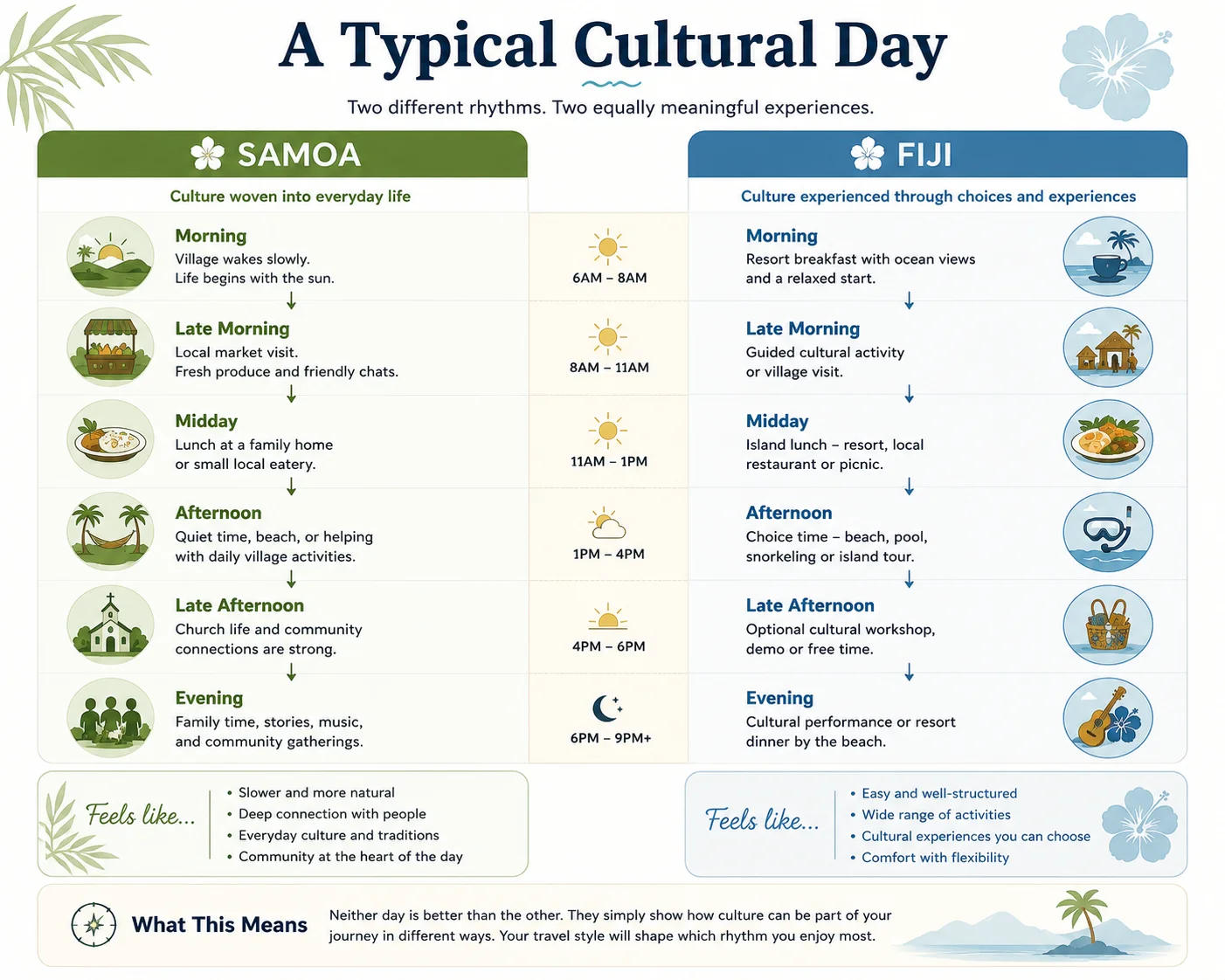
In Samoa, a cultural day may begin with village sounds, continue through a local market or road journey, include a family-run meal, and end with church music, conversation, or a quiet evening near a community. The experience may not contain one major cultural attraction, yet the entire day can feel culturally grounded.
In Fiji, the day may begin at a resort, continue with a guided village visit or market stop, include a local meal, and finish with music or a cultural presentation. The structure is often clearer and easier to arrange, particularly for travelers with limited time.
What social media may not show: Cultural travel is often made of pauses rather than highlights—waiting for a guide, dressing carefully before entering a village, following local timing, listening more than speaking, or accepting that a meaningful day may look quiet in photographs.
Which Destination Fits Your Cultural Travel Style?
| Traveler Type | Likely Better Fit | Why |
|---|---|---|
| Slow traveler who enjoys observation | Samoa | Village life and social rhythms remain visible throughout the journey |
| First-time Pacific traveler | Fiji | Guided cultural experiences and established tourism support reduce uncertainty |
| Traveler interested in church and Sunday life | Samoa | Sunday traditions strongly influence the atmosphere and travel rhythm |
| Family with mixed interests | Fiji | Culture can be combined with kids’ clubs, beaches, water activities, and resort comfort |
| Traveler interested in food diversity | Fiji | Indigenous Fijian and Indo-Fijian influences create a broader everyday food landscape |
| Independent road-trip traveler | Samoa | Driving around Upolu or Savai‘i makes cultural surroundings easy to notice |
| Traveler wanting polished cultural introductions | Fiji | Resorts and tour operators provide accessible performances, visits, and explanations |
| Traveler wanting fewer tourism layers | Samoa | The destination often feels more culturally continuous outside formal attractions |
Best For and Not Ideal For
Samoa Is Best For
- Travelers who want culture to shape the whole journey rather than one scheduled activity.
- Visitors comfortable with slow pacing, simple accommodation, and quieter evenings.
- People interested in village structure, church life, family traditions, and road travel.
- Independent couples and solo travelers who enjoy observing before participating.
- Travelers who prefer locally run stays and fewer large resort environments.
Samoa Is Not Ideal For
- Travelers expecting constant organized entertainment or detailed interpretation.
- Visitors uncomfortable with reduced Sunday services and a slower weekly rhythm.
- People wanting a very large choice of resorts, restaurants, and family facilities.
- Travelers who prefer every cultural activity to be booked directly through their hotel.
Fiji Is Best For
- First-time Pacific visitors wanting accessible cultural experiences.
- Families and groups with different interests, ages, and comfort levels.
- Travelers who want culture combined with resorts, beaches, diving, or adventure.
- Visitors interested in both Indigenous Fijian and Indo-Fijian life.
- People who appreciate organized tours, clear explanations, and easy logistics.
Fiji Is Not Ideal For
- Travelers who stay entirely inside a large resort but expect a complete cultural picture.
- Visitors assuming every island and tourism region offers the same local experience.
- Strict-budget travelers who overlook transfers, meal plans, and resort activity charges.
- People seeking a consistently quiet, village-shaped atmosphere throughout the trip.
Practical Planning Insights
A culturally worthwhile trip depends less on collecting activities and more on choosing the right setting, pace, and behavior.
- Choose Samoa when you want everyday culture, village atmosphere, church life, and slow road travel to define the journey.
- Choose Fiji when you want cultural experiences combined with wider resort, family, activity, and accommodation choices.
- Stay outside the largest tourism bubble for at least part of the trip if cultural connection is a priority.
- Ask before photographing people, ceremonies, homes, churches, and community spaces.
- Dress modestly for villages and religious settings, and follow guidance from hosts or local guides.
- Leave room in the itinerary for slower conversations, market visits, local meals, and unplanned stops.
- Do not judge a community experience only by how dramatic it looks in photographs.
- Research Sunday schedules in Samoa and transport connections in Fiji before fixing daily plans.
Common Traveler Misunderstandings
Another misconception is that a cultural performance is automatically artificial. Many performances are based on real knowledge, skill, music, stories, and community pride. The important questions are who leads the experience, whether it is explained respectfully, and whether visitors understand its context.
A further misunderstanding is that one village visit provides a complete understanding of a country. Samoa and Fiji both contain regional, family, religious, linguistic, and social differences. Cultural travel should create curiosity rather than the belief that the traveler now understands everything.
Finally, culture does not need to feel dramatic to be worthwhile. A market conversation, church choir, family meal, local bus ride, craft demonstration, or quiet evening in a village setting may become more memorable than a highly staged event.
Seasonal and Local Context
Weather can influence cultural travel even when the main interest is not beaches. Heavy rain may affect roads, outdoor performances, village visits, ferries, and market activity. Heat and humidity can also make long tours or formal clothing less comfortable.
Both Samoa and Fiji generally experience warmer, wetter, and more humid conditions during the southern summer months, with the wider regional cyclone season also affecting travel planning. Conditions vary by island, year, and location, so travelers should leave flexibility and use suitable insurance.
The drier and cooler part of the year is popular because road travel, walking, ceremonies, and outdoor activities can feel more comfortable. However, school holiday periods may raise prices and increase resort occupancy, particularly in Fiji.
For Samoa-specific weather planning, What Is the Best Time to Visit Samoa for Good Weather? provides a realistic look at rainfall, humidity, seasonal tradeoffs, and why no month guarantees perfect conditions.
Pacific Worth Note: I think Samoa often makes culture feel like the setting of the trip, while Fiji makes culture easier to enter through clear, welcoming experiences. One asks travelers to slow down and notice more. The other gives travelers more choices in how deeply they want culture to shape the holiday.
Frequently Asked Questions
Samoa vs Fiji for cultural experiences: which is better?
Samoa is usually better for travelers who want culture to feel naturally present in village life, church traditions, family-run stays, and everyday island routines. Fiji is generally better for travelers who want easier access to cultural shows, guided village visits, resort programs, food diversity, and a wider range of accommodation and activities.
Does Samoa feel more traditional than Fiji?
Samoa often feels more culturally continuous because village structure, church life, family land, and social customs remain highly visible throughout the journey. Fiji is equally culturally rich, but major resort areas can create more separation between visitors and everyday local life.
Is Fiji too touristy for a cultural trip?
No. Fiji can offer meaningful cultural travel when visitors choose the right region, leave the resort, use responsible guides, visit markets and towns, and learn about both Indigenous Fijian and Indo-Fijian life. The experience becomes limited only when the traveler treats a resort program as the whole country.
Which destination is better for families interested in culture?
Fiji is usually easier for families because many resorts and operators provide organized cultural activities alongside pools, kids’ clubs, beaches, and flexible dining. Samoa can be rewarding for culturally curious families, but the trip may require more independent planning and comfort with a slower pace.
How many days do you need for a cultural trip to Samoa or Fiji?
Seven nights can work in either destination when the itinerary is focused. Samoa travelers can explore Upolu or combine it carefully with Savai‘i. Fiji travelers should choose one main region or one practical island combination. Ten to fourteen nights allow more time for local interaction without rushing transfers.
Final Thoughts
When comparing Samoa vs Fiji for Cultural Experiences, Samoa is generally the stronger choice when you want culture to feel inseparable from everyday island life. Village rhythms, church traditions, family land, local accommodation, and slow road travel make that cultural setting difficult to ignore.
Fiji is usually the better choice when you want cultural connection alongside broad resort choice, organized activities, food diversity, family facilities, and simpler visitor logistics. Its structured entry points can be especially reassuring on a first Pacific trip.
Choose Samoa when you are comfortable slowing down, observing before joining, dressing respectfully, and accepting quieter Sundays. The strongest memories may come from ordinary surroundings rather than a headline attraction.
Choose Fiji when you want guided village visits, resort programs, kava-related introductions, diverse food, and the freedom to combine culture with beaches, family time, diving, or adventure.
Neither destination should be reduced to a claim that one is more authentic. Samoa often feels more culturally continuous; Fiji often feels more culturally accessible. Both can be meaningful when travelers choose the right setting and approach communities with humility.
The most worthwhile choice depends on how you prefer to learn about a place: through culture surrounding the whole journey, or through welcoming experiences that fit naturally into a broader holiday.
Leave a Reply